
By Paul Joseph
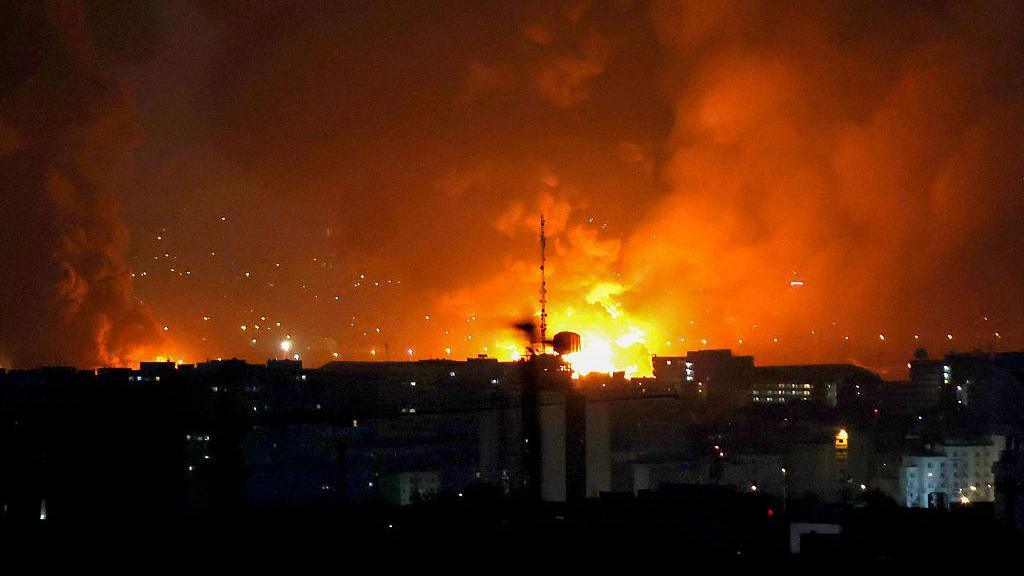
Explosions rocked one of Tehran’s main commercial airports on Friday, with eyewitnesses reporting that a plane was seen burning on the tarmac after the blasts. Thick smoke was reported rising from the airport area as panic spread among travellers and nearby residents.
Israeli authorities later confirmed that the country had carried out a new wave of strikes on Iranian targets, marking another escalation in the ongoing confrontation between the two countries.
In the United Arab Emirates, operations at Dubai International Airport were partially resumed after authorities earlier suspended some flights amid growing security concerns linked to the conflict.
Amid the rising tensions, Iranian President Masoud Pezeshkian issued a video address broadcast on state media in which he apologised to neighbouring states for the impact of the ongoing hostilities.
Pezeshkian said Iran had no intention of attacking its neighbours, stressing that Tehran would only act in self-defence.
“Iran will not attack neighbouring states unless attacked first,” he said, while calling for regional stability despite the escalating military exchanges.
However, shortly after the president’s address, Qatar announced that its air defence systems had intercepted a missile attack, underscoring fears that the conflict could spill further across the Gulf region.
Earlier, United States President Donald Trump hardened Washington’s stance on the crisis, saying there would be “no deal” with Iran unless Tehran accepted what he described as “unconditional surrender.”
Trump also suggested that Iran should select a new leader acceptable to his administration, a remark likely to further inflame tensions between the two countries.
The latest developments highlight the growing risk that the conflict could draw in additional countries and disrupt aviation, trade and security across the Middle East if diplomatic efforts fail to ease the situation.



Leave a Reply