
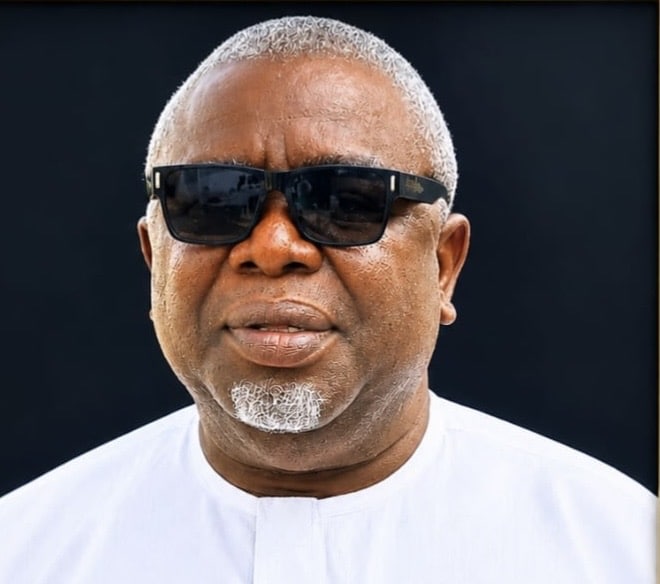

By Isaac Monehin
Electricity is not a luxury. It is the lifeblood of modern economies, the foundation of industrialisation, a catalyst for employment and an indispensable ingredient of national development. Yet, for millions of Nigerians, electricity remains an expensive uncertainty rather than a dependable public service.
During his 2023 presidential campaign, President Bola Ahmed Tinubu promised Nigerians regular electricity within four years, challenging voters to hold him accountable if he failed. With his first tenure approaching its conclusion, an important question arises: How far have we travelled towards that promise?
It is instructive to state that Nigeria’s electricity problems predate the administration of President Bola Tinubu. They reflect decades of inadequate investment, poor planning, institutional inefficiency and inconsistent policies.
The 2013 privatisation of the electricity sector was expected to introduce private capital and operational efficiency. PHCN was unbundled into generation companies (GenCos), the Transmission Company of Nigeria (TCN) and distribution companies (DisCos). Unfortunately, the anticipated transformation remains largely unrealised.
Average generation increased from approximately 3,557MW in 2015 to 4,191MW in 2023. Installed capacity reached approximately 13,588MW by December 2023.
Under President Tinubu, some developments deserve recognition. The Electricity Act 2023 introduced decentralisation, allowing states to establish electricity markets. Nigeria also recorded available generation of approximately 6,003MW in March 2025.
The government introduced interventions to address accumulated sector debts, while the Presidential Metering Initiative seeks to reduce estimated billing. Renewable energy and rural electrification have also received attention.
These are important developments. However, legislation, investment announcements and occasional generation records must not be confused with reliable electricity delivery.
NERC’s February 2026 operational factsheet reported average hourly generation of approximately 4,102MW. This illustrates the enormous gap between installed capacity and electricity actually supplied.
Why are we still in darkness? Five fundamental challenges stand out:
- Inadequate gas supply: Gas-fired stations cannot operate optimally because of insufficient domestic supply, pipeline constraints and outstanding payments to suppliers.
- Weak transmission infrastructure: Ageing equipment, inadequate substations and insufficient transmission lines restrict the evacuation and distribution of available electricity.
- Inefficient distribution companies: Inadequate investment, technical losses, electricity theft and poor metering undermine delivery and revenue collection.
- Financial insolvency: Accumulated debts and inadequate revenue recovery discourage investment throughout the electricity value chain.
- Policy inconsistency: Weak coordination among governments, regulators and private operators has discouraged long-term investment.
But are these challenges insurmountable or uniquely Nigerian? My answer is no. One cannot help but cite neighbouring Ghana as an instructive comparison. Although Ghana has experienced electricity rationing and supply challenges, it has made considerable progress in expanding electricity access and improving reliability.
World Bank data for 2024 put Ghana’s electricity access at approximately 91.9%, compared with Nigeria’s 62.5%. Though access does not necessarily mean uninterrupted supply, the difference is very significant.
Nigeria should study Ghana’s investments in generation, transmission, distribution and institutional reforms. The objective should be to achieve dependable electricity, not merely increase the number of people connected to the grid.
Perhaps a critical area is how the country can finance the electricity revolution. How much will it cost, and where will the money come from? Nigeria’s Energy Transition Plan estimates approximately $25.8 billion in investment requirements for universal electricity access.
This is a longer-term access programme, not the price of achieving 24-hour supply nationwide.
For an immediate five-year programme aimed at rehabilitating infrastructure and progressively increasing dependable supply towards 10,000MW, an indicative investment envelope of $15–20 billion should be considered, subject to independent engineering and financial assessment.
This could be allocated approximately as follows:
- Generation rehabilitation and expansion: $5–6 billion.
- Transmission infrastructure: $3–4 billion.
- Distribution networks and metering: $4–5 billion.
- Gas infrastructure and supply security: $2–3 billion.
- Renewable energy, storage and mini-grids: $1–2 billion.
Government must not attempt to finance this entire programme through borrowing. I propose a blended financing structure:
First, federal and state governments should provide strategic equity and targeted infrastructure funding, particularly for transmission and public-interest projects.
Second, concessional financing from the World Bank, African Development Bank, European development institutions and other partners should support transmission, renewable energy and rural electrification.
Third, private investors should finance commercially viable generation, embedded power projects, mini-grids and distribution infrastructure through independent power producer arrangements and public-private partnerships.
Fourth, Nigeria should mobilise domestic pension funds, insurance companies, infrastructure funds and institutional investors through appropriately structured electricity infrastructure bonds.
The existing $750 million World Bank-backed DARES programme, designed to mobilise additional private capital and expand electricity access, provides an example of how development finance can leverage private investment.
Investment must have a credible recovery mechanism. Otherwise, Nigeria will simply reproduce the cycle of borrowing, accumulating debts and returning to government bailouts.
Electricity tariffs should progressively reflect the efficient cost of generation, transmission and distribution, while protecting vulnerable households through targeted lifeline subsidies.
Higher tariffs must, however, be conditional on improved and verifiable service delivery. Consumers should pay according to the electricity received, not promises made.
Distribution companies must improve metering, billing and collection. Revenues should flow through transparent arrangements that guarantee timely payments to generators, gas suppliers and transmission operators.
Private investors should recover their capital through regulated tariffs, long-term power purchase agreements and predictable revenue streams over agreed investment periods, potentially 15–20 years.
Government guarantees should be limited, transparent and directed towards clearly identified risks rather than indiscriminate subsidies.
The electricity revolution programme should be implemented in three phases:
- Phase One (Years 1–2): Repair existing generation facilities, secure gas supply, rehabilitate critical transmission infrastructure, improve distribution networks and accelerate metering.
- Phase Two (Years 2–4): Commission additional generation capacity, expand substations and transmission lines, develop industrial embedded power projects and scale up renewable energy.
- Phase Three (Years 4–5): Consolidate the national grid, expand regional electricity markets and progressively increase dependable supply towards 10,000MW and beyond.
Government should publish quarterly performance reports covering investment expenditure, generation, actual electricity delivered, hours of supply and collection efficiency.
Unreliable electricity costs Nigeria billions of dollars annually in lost productivity, employment opportunities and industrial competitiveness.
Reliable electricity would reduce production costs, improve household purchasing power, strengthen manufacturing and accelerate poverty reduction.
President Tinubu must recognise that electricity reform is not merely an infrastructure programme. It is an economic transformation and national development imperative; it is a veritable strategy for poverty reduction.
Nigeria has the resources, market size and human capital to achieve what Ghana and other African countries are progressively demonstrating is possible. The administration must now provide a credible, adequately financed and time-bound roadmap.
Ultimately, electricity reform must not be measured by the number of power stations commissioned, megawatts announced or billions borrowed. It must be measured by whether ordinary Nigerians can switch on their lights, operate businesses, preserve food, study and work without constantly worrying about when electricity will disappear.
That is the real meaning of the promise of regular electricity. Re-electing President Bola Tinubu will help to turn that promise into reality.
Isaac Monehin is an economist and a policy analyst. He can be reached at monehinisaac@gmail.com (mailto:monehinisaac@gmail.com).



Leave a Reply