
By Paul Joseph
Iranian President Masoud Pezeshkian has announced that Iran is willing to initiate nuclear discussions with the United States in light of renewed threats from US President Donald Trump.
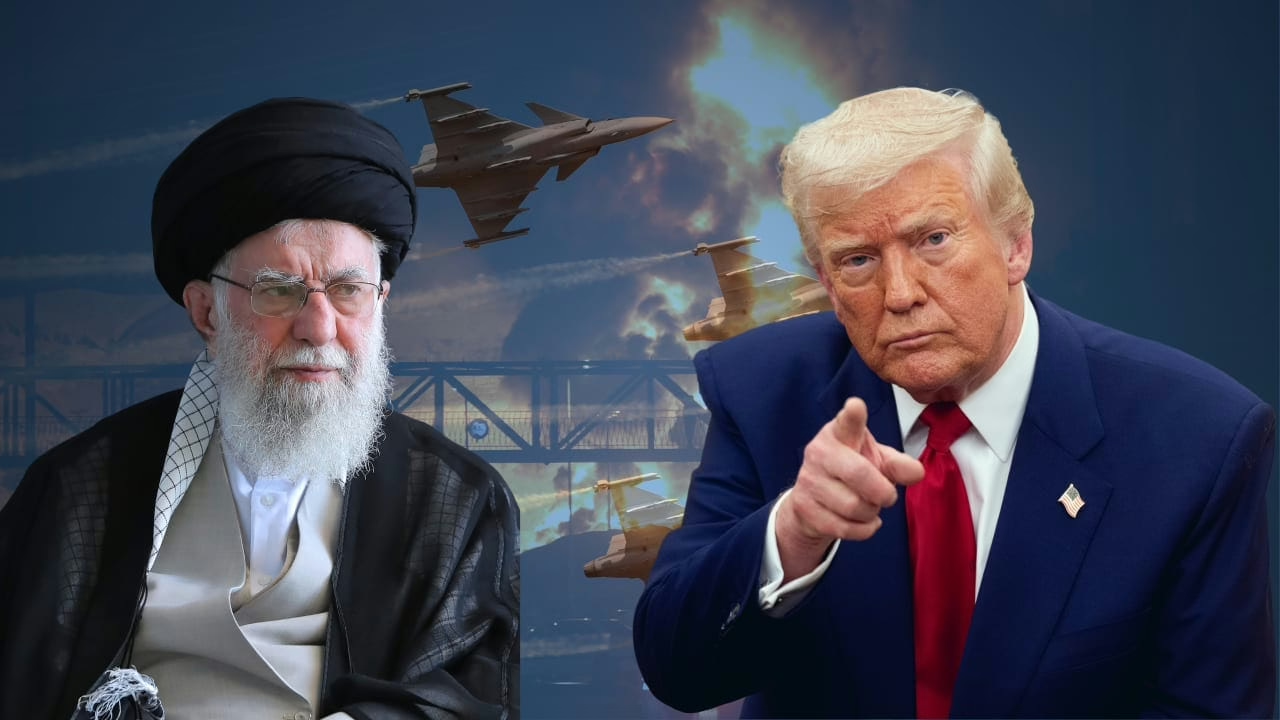
Trump cautioned that “bad things” could occur if an agreement is not reached, mentioning the possibility of military action and deploying an aircraft carrier group to the Middle East following the violent suppression of recent protests in Iran.
Despite these threats, Trump expressed optimism that an agreement could be achieved between Washington and Tehran.
Iran has indicated a preference for diplomatic solutions but has also warned of a strong response to any military aggression.
In a post on X, President Pezeshkian stated that he has directed Iran’s foreign minister to engage in negotiations, as long as these talks occur without threats or unreasonable demands.
He emphasized that the discussions would concentrate solely on Iran’s national interests and were prompted by requests from allied nations.
A senior official from the United Arab Emirates has also encouraged Iran to mend its relations with the United States, asserting that direct dialogue could help alleviate current tensions.
While Iran has not officially confirmed where the talks will take place, an Arab official informed AFP that they might occur in Turkey on Friday, following diplomatic initiatives by Egypt, Qatar, Turkey, and Oman.
Iran has made it clear that the discussions will be limited to its nuclear program and has dismissed any talks regarding its missile program or defense capabilities.
Iran’s Foreign Minister, Abbas Araghchi, mentioned in an interview that although Iran has lost trust in the US, a nuclear agreement remains feasible if Washington pursues a fair and balanced deal.
Previous negotiations fell apart last year after Israel conducted extensive airstrikes on Iran, leading to a brief but intense conflict.
During this period, the US executed limited strikes on Iranian nuclear facilities, while Iran retaliated with missile and drone attacks on Israel and a US military base in Qatar.
Since taking office again, Trump has reinstated stringent economic sanctions on Iran, exacerbating the country’s economic difficulties.
The rising cost of living has sparked protests that have spread across the nation. Iranian officials reported that over 3,000 people died during the unrest, while human rights organizations claim the actual number is significantly higher.
Iran attributes the violence to foreign interference and characterizes the protests as riots. Supreme Leader Ayatollah Ali Khamenei has warned that any US attack could escalate into a broader regional conflict.


Leave a Reply