
By Opeyemi Adelakun
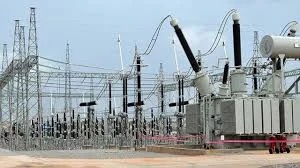
The Federal Government has expanded its intervention in Nigeria’s troubled electricity market with a N728.979bn bond aimed at clearing verified debts owed to generation companies and restoring the liquidity needed to sustain investment in power generation.
The Series 2 bond, issued under the Federal Government’s N4tn Power Sector Multi-Instrument Issuance Programme, takes the value of the first phase of the initiative to approximately N1.23tn.
The latest issuance consists of N402bn in cash bonds sourced from the capital market and N326.979bn in non-cash bonds allocated to participating GenCos under the Presidential Power Sector Debt Reduction Programme.
The government’s latest intervention is targeted at accumulated obligations that have weakened confidence in the electricity market and reduced the capacity of generation companies to invest in expanding their operations.
At the signing ceremony in Abuja on Monday, the Minister of Finance and Coordinating Minister of the Economy, Taiwo Oyedele, said the government’s challenge was not merely to clear old debts but to ensure that the market did not generate another cycle of unpaid obligations.
“This transaction addresses an important challenge in Nigeria’s electricity markets, which is accumulated legacy obligations that have weakened liquidity, constrained investments, and affected confidence across the value chain.
“The federal government’s objective is to resolve legitimate legacy obligations in a structured and transparent manner, while implementing the reforms necessary to prevent their recurrence.”
Oyedele said the debt intervention would have limited effect without fundamental improvements in the operation of the electricity market.
“This means the bond programme cannot stand alone. It must be accompanied by stronger market discipline, improved revenue assurance, reduction in technical and commercial losses, greater efficiency and accountability across the electricity ecosystem.
“It is also important that we are leveraging Nigeria’s domestic capital markets. This demonstrates how the government can use appropriate market instruments to address significant economic challenges, while deepening our financial markets and mobilizing long-term domestic capital,” he said.
He said the government would consider the programme successful only if it ultimately translated into a financially sustainable market capable of attracting investment and delivering more dependable electricity.
“Ultimately, the success of this programme will not be measured by the amount or size of the bond that we have issued. It will be measured by whether we achieve a financially sustainable electricity market that can attract investments, meet its obligations and deliver more reliable power to Nigerian households and businesses,” Oyedele stated.
The Chief Executive Officer of Nigerian Bulk Electricity Trading Plc, Akinola Odeyemi, said the latest issuance had attracted 11 GenCos, compared with eight in the first series.
He said the increased participation was evidence that stakeholders were gaining confidence in the government’s approach to resolving verified debts.
“The increased participation is a positive development and reflects the growing confidence of stakeholders in the programme and its ability to provide a credible framework for addressing verified outstanding obligations to the sector,” Odeyemi said.
He explained that years of unpaid obligations had weakened the financial position of operators and limited GenCos’ ability to invest in higher generation capacity.
Odeyemi said the debt programme therefore had implications beyond the repayment of historical claims.
“It is therefore important that the Debt Reduction Program is viewed not simply as an initiative for settling historical debt, but also as part of a broader effort to restore financial confidence, liquidity and sustainability to the Nigerian electricity supply industry,” he stated.
The Special Adviser to the President on Energy, Olu Verheijen, said the first series had demonstrated that the debt-reduction model could work, while the second series was designed to take the initiative further.
Settlement agreements from the first issuance covered 11 generation companies representing 21 power plants, she disclosed.
“Now we are moving deeper into implementation with Series 2. As I said at the investor forum in July, Series 1 proved the model, and Series 2 is scaling it. As important as it is, you would agree that scaling is what truly makes the difference,” she said.
Verheijen said the two issuances had generated more than N1.1tn within the N4tn ceiling approved by the Federal Government.
Michael Nwezi of Cardinal Stone, the lead issuing house and financial adviser, said the transaction demonstrated the ability of government-backed financial instruments to mobilise capital around a major national challenge.
He described it as the largest fund issuance in the history of the Nigerian capital market, adding that investors included pension fund administrators, banks, sovereign wealth funds, asset managers, institutional investors and retail participants.
The Federal Executive Council approved the N4tn Power Sector Multi-Instrument Issuance Programme in August 2025 to address verified legacy obligations to GenCos and gas suppliers.
The first series, completed in January 2026, raised N501.021bn and recorded full subscription. It comprised N300bn in cash bonds raised from the capital market and N201.021bn in non-cash bonds issued to participating generation companies.
The government says the wider programme is intended to improve liquidity, strengthen investor confidence and support sustainable electricity generation while reforms are pursued to improve revenue assurance, reduce technical and commercial losses and prevent the recurrence of unpaid obligations across the electricity value chain.





Leave a Reply