
By Paul Joseph
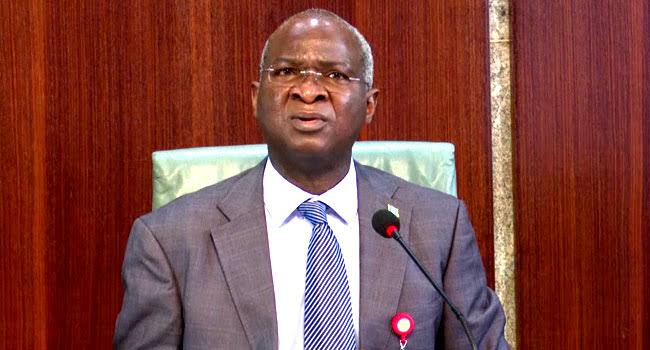
Former Lagos State Governor and ex-Minister of Works, , has challenged the widespread belief that state governors receive and spend security votes, insisting that no such arrangement existed during his administration in Lagos.
Speaking on Friday during a panel session at The Platform, a public policy forum organized by , Fashola said security funding in Lagos was driven by public contributions and transparent accountability mechanisms rather than undisclosed government allocations.
“This security vote thing whenever I hear some of my colleagues talk about it, I don’t know what it means because I never had it in Lagos,” Fashola said. “I was the governor; there was no security vote.”
The former governor maintained that all security-related acquisitions and expenditures under his administration were processed through official government channels, particularly the Ministry of Budget and Planning, rather than through a separate security vote structure.
According to him, Lagos adopted a model that relied heavily on citizen participation through the Lagos State Security Trust Fund, where individuals and corporate organizations contributed resources to support security operations across the state.
Fashola explained that regular stakeholder engagement and transparency were central to the system, noting that security meetings were held every first Wednesday of the month throughout his eight-year tenure and that annual reports were presented to residents.
“We set up a Security Trust Fund where people invested. The accounts and assets were audited, and every year we came to a town hall like this,” he said.
The former governor noted that beyond funding security equipment and operations, the state also tracked crime statistics and assessed trends regularly to evaluate the effectiveness of its strategies.
Drawing from his experience in office, Fashola argued that combating crime requires more than military force and law enforcement action, stressing that policy interventions and data-driven governance are equally important.
“Crime is dynamic. As you win one battle, a new crime emerges. It doesn’t end. It is not just a battle won with arms and guns; it is also a battle won with policies,” he stated.
Fashola’s remarks come amid ongoing national conversations about the management, transparency, and accountability of security-related expenditures by state governments across Nigeria.
His comments have reignited debate over the existence and administration of security votes, a subject that has long generated public scrutiny and calls for greater transparency.




Leave a Reply