
By Opeyemi Adelakun
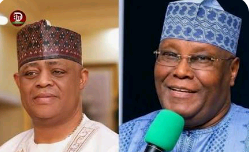
A disagreement over how President Bola Tinubu should be addressed has triggered a war of words between former Minister of Aviation, Femi Fani-Kayode, and Paul Ibe, media adviser to former Vice-President Atiku Abubakar.
The controversy followed Atiku’s October 1 Independence Day address, in which he repeatedly referred to the President as “Bola” rather than using his official title.
Fani-Kayode took issue with the choice of words, arguing that Atiku’s position as a former vice-president demanded greater regard for the institution of the presidency.
In a Facebook post on Sunday, he described the address as disrespectful and questioned the former vice-president’s decision to repeatedly use Tinubu’s first name.
“Surely this level of pettiness is below even you. Yet despite this provocation I will not refer to you as ‘Kachalla’ and I will accord you the respect that I still think you deserve,” he wrote.
Fani-Kayode also drew attention to criticism of Atiku’s address by Akin Osuntokun, a former political adviser to ex-President Olusegun Obasanjo and former Director-General of Peter Obi’s presidential campaign organisation.
He argued that respect for the presidency should transcend political differences, before bringing up previous disagreements involving Atiku and other political figures.
Among the issues he raised were Atiku’s political relationship with Obasanjo during their time in government, his remarks about former President Goodluck Jonathan, his exchange with Vice-President Kashim Shettima and the controversy surrounding the killing of Deborah Samuel in 2022.
He also cited comments attributed to former Rivers State governor Rotimi Amaechi questioning Atiku’s prospects and capacity to offer a different direction for the country.
But Ibe rejected the criticism, insisting that the former vice-president’s choice of name was not an issue deserving public attention.
“His name is Bola. And that is not Nigeria’s problem,” he said in a response published on his social media platforms.
For Atiku’s aide, the debate over titles was taking attention away from issues affecting households and businesses, including the rising cost of food, transportation and energy, as well as insecurity.
He maintained that Nigeria’s republican system did not place the President beyond criticism or require political opponents to use honorific language when discussing his administration.
“Nigeria is a republic, not a monarchy. The President is an elected public servant, not an emperor before whom opponents must genuflect,” Ibe said.
He also turned Fani-Kayode’s demand for restraint against him, pointing to the former minister’s use of strong expressions in his criticism of political opponents.
Ibe further disputed some of the historical accounts raised by Fani-Kayode, particularly the suggestion that Atiku’s disagreements with Obasanjo amounted to disloyalty.
On the claim that Obasanjo once knelt before Atiku during their political disagreement, he said the account remained contested, noting that the former vice-president had denied it.
He also defended Atiku’s comments about Jonathan, arguing that assessing a former leader’s preparedness for office was a legitimate part of political discourse.
Regarding the 2022 killing of Deborah Samuel in Sokoto, Ibe said the social media post that triggered controversy had been published without Atiku’s approval. He added that Atiku subsequently condemned the killing and rejected any religious justification for taking a life outside due process.
The exchange has also brought the 2027 elections into focus, with Ibe arguing that voters would judge the current administration by its performance rather than the language used by its critics.
He challenged the government to demonstrate improvements in food affordability, fuel and electricity costs, employment, security, the value of the naira and the general standard of living.
“It is easier to debate ‘Bola’ versus ‘Mr President’ than to defend what Bola’s policies have done to Nigerians,” he said.
“In 2027, Nigerians will vote on food, petrol, electricity, jobs, insecurity, the naira and their quality of life — not forms of address.”


Leave a Reply