
By Abdulqadir Muhammad Alhaji
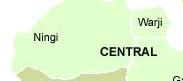
Residents of Ningi Local Government Area of Bauchi State have expressed concern over the prolonged absence of electricity in the area, saying the situation has negatively affected businesses, healthcare services, education and household livelihoods.
The residents spoke in separate interviews with StarNewsNG during a visit to the local government area, where they described the impact of the power outage, which they said has persisted for nearly eight months.
One of the residents, Abdurrahman Umar, popularly known as Abasu, described the situation as one of the most devastating challenges he has witnessed in his lifetime.
According to him, the prolonged blackout has hindered development in the area, particularly affecting businesses that depend heavily on electricity such as welding workshops and other technical services.
He explained that the high cost of fuel has made it difficult for business owners to rely on generators, leading to increased costs of goods and services across the local government area.
Abasu further lamented that many women who depended on refrigerators and freezers for their daily income have been forced to abandon their businesses due to the lack of electricity.
He recalled that the situation became particularly difficult during the Ramadan fasting period when residents were compelled to purchase water transported from Birnin Kudu in neighbouring Jigawa State, despite uncertainty over its source.
The resident called on Governor Bala Abdulkadir Muhammad, Senator Abdul Ahmed Ningi, Speaker of the Bauchi State House of Assembly, Abubakar Y. Suleiman, and other elected representatives to urgently intervene and facilitate the restoration of power supply to the area.
Also speaking, Gaddafi Shehu said the electricity challenge in Ningi has become a recurring problem over the years, noting that whenever power is restored, it often lasts only a short period before another disruption occurs.
He attributed the current outage partly to the reported theft of electrical wires along the Bauchi-Ningi road, expressing concern that large sections of electricity infrastructure could disappear despite the busy nature of the route.
According to him, the absence of electricity for nearly eight months has forced many businesses to shut down while increasing the economic burden on residents who must rely on alternative energy sources.
Gaddafi also highlighted the impact of the outage on healthcare delivery, stating that some medical equipment cannot effectively operate on generators or solar power systems.
He explained that the situation has compelled health workers to refer emergency cases to hospitals in Bauchi and Birnin Kudu, adding that some patients have reportedly lost their lives while being transported for treatment.
He appealed to relevant authorities to urgently repair the damaged infrastructure and strengthen security measures around electricity facilities to prevent future occurrences.
Another resident, Abdullahi Isa Dandara, said the prolonged power outage has contributed to the collapse of numerous small-scale businesses in the area.
He expressed disappointment that despite the presence of prominent political leaders representing the area at various levels of government, residents continue to suffer from inadequate electricity supply.
Dandara further noted that hospitals in the area face serious difficulties handling emergency medical procedures, including surgical operations, often resulting in referrals to healthcare facilities outside the local government.
Similarly, Abubakar Idris described the blackout as a major setback to economic activities in the area, saying many businesses have ceased operations due to the absence of power.
He lamented that some children under the age of two have grown up without experiencing stable electricity supply because of the prolonged nature of the crisis.
Sadam Nasiru also expressed concern over the effects of the outage on healthcare services, education and household businesses.
According to him, hospitals are unable to effectively utilize certain electrical appliances needed for patient care, while poor ventilation has exposed patients to discomfort and mosquito bites.
He added that practical lessons in schools that require electricity have been disrupted, negatively affecting the quality of education received by students.
Nasiru further explained that women engaged in home-based businesses such as the production and sale of sachet water, zobo drinks and other products have suffered significant losses as a result of the prolonged blackout.
The residents collectively called on government authorities, electricity service providers and other stakeholders to take immediate action to restore power supply to Ningi Local Government Area.
They stressed that access to reliable electricity remains essential for economic growth, quality healthcare delivery, educational development and improved living standards.
As residents continue to endure the consequences of the prolonged outage, many say urgent intervention is needed to prevent further economic hardship and improve the wellbeing of communities across the local government area.






Leave a Reply