
By Paul Joseph
Israeli Prime Minister Benjamin Netanyahu has declared that preventing Iran from acquiring nuclear weapons remains his “life’s mission,” insisting that under his leadership, Tehran will never possess an atomic bomb regardless of whether a diplomatic agreement is reached.
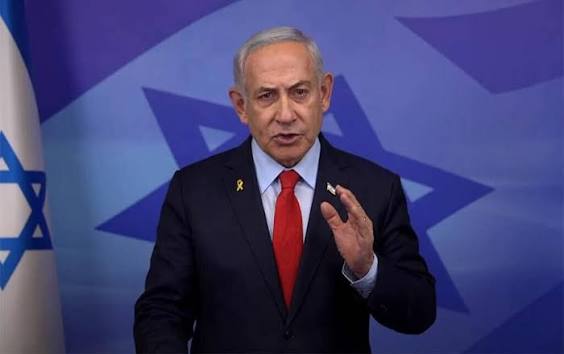
Addressing Israelis during a press conference, Netanyahu said his government’s actions had eliminated what he described as an imminent existential threat to Israel, while vowing to continue military and strategic efforts to prevent Iran from rebuilding its nuclear capabilities.
“For decades, I have been fighting against Iran’s efforts to arm itself with nuclear weapons. I can define it as my life’s mission,” Netanyahu said. “With an agreement, without an agreement – Iran will not have nuclear weapons. Not today, and not tomorrow. As long as I am Prime Minister of Israel, this will not happen.”
The Israeli leader defended recent military operations against Iran, saying Israel, working alongside the United States, had carried out what he described as the largest offensive air campaign in the country’s history. According to him, the operation targeted nuclear scientists, senior military commanders, missile production facilities, military infrastructure, and other strategic assets.
Netanyahu claimed the strikes inflicted hundreds of billions of dollars in economic damage on Iran and significantly weakened its military and nuclear capabilities.
He argued that the military campaign prevented Iran from rapidly advancing toward a nuclear weapon, saying the country had been accelerating both its atomic programme and efforts to move key facilities underground before Israel launched what he referred to as Operation Rising Lion, followed by Operation Roaring Lion in coordination with U.S. President Donald Trump and the American military.
“If we had not acted at the time we did, and with the overwhelming force with which we did, Iran would already have atomic bombs,” Netanyahu said, adding that Israel had “saved the State of Israel from the threat of nuclear annihilation.”
Despite declaring the operations a major success, Netanyahu stressed that Israel’s campaign against Iran was far from over.
“The struggle is not over and done,” he said. “We will need to maintain our vigilance, remain strong and determined to defend ourselves as required.”
The prime minister also highlighted Israel’s military operations against Iranian-backed groups across the Middle East, including in Gaza, Lebanon, Syria, Yemen, and the West Bank, saying Israeli forces had dealt unprecedented blows to what he described as Iran’s “Axis of Evil.”
Netanyahu claimed Israel had eliminated several senior Hamas leaders, including Mohammed Deif, Ismail Haniyeh and Yahya Sinwar, while asserting that nearly every key figure involved in the October 7 attacks had been killed. He also said all Israeli hostages held in Gaza had been returned.
He defended controversial military decisions, including operations in Rafah and Gaza City, saying he rejected calls to end the war prematurely in exchange for hostage releases.
Turning to Lebanon, Netanyahu said Israel had significantly weakened Hezbollah by eliminating its leader Hassan Nasrallah, destroying much of the group’s missile arsenal, preventing an alleged planned invasion by the Radwan Force, and capturing strategic positions previously used to threaten northern Israel.
He further announced that Israel had established permanent security zones in Gaza, Lebanon and Syria, insisting Israeli forces would remain in those areas for as long as necessary to protect the country.
“After October 7, I established a simple principle: Israel will not allow terror organizations to encamp on our borders, tunnel into our territory, or prepare for another massacre close to our citizens,” he said.
Netanyahu said Israel had fundamentally transformed its national security doctrine by shifting from a defensive posture to proactively targeting threats before they materialize.
Looking ahead, he pledged to strengthen Israel’s military independence, deepen regional alliances, invest approximately 350 billion shekels in domestic defence production, and accelerate the development of advanced military technologies.
“Our strength is the key to our future, our security, our economy and our alliances,” Netanyahu said. “Alliances are made with the strong, and Israel today is a very strong country.”
He concluded by thanking Israeli citizens for their support and paying tribute to members of the Israeli military and security services, expressing confidence that Israel would continue to prevail against its enemies.





Leave a Reply