
By George Omagbemi Sylvester
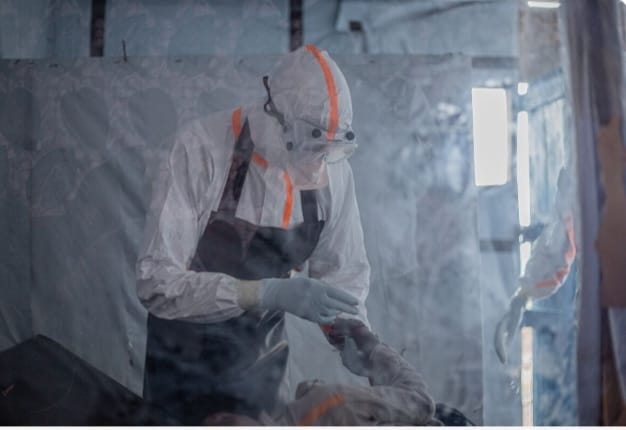
The ongoing Ebola outbreak in the eastern Democratic Republic of the Congo (DRC) is on the verge of becoming the second-largest Ebola epidemic ever recorded, as health authorities continue to battle a rapid surge in infections and deaths driven by the rare Bundibugyo strain of the virus.
According to the latest figures released by Congolese health authorities on Sunday, July 26, 2026, the country has recorded more than 3,200 confirmed Ebola cases, including 1,405 deaths, with the outbreak expected to surpass the 2018–2020 Kivu epidemic within days if transmission continues at its current pace. The current epidemic, first reported in May 2026, has spread rapidly across several provinces in eastern Congo despite ongoing containment efforts.
Public health experts have described the outbreak as one of the fastest-growing Ebola epidemics in history. Unlike previous outbreaks caused by the Zaire strain, the current crisis involves the Bundibugyo ebolavirus, for which there is no approved vaccine or specific treatment, making containment significantly more challenging.
Response efforts have been further complicated by armed conflict, attacks on healthcare facilities, shortages of medical supplies, unpaid health workers, and widespread public mistrust of health authorities.
Insecurity has also hampered contact tracing and delayed the isolation of infected persons, allowing the virus to spread into remote communities.
The World Health Organization (WHO) has warned that the outbreak remains in an expansion phase and continues to pose a serious public health threat.
Although neighboring Uganda successfully contained a limited number of imported cases, health officials stress that the risk of further cross-border transmission remains, prompting intensified surveillance across the region.
Health authorities have urged residents to report symptoms early, avoid physical contact with infected persons, cooperate with contact-tracing teams, and observe safe burial practices.
International partners continue to support the Congolese government with surveillance, laboratory testing and clinical response as efforts intensify to prevent the outbreak from becoming the second-largest Ebola epidemic on record.





Leave a Reply