
By Opeyemi Adelakun
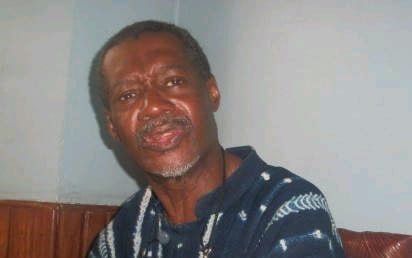
Veteran Nigerian filmmaker Ola Balogun has directed that his kidneys, eyes and any other viable organs be donated to people in need after his death, while the remainder of his body should be handed over to medical institutions for medical research and the training of future doctors.
Balogun made the directive in a document titled Public Rendition of My Last Will and Testament, released on Wednesday following a recent health challenge.
The 81-year-old said he decided to publicly document his final wishes after being diagnosed with a fresh illness a few days after celebrating his 81st birthday on August 1.
The filmmaker, who is receiving treatment at the Josek Medical Centre in Ogba, Ikeja, Lagos State, explained that he was unable to engage a legal practitioner to prepare a formal will, prompting him to issue a public statement instead.
“Barely a week after I was privileged to celebrate my 81st birthday on August 1st, a fresh medical alert has obliged me to once more seek treatment at the Josek Medical Centre in Ogba, Ikeja,” Balogun said.
He continued, “Consequently, I am hastily writing these few lines, not knowing whether or not I am destined to emerge alive from my latest confrontation with illness.
“Since I do not have the material possibility of calling on a legal practitioner at the present moment to seek help in drawing up a final version of my last will and testament, I have decided to have recourse to the present public document in order to leave instructions behind in the event that my physical being should succumb to death within the next few days or weeks.”
Balogun said his decision was inspired by the late Chief Obafemi Awolowo, whom he described as a model for preparing for death with dignity and order.
“I am encouraged in this decision by the sterling example of the great Chief Obafemi Awolowo, who calmly sat down to pen a final version of his will a few weeks before his death.
“Like the late sage, I firmly believe that departure from earthly existence should involve a well-thought out and orderly process, rather akin to preparation for a long journey.”
Giving specific instructions on the disposal of his remains, the veteran filmmaker directed that doctors should immediately harvest any viable organs for transplantation once his death is medically confirmed.
“I hereby further direct that immediately after my physical demise would have been medically certified, my remains should be speedily dissected in order to extract any vital organs that might be useful for donation to persons in need of vital organs such as the kidneys, the eyes etc.”
He further instructed that the remainder of his body should be donated to medical institutions for anatomical studies.
“After that, I hereby direct that whatever is left over should be speedily handed over to appropriate medical institutions for use by future doctors who are learning how to carry out dissections within the scope of their study of morbid anatomy.”
Explaining the reason behind the directive, Balogun said he wanted his remains to continue serving humanity after his death.
“The above decisions concerning the disposal of my corpse are rooted in the firm conviction that my physical remains should, if possible, be useful to the living.”
Balogun is regarded as one of the pioneers of Nigeria’s film industry. Since directing his first feature-length film, Alpha, in 1972, he has produced several acclaimed films and documentaries in English, Yoruba, Pidgin and Igbo.
His notable works include Alpha, Ija Ominira, Amadi, Nigersteel, Ajani Ogun, Musik Man and Oorun Moru. He is also recognised as a member of Nigeria’s first generation of filmmakers alongside the late Hubert Ogunde, Jab Adu, Ade Afolayan (Ade Love) and Moses Olaiya (Baba Sala).




Leave a Reply