
By Gloria Drealomalicha Emmanuella
As Nigeria inches closer to the 2027 general elections, a growing number of politicians battling corruption allegations, criminal prosecutions, and multi-billion naira fraud investigations are once again positioning themselves for public office raising fresh concerns about accountability, political morality, and the country’s anti-corruption war.
From former ministers under ex-President Muhammadu Buhari to ex-governors facing EFCC scrutiny, several controversial political figures are already testing the waters for Senate seats, governorship positions, and legislative comebacks despite unresolved legal troubles.
Critics say the trend reflects a disturbing reality in Nigerian politics: corruption allegations rarely end political careers — and, in some cases, may even strengthen political relevance.
Hadi Sirika: From Aviation Projects to Senate Ambition
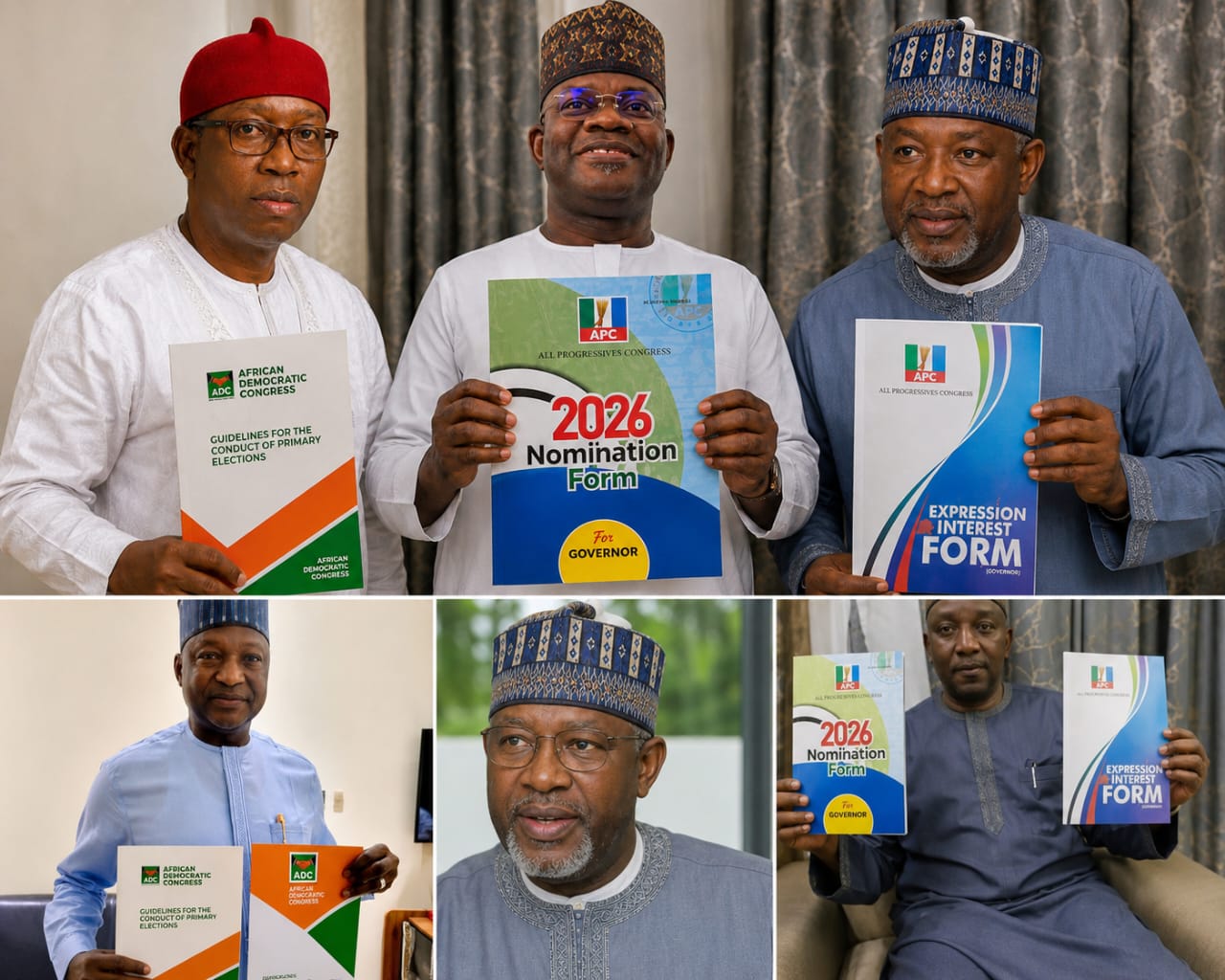
Former Aviation Minister Hadi Sirika has openly declared his intention to contest the Katsina North Senatorial seat under the APC in 2027, despite facing ongoing investigations linked to alleged contract fraud running into over ₦2.8 billion.
The former minister remains under EFCC scrutiny over controversial aviation contracts awarded during his tenure, including projects tied to the failed national carrier initiative, Nigeria Air, which sparked nationwide outrage and accusations of abuse of office.
Yet, even with the legal clouds hanging over him, Sirika continues to maintain significant political influence within Katsina APC circles.
Yahaya Bello: Wanted by EFCC, Eyeing the Senate
Few political figures embody Nigeria’s controversial power dynamics like former Kogi State Governor Yahaya Bello.
Declared wanted by the EFCC over alleged money laundering and misappropriation of public funds, Bello has remained a dominant figure in Kogi politics while reportedly being linked to an Interpol alert.
Despite the allegations, the former governor has formally declared his intention to contest the Kogi Central Senatorial seat in 2027.
He unveiled his ambition during a high-profile visit to the palace of the Ohinoyi of Ebiraland, attended by political leaders, traditional rulers, and Governor Ahmed Usman Ododo, a move many analysts interpreted as a show of political strength despite mounting legal troubles.
The EFCC had accused Bello of involvement in alleged financial crimes amounting to over ₦80 billion, though the former governor has consistently denied wrongdoing.
Abubakar Malami: Court Cases and Governorship Calculations
Former Attorney General of the Federation and Minister of Justice Abubakar Malami is also plotting a political comeback.
Malami has formally declared his intention to contest the Kebbi State governorship election in 2027, even as he battles multiple allegations involving massive financial misconduct.
Reports indicate he is facing a 16-count charge connected to assets and properties allegedly valued at over ₦212.8 billion.
The EFCC is also reportedly probing separate allegations involving between ₦80 billion and ₦82 billion in suspected misappropriation of public funds.
The irony has not been lost on critics: a former chief law officer of the federation, once responsible for overseeing justice and anti-corruption policies, is now entangled in some of the country’s most high-profile corruption allegations.
Ifeanyi Okowa: From PDP Vice Presidential Candidate to APC Senate Bid.
Former Delta State Governor Ifeanyi Okowa has also entered the growing list of embattled politicians seeking fresh mandates. Okowa, who served as the PDP vice-presidential candidate in the 2023 election, has reportedly declared interest in the Delta North Senatorial seat under the APC platform.
The EFCC is currently investigating allegations involving the alleged diversion of about ₦1.3 trillion in 13 per cent derivation funds alongside another ₦40 billion tied to a floating LNG investment project during his time as governor.
He was arrested in November 2024 after honouring an EFCC invitation in Port Harcourt, though no conviction has been secured against him.
His political realignment and renewed ambition have triggered heated debate in Delta politics, with critics questioning how politicians facing grave allegations continue to recycle themselves across party lines.
Saleh Mamman: Convicted Yet Politically Active:
In one of the most dramatic anti-corruption cases in recent months, former Power Minister Saleh Mamman was convicted over a ₦33.8 billion fraud and money laundering scandal linked to the Mambilla and Zungeru hydroelectric power projects.
The Federal High Court in Abuja found him guilty on 12 counts of corruption and financial crimes.
Shockingly, reports still linked the former minister to ongoing political activities even after his conviction.
A bench warrant was later issued for his arrest after he allegedly failed to appear for sentencing proceedings.
The case has become symbolic of Nigeria’s long-running struggle with accountability in the power sector, where billions of naira have been spent with little improvement in electricity supply for millions of citizens.
Farouk Lawan: From Fuel Subsidy Scandal to Political Resurrection:
Former House of Representatives member Farouk Lawan is also plotting a dramatic political return following his conviction in the infamous fuel subsidy bribery scandal.
Lawan, who once chaired the House ad hoc committee investigating fuel subsidy fraud, was convicted after being caught in a bribery scandal involving billionaire businessman Femi Otedola.
He was accused of demanding a $3 million bribe to remove Zenon Petroleum and Gas Limited from a list of companies implicated in subsidy fraud.
After serving a five-year prison sentence and later receiving presidential clemency in 2025, Lawan has now passed APC screening processes to contest for a return to the House of Representatives.
His attempted comeback has reignited public anger over what many Nigerians describe as the “normalisation of political impunity”.
Corruption Allegations No Longer Political Death Sentences?
Political observers say the growing number of indicted or investigated politicians preparing for 2027 elections reflects the weakening stigma around corruption allegations in Nigeria’s political culture.
In many advanced democracies, corruption investigations alone can permanently damage political careers. In Nigeria, however, politicians frequently survive scandals, switch political parties, negotiate elite alliances, and return stronger.
For many Nigerians battling economic hardship, rising inflation, insecurity, and unemployment, the spectacle of politicians facing billion-naira fraud allegations while aggressively seeking new offices has become a painful symbol of the country’s accountability crisis.
With 2027 already taking shape, one uncomfortable question now hangs over Nigeria’s democracy: are corruption scandals becoming mere political speed bumps rather than career-ending consequences?


Leave a Reply