
By George Omagbemi Sylvester
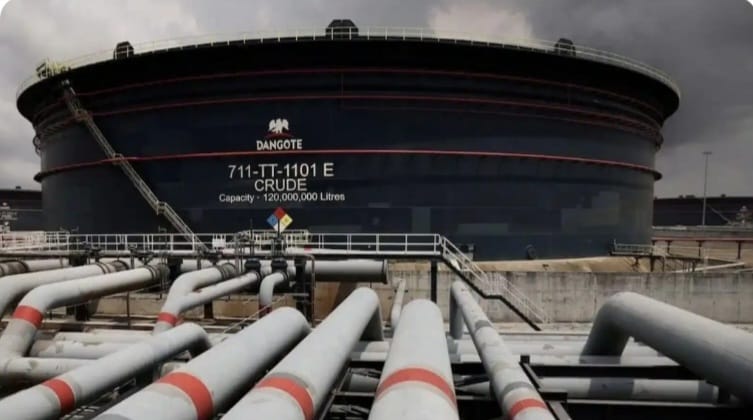
Nigeria’s refining sector has recorded a major breakthrough as the Dangote Petroleum Refinery successfully increased its crude oil processing volume to 700,000 barrels per day during a recent performance test, surpassing its official nameplate capacity of 650,000 barrels per day. The development marks a significant milestone for Africa’s largest refinery and further strengthens its position in both regional and global energy markets.
The achievement was disclosed by Devakumar Edwin, Vice President of Oil and Gas at Dangote Industries, who explained that the increased throughput formed part of ongoing operational assessments designed to optimize production efficiency. The refinery, located in Lekki, Lagos State, began fuel production in 2024 and has steadily expanded output of petrol, diesel, aviation fuel, and other refined petroleum products.
Industry analysts believe the milestone could have far-reaching implications for Nigeria’s energy security. For decades, Africa’s largest crude oil producer relied heavily on imported refined petroleum products despite possessing vast crude reserves.
The growth of local refining capacity is expected to reduce dependence on imports, conserve foreign exchange, and improve fuel supply stability across the country.
The refinery has also emerged as a major exporter of refined products. Recent data indicate that exports have expanded significantly, with products reaching markets across Africa, Europe, the United States, and the Middle East.
Analysts note that supply disruptions in parts of the global energy market have increased demand for products from the Lagos-based facility.
Beyond its current achievement, Dangote Industries has unveiled ambitious plans to double refining capacity to approximately 1.4 million barrels per day within the next few years.
If completed, the expansion would position the facility among the largest refining complexes in the world and significantly boost Nigeria’s influence in global petroleum trade.
Energy experts say the refinery’s growing capacity could support industrial growth, strengthen regional fuel supply chains, create employment opportunities, and help transform Nigeria from a major fuel importer into a leading exporter of refined petroleum products.
However, they also caution that sustained access to crude oil feedstock, efficient regulation, and market stability will be critical to maintaining long-term success.






Leave a Reply