
By George Omagbemi Sylvester
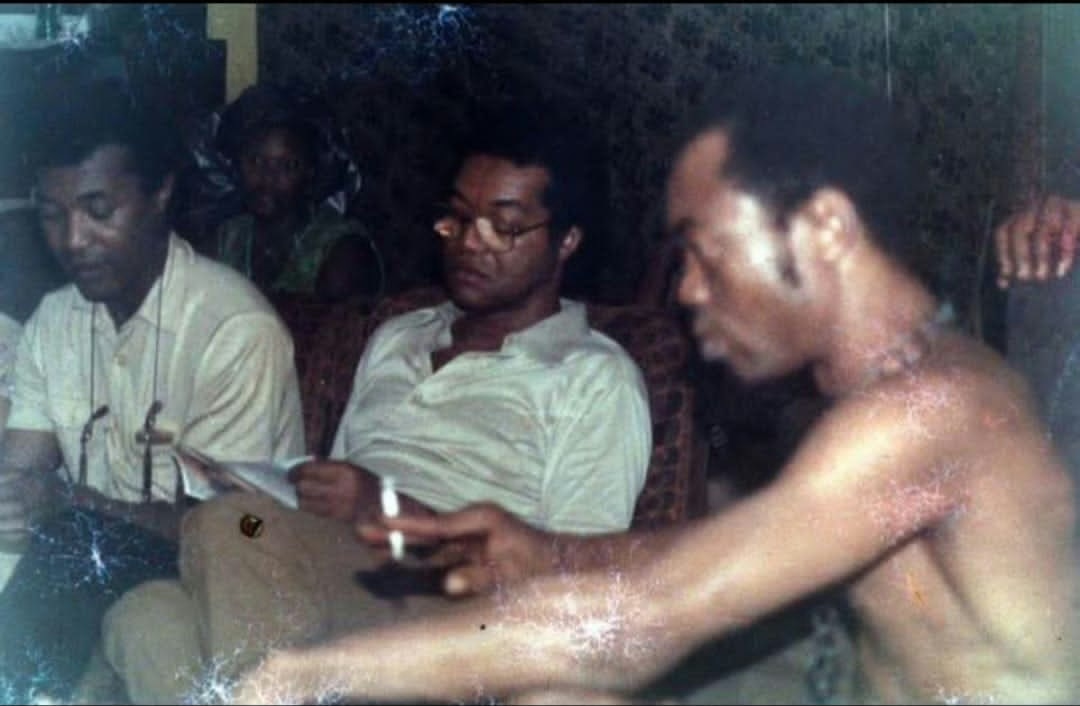
The emergence of rare photographs showing the three Kuti brothers together (Fela Anikulapo‑Kuti, Dr. Beko Ransome‑Kuti and Prof. Olikoye Ransome‑Kuti) has renewed public attention on one of Nigeria’s most influential families. Born to the same parents and raised in the politically charged environment of Abeokuta, the trio would, in different ways, confront the Nigerian state, reshape its institutions and redefine the meaning of civic duty.
The brothers were sons of Funmilayo Ransome‑Kuti, a leading anti-colonial campaigner and women’s rights pioneer and Reverend Israel Oludotun Ransome-Kuti, an Anglican minister and educationist.
Their upbringing in a household steeped in political consciousness and social reform produced three men whose careers (though different in style) shared a common thread of national engagement.
Fela, born in Abeokuta in 1938, became the most internationally famous of the brothers. A multi-instrumentalist and political icon, he created Afrobeat by blending jazz, funk and traditional Yoruba rhythms.
His music evolved into a vehicle for fierce political criticism after exposure to radical Black liberation ideas during a U.S. tour in 1969.
Songs such as Zombie and Beasts of No Nation openly mocked military rulers and condemned corruption, earning him repeated arrests and raids on his Lagos compound by security forces.
For many Nigerians, Fela’s life symbolized artistic defiance against authoritarian rule. As historian Toyin Falola once observed, “Fela was more than a musician; he was a political institution in himself, using rhythm as a weapon against injustice.” His Kalakuta Republic commune and nightclub became rallying points for dissent, especially during Nigeria’s turbulent years of military governance.
Dr. Beko Ransome-Kuti, born in 1940, pursued medicine but soon became one of Nigeria’s most prominent human-rights activists.
After returning from medical training in the United Kingdom, he practiced as a physician but was radicalized by the 1977 military assault on Fela’s compound, which led to the death of their mother.
From then on, he emerged as a key figure in pro-democracy struggles, helping to found the Campaign for Democracy and challenging successive military regimes.
Beko was jailed multiple times, including during the regimes of Generals Muhammadu Buhari and Sani Abacha and was adopted as a prisoner of conscience by Amnesty International before his eventual release in 1998.
According to the late legal activist Gani Fawehinmi, Beko represented “the moral conscience of a nation suffocated by decrees and dictatorship.”
In contrast, Prof. Olikoye Ransome-Kuti took a different route. Born in 1927, he was a renowned paediatrician who rose to become Nigeria’s Minister of Health during the military administration of General Ibrahim Babangida.
While his brothers confronted the state from the outside, Olikoye sought reform from within. As minister, he spearheaded the expansion of primary healthcare, focusing on immunization, maternal care and rural health delivery.
Public-health scholars widely credit him with laying the foundation for Nigeria’s primary healthcare system and bringing HIV/AIDS awareness into national discourse during the 1980s and 1990s.
Former World Health Organization officials described him as “a model of transparency and incorruptibility” in public service.
What makes the Kuti story historically significant is not merely their individual achievements but the contrast in their methods. Fela used music as rebellion. Beko employed civil resistance and human-rights advocacy. Olikoye chose institutional reform through government service. Together, they represented three different approaches to national transformation: cultural resistance, political activism and technocratic governance.
The renewed circulation of rare images of the brothers has therefore reignited discussion about the power of family legacy in shaping public life. Their story also underscores the influence of their mother, Funmilayo, whose anti-colonial activism and feminist organizing laid the ideological foundation for her sons’ paths.
Today, decades after their peak years, the Kuti name remains synonymous with resistance, reform and cultural pride. Fela’s Afrobeat continues to inspire global artists; Beko is remembered as a symbol of democratic struggle and Olikoye’s health reforms still shape Nigeria’s primary healthcare structure.
In a country often marked by political turbulence, the Kuti brothers stand as enduring evidence that dissent, service and creativity can emerge from the same household and together, alter the course of national history.





Leave a Reply