
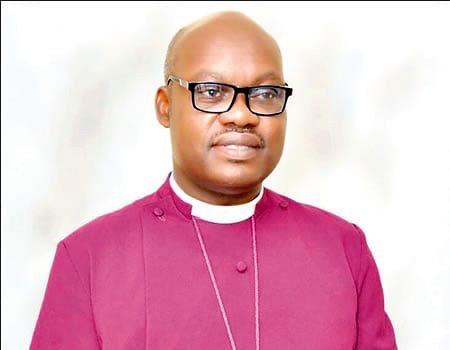
The Anglican Bishop of Owo Diocese, Rt. Revd. Dr. Stephen Ayodeji A. Fagbemi, has called on both the federal and state governments in the Southwest to urgently arm Amotekun and establish state police, highlighting the ongoing vulnerability of communities to banditry, kidnapping, and other forms of criminal violence.
Speaking on Frontline, a public affairs programme on Eagle 102.5 FM Ilese-Ijebu, Ogun State, on Monday, Bishop Fagbemi stated that Nigeria’s current security framework is inadequate to respond promptly to local threats, leaving citizens exposed and instilling fear in places of worship, schools, and markets.
“Security has reached a level of serious concern for everyone,” Bishop Fagbemi remarked. “Parents are afraid to send their children to school. Farmers are hesitant to go to their farms. Worshippers pray with fear. Before planning an event, security must now be considered first. Our system is reactive, not proactive. Criminals take advantage of every delay.”
He recounted the 2022 attack on St. Francis Catholic Church in Owo, noting the trauma it inflicted on the community. “I was standing barely 400 metres away, and the screams, the running, the confusion were unbearable. People were calling from all over, asking if their loved ones were safe. You can imagine the fear and helplessness. Even weeks later, some people are still too afraid to come to church.”
Call to Arm Amotekun
Bishop Fagbemi highlighted the Amotekun Corps, commending its successes as a community-led security initiative. “Amotekun has been crucial in ensuring some level of safety. However, they operate under severe limitations. They are legally and operationally restricted, lacking the authority to make arrests and carry appropriate weapons. These are the individuals closest to the communities, who understand the terrain, the roads, and the criminals.”
He added, “If we truly value life and are serious about security, we must arm them properly. This is not about militarising civilians; it is about equipping those on the frontlines to deter crime and protect our people. They deserve full statutory backing to act effectively.”
State Police: A Decentralised Solution
The Bishop stressed the urgent need for state police. “Imagine a system where criminals in your town can be chased, arrested, and prosecuted without waiting for orders from Abuja. That is the promise of state police. Local authorities, accountable to the people, would respond faster, preventing tragedies before they escalate.”
He noted that the current centralised policing structure often results in delayed responses. “Many areas are underserved because police resources are stretched thin. Response times are slow, and criminals exploit this gap daily.”
Ondo State Government’s Performance Rated
In a pointed assessment of local governance, Bishop Fagbemi rated the Ondo State government’s response to insecurity as “way below average.” “If I were to give a score, it would be four out of ten,” he said. “On the issue of insecurity in the state, there is no pass mark. The people feel abandoned and left to their own devices. Even when ransom is raised, security agents ask for fuel money, further burdening victims and their families.”
Community Realities and Human Cost
Bishop Fagbemi provided vivid illustrations of how insecurity affects communities. “Recently in Owo, kidnappers struck, demanding millions. People are scared to leave home. Churches have had to suspend activities. Families are traumatised. Yet our law enforcement is overstretched and under-equipped. If we fail to act, we are normalising this suffering.”
He stressed, “Even the courts are slow. Those responsible for attacks are still pleading guilty or not guilty after years. Justice delayed is justice denied, and the people lose faith in institutions. Our communities need protection now, not promises.”
Operational Constraints of Amotekun
“Amotekun is agile and committed. They understand local issues and respond effectively when possible,” Bishop Fagbemi said. “But without full powers to arrest or detain, they can only do so much. Criminals know this and operate with impunity because the law does not empower those who protect us.”
He added, “Imagine sending men into forests where kidnappers are hiding without adequate weapons. It is an invitation to disaster. Arming them is urgent.”
Legal and Political Backing Required
Bishop Fagbemi emphasised that state governments must collaborate with the federal government to legislate the creation of state police. “A decentralised force would bring decision-making closer to the people. Governors would be accountable, and citizens would see tangible results. This is how we efficiently curb insecurity,” he stated.
He highlighted successful models already in place: “We have examples in the South-West. Amotekun demonstrates what community-led security can achieve. State police is simply an evolution, formalising and empowering these initiatives.”
While advocating for stronger forces, the Bishop emphasised the need for oversight. “With greater powers come greater responsibilities. State police must operate under clear rules, and their actions must be transparent. Otherwise, we risk creating another system where abuse is possible. Accountability and effectiveness must go hand in hand.”
“The economy cannot flourish where security is absent,” Bishop Fagbemi concluded. “Even if indices look good, businesses will suffer if people cannot move safely, children cannot attend school, and worshippers cannot pray without fear. Security underpins all aspects of society; without it, everything else is fragile.”
Citizens’ Role in Supporting Security
Bishop Fagbemi encouraged community participation: “Residents, youth groups, church members, and community leaders must cooperate with security agencies. Local intelligence and vigilance are critical. Amotekun and future state police rely on community input to operate effectively.”
He warned against repeating past failures. “Look at the St. Francis Church attack and other incidents. Delays in response embolden criminals. Delays in justice deepen trauma. We must learn, act, and prevent history from repeating.”
National Implications
“State police should not be a regional or partisan issue. Every state suffers in some way. What happens in Ondo, Lagos, Kaduna, or Plateau affects the country’s perception of governance. Citizens must see security as a priority at both state and federal levels,” the Bishop stated.
“The government must move beyond rhetoric. Too often, they claim measures are in place, yet communities remain exposed. If there is political will, legislation and funding for state police can happen quickly. Delays are costing lives,” he added.
“Security is everyone’s business. Faith leaders, politicians, law enforcement, and citizens all have roles to play. But the foundation must be a competent, empowered, and accountable policing structure. Amotekun shows the path; state police will complete it. We cannot wait any longer,” Bishop Fagbemi concluded.






Leave a Reply