
By Sunday Ameh
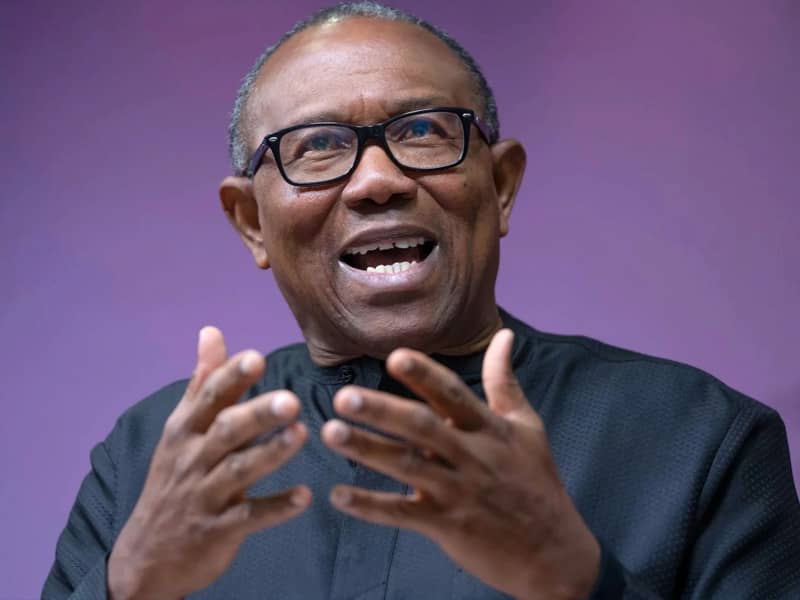
Leaders of Hausa and northern communities in Anambra State have dismissed allegations that former Anambra State Governor and presidential candidate of the Nigeria Democratic Congress, Peter Obi, discriminated against northerners or ordered the demolition of a mosque during his tenure.
The community leaders, who spoke to journalists in Awka and Onitsha, described the allegations as politically motivated and insisted that their relationship with Obi remained cordial throughout his tenure as governor and beyond.
They specifically rejected claims that Obi compelled northerners living in the state to obtain identity cards as a condition for remaining in Anambra.
The leaders also dismissed reports that the former governor was responsible for the demolition of a mosque, explaining that the incident occurred before Obi assumed office in 2006.
Mahmud Ibrahim, Secretary of the Hausa Community in Onitsha and Secretary of the Northern Community in Anambra and Delta States, said the allegations did not reflect the experience of northern residents in the state.
According to him, the mosque being referred to was demolished during a reprisal attack following the Sharia crisis in February 2006, before Obi became governor in March of the same year.
He said Obi subsequently visited members of the northern community who had taken refuge at an Army Barracks following the crisis and later accompanied them back to the mosque.
Ibrahim further alleged that Obi donated money towards the rebuilding of the mosque, questioning why the former governor was now being accused of destroying the same facility.
“Our relationship with Mr Peter Obi during his tenure as governor and even now is cordial. We want to say that the rumours that he demolished our mosque while he was governor is untrue,” he said.
He also explained that the identity cards issued to members of the northern community were not imposed by the former governor.
According to him, the northern community itself decided to issue identification cards to its members for administrative and identification purposes.
He distinguished this from the Anambra State Identification Card, saying the latter was issued to residents generally, including government officials and other residents of the state.
The traditional ruler of the Hausa community in Awka, Alhaji Garba Haruna, also dismissed allegations of discrimination under Obi’s administration.
Haruna said he did not experience or witness any policy that created a distinction between indigenes and non-indigenes during Obi’s tenure.
He said members of his family benefited from the former governor’s free education programme, while he personally benefited from Hajj sponsorship.
“My children benefited from the free education and I want to tell you that I personally benefited from his sponsorship for Hajj,” Haruna said.
The traditional ruler further said Obi maintained a cordial relationship with the northern community even after leaving office.
He noted that the former governor still attended functions organised by the community and sent gifts during Islamic celebrations.
Also speaking, Chairman of the Northern Community in Anambra State, Alhaji Gidado Sidikki, said he personally benefited from an agricultural loan programme introduced during Obi’s administration.
Sidikki claimed that he received N10 million under the programme, which he estimated would be worth about N100 million in today’s economic value.
He said the programme was not restricted to a particular ethnic group and that northerners were among those who benefited.
According to him, Obi’s administration also settled the loans on behalf of beneficiaries before the former governor left office.
“My son was also a beneficiary of Peter Obi’s free education and the boy is in China doing his PhD today,” Sidikki said.
He added that he had lived in Anambra for about four decades, raised his children in the state and had five graduates, arguing that his experience did not support claims that the state was hostile to northerners.
The community leaders consequently described the allegations against Obi as politically driven, arguing that they were being revived to damage his reputation ahead of the 2027 general election.
They said their personal experiences and interactions with Obi contradicted claims that he was hostile to northerners or Muslims during his time as governor.
The leaders also expressed support for Obi’s political aspirations, pledging to mobilise northerners resident in Anambra State to support him when the 2027 campaigns commence.
They expressed optimism that Obi’s chances in the 2027 presidential election would improve, particularly with Rabiu Kwankwaso reportedly aligning with him politically.
The development comes amid growing political realignments ahead of the 2027 general election, with politicians and support groups increasingly seeking to consolidate support across ethnic and regional lines.
Leave a Reply