
By Gloria Drealomalicha
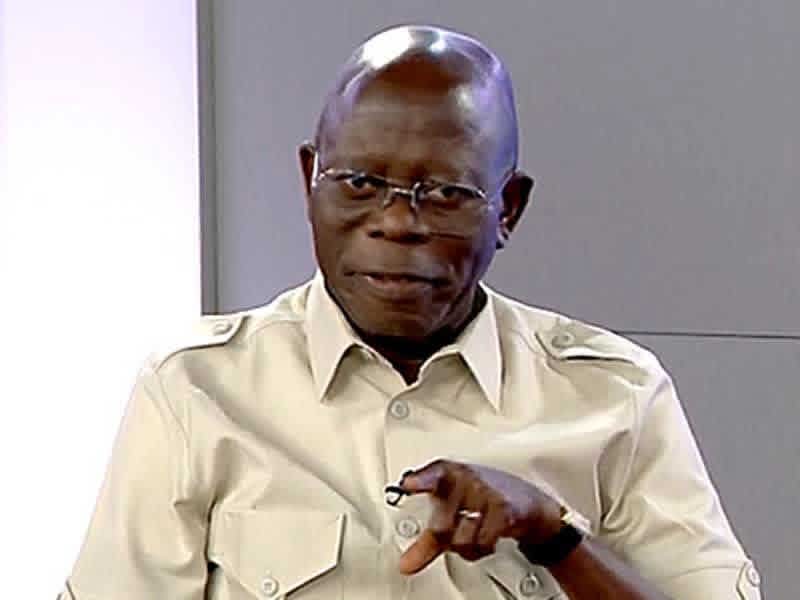
Senator Adams Oshiomhole has alleged that Senate President Godswill Akpabio had a personal interest in matters relating to the Nigerian National Petroleum Company Limited (NNPCL), claiming that Akpabio’s daughter benefited from a senior appointment allegedly facilitated by former NNPCL Group Chief Executive Officer, Mele Kyari.
The former Edo State governor made the allegations during an appearance on the Mic On Podcast hosted by journalist Seun Okinbaloye, where he defended his controversial comments on the Senate’s handling of investigations involving the state-owned oil company and the issuance of a bench warrant against Kyari.
Oshiomhole insisted that his earlier remarks reflected his personal views rather than an official position of the Senate. However, he maintained that the oil sector had long been plagued by favouritism and family influence.
According to him, information available to him suggested that Akpabio’s daughter was appointed to a desirable position within the NNPCL outside the normal recruitment process.
While stopping short of providing evidence to support the claim, Oshiomhole argued that such allegations point to a broader culture of patronage within the organisation.
He further alleged that successive leaders of the national oil company had transformed it into what he described as a “family business”, where relatives and associates were routinely given employment opportunities.
According to the senator, if a detailed review of the company’s payroll were conducted, it would reveal extensive recruitment of children, relatives and associates of former and serving officials.
Despite his criticism, Oshiomhole stressed that he had no objection to the employment of children of public officials, provided they were qualified and recruited through transparent and competitive processes.
“The issue is not who your parents are,” he said. “The issue is whether proper procedures were followed and whether the individual was qualified for the position.”
The senator also addressed reports suggesting that the Senate had distanced itself from the bench warrant issued against Kyari. He argued that the legislature acted within its constitutional authority and that Senate committees possess powers delegated by the chamber to carry out investigations and compel attendance where necessary.
According to Oshiomhole, the Senate cannot disregard powers expressly granted under the 1999 Constitution, as amended, simply because they become politically contentious.
He maintained that issuing a warrant against the former NNPCL chief was justified given the scale of the allegations under investigation.
The controversy stems from a recent session of the Senate Committee on Public Accounts, during which Oshiomhole launched a blistering attack on the reputation of the national oil company.
During the hearing, he accused the NNPCL of being associated with corruption and backed a motion seeking the arrest of Kyari over allegations that trillions of naira could not be properly accounted for during his tenure.
The session became increasingly tense as Oshiomhole rejected suggestions that Nigerians sought employment in the company because of its prestige, arguing instead that many viewed the organisation as a gateway to illicit enrichment.
The senator also lamented what he described as a culture of impunity among some public officials, saying certain individuals behaved as though they were above the law.
Drawing a distinction between pursuing minor offenders and holding powerful figures accountable, Oshiomhole argued that Nigeria’s anti-corruption efforts would only gain credibility when influential individuals faced the same scrutiny as ordinary citizens.
He urged the committee to act decisively in its investigation of Kyari, insisting that allegations involving trillions of naira in public funds warranted urgent and uncompromising action.
According to Oshiomhole, the Senate has both the constitutional authority and moral responsibility to ensure that those entrusted with managing national resources are held accountable for their stewardship.



Leave a Reply