

By Ameh Sunday Enyo-ojo
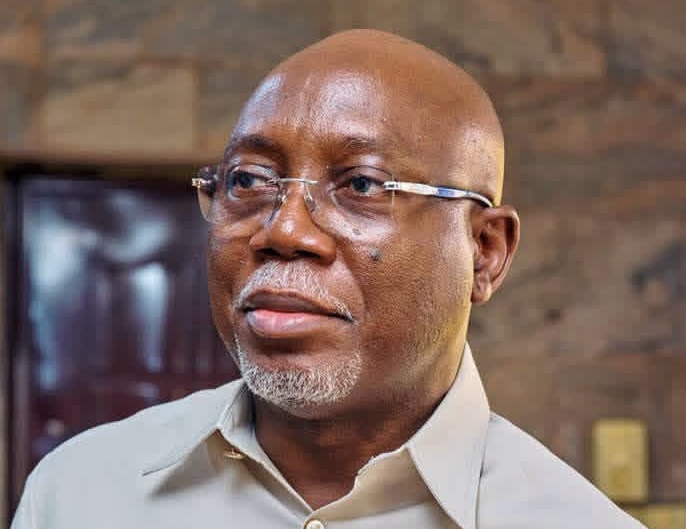
Ondo State Governor, Lucky Orimisan Aiyedatiwa, has declared that the late former governor of the state, Arakunrin Oluwarotimi Akeredolu’s advocacy for State Police will eventually become a reality.
Aiyedatiwa made the declaration on Thursday at a colloquium in Ibadan held to commemorate Akeredolu’s 70th posthumous birthday, with the theme, “Fundamentals and Governance of State Policing: Towards a New Architecture for National Security in Nigeria.”
The governor said Akeredolu’s advocacy for a decentralised security architecture had moved beyond regional agitation and become part of Nigeria’s national policy and constitutional conversation.
His position comes as the Federal Government and National Assembly advance constitutional reforms to establish State Police across the country. The Presidency said in June that consultations on the framework had gained significant traction, while both chambers of the National Assembly subsequently advanced the proposed constitutional amendment.
Aiyedatiwa described Akeredolu, whom he fondly called “My Oga,” as a selfless public servant whose contributions to law, governance and security would continue to influence the country.
He recalled Akeredolu’s service as Attorney-General of Ondo State, President of the Nigerian Bar Association, governor of Ondo State, Chairman of the South-West Governors’ Forum and Chairman of the Southern Nigeria Governors’ Forum.
According to Aiyedatiwa, Akeredolu’s advocacy for true federalism was not merely rhetorical, particularly in the area of security.
He recalled that Akeredolu and other South-West governors responded to worsening insecurity by establishing the Western Nigeria Security Network, codenamed Amotekun, arguing that communities closest to security threats should have a meaningful role in protecting themselves.
Aiyedatiwa said the recent involvement of Ondo Amotekun alongside other security agencies in operations against suspected terrorists in the state’s forests further demonstrated the importance of local intelligence and community participation.
He said the experience strengthened the argument for a policing system capable of responding to security threats based on local realities.
The governor said President Bola Tinubu had also demonstrated commitment to moving the State Police proposal from political debate to institutional reform.
He, however, stressed that the establishment of State Police must be accompanied by credible recruitment, proper vetting, professionalism, accountability and other safeguards necessary to earn public confidence.
Aiyedatiwa said the most fitting way to honour Akeredolu would not be through monuments and ceremonies alone but by building a Nigeria that is safer, more federal, more just and more responsive to citizens.
He also pledged to continue advancing Akeredolu’s legacy in Ondo State, including the completion of projects initiated by the late governor.
In his keynote address, Ogun State Governor Dapo Abiodun said Nigeria needed an additional 554,353 police personnel to meet the United Nations-recommended police-to-citizen ratio.
Abiodun, who chairs the Nigeria Governors’ Forum Committee on State Police, called for comprehensive reforms to ensure that the proposed system is effective and sustainable.
He said Akeredolu’s vision extended beyond security hardware, arguing that the late governor understood the connection between security and economic development.
“A secure region is a prosperous region,” Abiodun said, while highlighting the role of Amotekun in community intelligence and rapid response.
He said the proposed State Police system reflected growing national support for decentralised policing, adding that the debate had increasingly shifted towards determining how the system should be structured and governed.
The proposed constitutional amendment has already advanced through the National Assembly, with lawmakers considering safeguards on recruitment, training, accountability and protection against political abuse.
Former Ekiti State Governor Kayode Fayemi described Akeredolu as a courageous defender of the vulnerable who consistently spoke truth to power.
Fayemi recalled Akeredolu’s role in the Southern Governors’ Forum and his advocacy for the rotation of the presidency to the South, describing his politics as centred on the common good.
Lagos State Governor Babajide Sanwo-Olu described the late Ondo governor as a steadfast voice for the interests, dignity and security of the South-West.
Represented by the Lagos State Secretary to the State Government, Salu Hundeyin, Sanwo-Olu said Akeredolu viewed leadership as a responsibility rather than a privilege.
Ekiti State Governor Biodun Oyebanji also described Akeredolu as a courageous leader whose determination to confront insecurity contributed significantly to the establishment of Amotekun.
Represented by the Ekiti SSG, Prof. Habibat Omolara Adubiaro, Oyebanji urged South-West governors to deepen regional integration and called on the South-West Development Commission to pursue projects capable of transforming the region.
The Director-General of the DAWN Commission, Dr Seye Oyeleye, said Nigeria could no longer rely solely on a centralised police structure controlled from Abuja, arguing that Amotekun had demonstrated the potential of state and regional policing.
Akeredolu’s first son, Oluwarotimi O. Akeredolu Jr, described his father as a courageous advocate of justice, human rights, political freedom and accountable government.
The colloquium brought together political leaders, governors, lawmakers, legal practitioners, security stakeholders and members of Akeredolu’s family to reflect on his contributions to governance and his campaign for a new security architecture in Nigeria.
The event was part of activities marking the late governor’s 70th posthumous birthday and efforts to sustain his advocacy for decentralised policing.







Leave a Reply