
By Opeyemi Adelakun
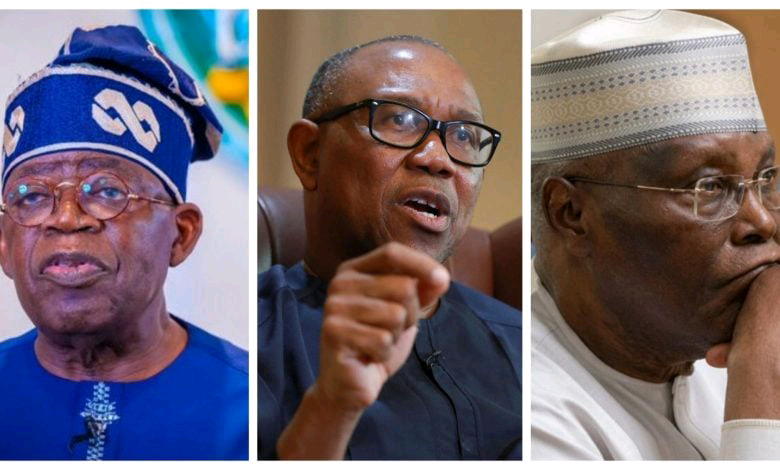
The opposition’s renewed attempt to present a single presidential candidate against President Bola Tinubu in the 2027 election is facing fresh hurdles amid disagreements among major political actors.
The latest initiative, championed by the G100 coalition, is seeking to bring opposition parties together and facilitate an arrangement that could produce a common candidate capable of challenging the ruling All Progressives Congress.
However, sources familiar with the negotiations said the reported support of former President Olusegun Obasanjo for Peter Obi could further complicate efforts to reconcile the presidential ambitions of Obi and former Vice-President Atiku Abubakar.
The development followed a meeting of six political parties in Abuja on Monday, August 31, to reaffirm their commitment to the G100 initiative.
Neither Atiku nor Obi attended the meeting, while their running mates were also absent, raising questions about the willingness of the leading opposition contenders to abandon their individual ambitions for a consensus arrangement.
One of the sources said the challenge facing the initiative was deeper than the absence of the two politicians from the Abuja meeting.
According to the source, Obi’s emergence as the presidential candidate of the Nigeria Democratic Congress could make it difficult for him to withdraw from the race in favour of another contender.
The source also recalled earlier efforts to establish the African Democratic Congress as a platform capable of uniting opposition politicians ahead of the 2027 election.
Although Atiku was reportedly supportive of the arrangement, the subsequent emergence of separate political platforms and presidential ambitions altered the political calculations.
Another source claimed that engagements between opposition politicians and foreign diplomats before the establishment of the ADC had reinforced the view that a united opposition would have a stronger chance of defeating Tinubu.
The source said Atiku was initially considered a leading candidate for such an arrangement, but the emergence of separate platforms subsequently weakened the prospect of a unified ticket.
The situation, according to the sources, has been further complicated by Obasanjo’s reported influence on Obi’s political decisions.
One source claimed that the former president played a role in Obi’s emergence as the NDC presidential candidate and in the choice of Senator Rabiu Musa Kwankwaso as his running mate.
The source further alleged that Obasanjo opposed a proposed arrangement that would have seen Obi accept the vice-presidential ticket under Atiku on the ADC platform.
However, these claims could not be independently verified from the information available.
Meanwhile, the ADC has played down suggestions that the G100 discussions are primarily focused on forcing existing presidential candidates to step aside.
The party’s National Publicity Secretary, Bolaji Abdullahi, said the talks covered broader issues, including possible cooperation among opposition parties.
“To the best of our knowledge, there were so many things on the agenda beyond producing a single presidential candidate,” Abdullahi said.
He added that a single presidential candidate could emerge from the discussions, but stressed that it was not the central objective of the meeting.
Despite the explanation, sources said both the ADC and NDC were participating in the process partly to avoid being blamed for any failure to achieve opposition unity ahead of the election.
The ruling APC, however, has dismissed the possibility of the opposition producing a consensus presidential candidate at this stage.
APC National Secretary, Senator Ajibola Basiru, described the initiative as unrealistic, arguing that the various parties had already completed their primary processes and produced candidates.
“They cannot get a single candidate. Their case is like a maize inside a bottle that hens cannot eat,” Basiru said.
He accused opposition politicians of pursuing individual ambitions rather than a common national agenda, arguing that their failure to unite before the primaries had made a consensus arrangement increasingly difficult.
APC National Publicity Secretary, Felix Morka, also questioned the seriousness of the coalition effort, citing the absence of the major presidential contenders from the Abuja meeting.
According to Morka, the absence of the principal actors suggested that the initiative was already facing difficulties.
He further predicted another electoral defeat for the opposition in 2027, insisting that the APC remained confident of retaining power.



Leave a Reply