
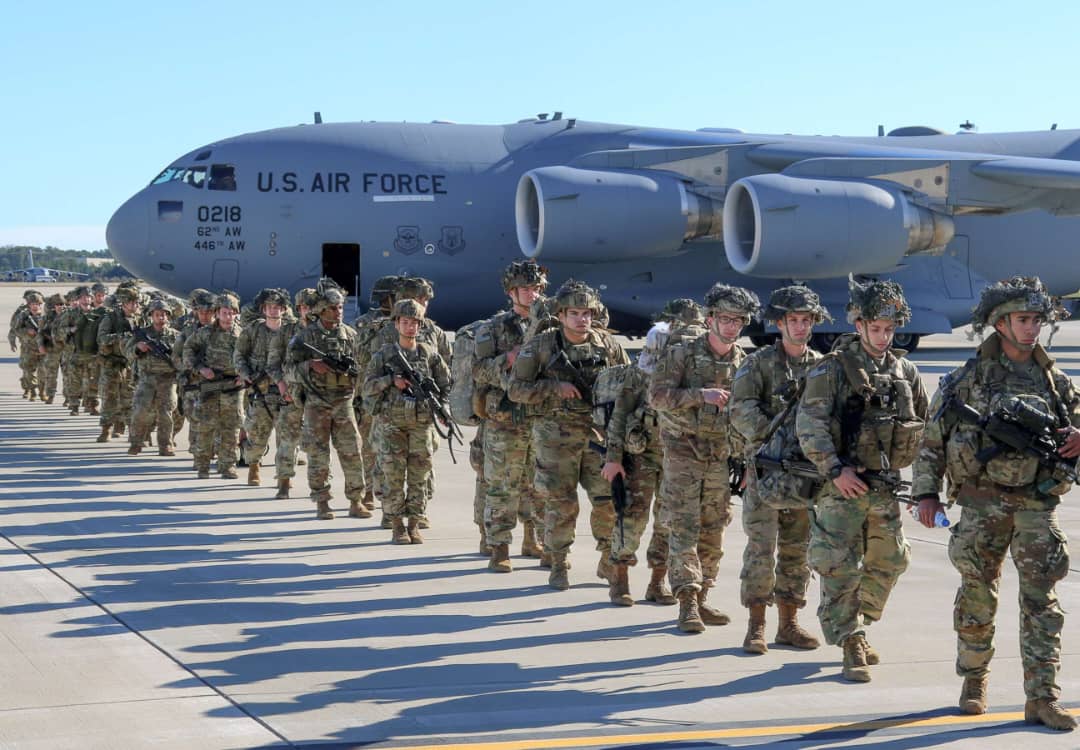

The United States has officially declared a tactical victory against Islamist militants in Nigeria, a move that signals the imminent withdrawal of its 200-strong contingent from the region. While the Pentagon touts this as a successful conclusion to a targeted mission, an objective assessment suggests that the reality on the ground is far more complex. The U.S. presence served as a potent, albeit temporary, intervention; however, it has left behind a security landscape that remains fundamentally unchanged for the average Nigerian.
The deployment was intended to be a model for a new “light footprint” strategy in Africa, a swift, intelligence-led operation designed to decapitate terrorist leadership without the entanglements of an open-ended conflict. In this limited scope, the mission achieved undeniable results. The May 2026 elimination of Abu Bilal al-Minuki, the global second-in-command for ISIS, alongside a series of precision airstrikes, successfully dismantled the immediate command structure of the insurgency.
Yet, there is a stark disconnect between these high-profile tactical successes and the enduring strategic reality. The insurgency, represented by groups such as ISWAP and Boko Haram, has proven remarkably resilient and decentralized. The recent, brutal ambush in Borno State which claimed the lives of at least nine Nigerian soldiers serves as a grim reminder that the removal of top-tier leadership has not diminished the insurgents’ lethal operational capacity.
Furthermore, the militants have adapted their tactics in response to military pressure. While they have largely abandoned attempts at large-scale territorial control, they have pivoted toward low-intensity asymmetric warfare. This shift has resulted in a surge in the use of Improvised Explosive Devices (IEDs) and landmines on rural roads, effectively strangling local economies by preventing farmers from accessing their land. Simultaneously, the scourge of banditry and mass kidnapping for ransom continues to plague the north, unabated and largely unaffected by the high-tech precision of the departing foreign forces.
The “light footprint” model, while effective as a temporary “band-aid” to suppress a spike in Islamic State activity, has failed to address the root causes of Nigeria’s insecurity. Temporary foreign training and kinetic operations cannot rectify the systemic issues within the overstretched Nigerian military, nor can they mitigate the deep-seated poverty, corruption, and climate-driven migration that serve as the primary engines of terrorist recruitment.
As the U.S. troops prepare to depart, and with Niger’s concurrent withdrawal from regional defense pacts such as the Multinational Joint Task Force, Nigeria finds itself in a precarious position. The country remains locked in a multi-front domestic security crisis, forced to rely once again on its own overburdened resources. The U.S. intervention may have provided a brief respite, but it has not cured the underlying illness. The departure of these forces marks not the end of the conflict, but rather a return to a difficult, long-term struggle that Nigeria must now confront largely on its own.






Leave a Reply