

By Gloria Drealomalicha
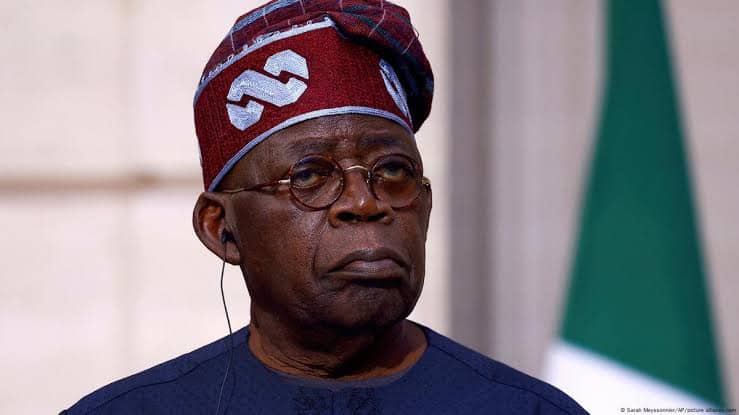
President Bola Ahmed Tinubu is back in Nigeria.
After spending weeks in Europe on what the Presidency described as a “working vacation”, the President returned to Lagos on Tuesday, September 29.
But as the presidential aircraft touched down, one question kept ringing in the minds of some Nigerians:
Why exactly are we celebrating?
Why should the return of a president after weeks abroad become a moment of excitement in a country where millions of citizens are struggling to survive?
This is Nigeria.
A country battling insecurity.
A country battling hunger.
A country battling rising living costs.
A country where workers are still demanding better wages because their salaries can no longer carry the weight of everyday life.
And yet, the President spent weeks in Europe.
Tinubu left Nigeria on August 30 for London, with the Presidency describing the trip as a three-week working vacation as part of his annual leave. He later travelled to Paris, France. His stay was subsequently extended by a few days.
Even more interesting was the drama surrounding his return.
The Presidency had initially indicated that Tinubu would return at the weekend, but a last-minute change to his itinerary pushed the return to Tuesday, September 29. The reason for the change was not publicly disclosed.
Now, as Nigerians, we can only wonder:
What exactly happened?
Perhaps, in the language of Nigerian humour, the President needed a little more time abroad to charge his phone completely before returning to a country where electricity is still a national headache.
Of course, that is sarcasm.
But isn’t it ironic?
The President needed extra time abroad, while millions of Nigerians at home are still waiting for enough electricity to charge their phones, power their businesses, preserve their food and simply live normal lives.
Nigeria remains a country where electricity supply is still a major challenge for households and businesses, despite the country also supplying electricity to neighbouring countries.
Imagine that.
A Nigerian citizen can sit in darkness, unable to charge a phone or power a small business, while electricity generated in Nigeria is supplied across the border.
So perhaps the President’s extended stay abroad gives Nigerians another reason to ask:
Was he waiting for the Nigerian electricity supply to stabilise before coming home?
Or maybe he simply needed to make sure his own battery was fully charged before returning to the Nigeria whose power sector is still struggling.
It is a joke, yes.
But behind the joke is pain.
Because Nigerians have become experts at turning suffering into humour.
We laugh because crying every day is exhausting.
We joke about “NEPA” because complaining about darkness has become part of everyday life.
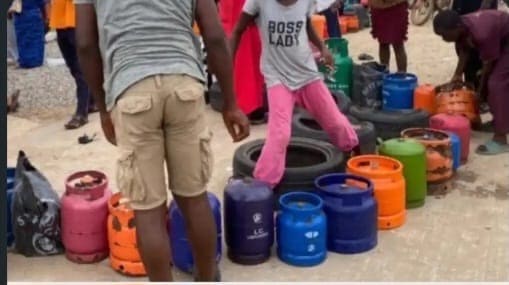
We laugh about fuel because we have become accustomed to queues and price increases.
We laugh about food prices because, sometimes, the alternative is to admit just how frightening things have become.
And that is why Tinubu’s return should not simply be greeted with fanfare.
The President said after his return that he had “enjoyed” himself and was ready to work.
Fair enough.
But while the President enjoyed his time abroad, what happened to the Nigerians who could not afford even a single day away from their struggles?
What happened to the worker still demanding a higher minimum wage?
What happened to the unemployed graduate?
What happened to the family struggling to feed its children?
What happened to the millions of Nigerian children who remain outside school?
According to UNICEF, Nigeria has one of the world’s largest populations of out-of-school children, with millions of children still deprived of access to education.
Millions of children.
That figure alone should make every Nigerian uncomfortable.
While children are sitting at home without access to proper education, our political leaders continue to move in and out of foreign countries as though Nigeria were merely another stop on their itinerary.
And this is not just about Tinubu.
His deputy, Vice-President Kashim Shettima, was also outside the country during part of the President’s absence, travelling to New York to represent Nigeria at the 81st United Nations General Assembly. The trip was officially for the UN General Assembly and not described as a personal holiday.
To be fair, that distinction matters.
But the timing still raises questions.
The President was abroad.
Then the Vice-President was abroad.
At one point, both of Nigeria’s two highest elected officials were outside the country.
Who exactly was minding the shop?
The government can explain that official duties continued.
It can explain that officials remained in Abuja.
It can explain that the President continued to communicate with those at home.
But Nigerians are entitled to ask whether this is really what leadership should look like at a time when the country is facing multiple crises.
Because Nigeria does not have a shortage of meetings.
Nigeria does not have a shortage of speeches.
Nigeria does not have a shortage of delegations.
What Nigerians are asking for is results.
Results on insecurity.
Results on electricity.
Results on food prices.
Results on jobs.
Results on education.
Results on wages.
Results on the basic things that make life bearable.
Meanwhile, workers are still calling for substantial increases in wages because N70,000 is increasingly inadequate for many households facing today’s cost of living.
So when Nigerians watch their leaders travelling abroad, the question inevitably comes:
Whose money is paying for all these trips?
How much does the Nigerian taxpayer spend on presidential and official foreign travel?
How much goes into flights, accommodation, security, protocol and logistics?
Which trips are privately funded and which are paid for from public resources?
These are legitimate accountability questions.
They should not automatically be dismissed as hatred for the government.
Because public office comes with public scrutiny.
And perhaps Nigerians have simply become too accustomed to watching politicians travel abroad that we no longer ask why.
President after president, the pattern has continued.
Foreign travel has become almost routine for Nigeria’s political elite.
One leader leaves.
Another travels.
A delegation follows.
Another official represents someone.
And somewhere in between all these journeys, the Nigerian people remain exactly where they have always been — at home, facing the problems their leaders were elected to solve.
And then there is another part of this story that makes the whole situation even more uncomfortable.
In June, First Lady Oluremi Tinubu encouraged Nigerians to consider small-scale businesses such as selling akara, roasted corn and making kulikuli, describing them as ventures that could be started with relatively little capital. Her comments came while discussing the Renewed Hope Initiative’s empowerment efforts, including grants for vulnerable Nigerians.
There is absolutely nothing wrong with selling akara.
There is dignity in honest work.
There is dignity in the woman who wakes before dawn to soak beans, grind them, fry akara and use the little profit to feed her children.
There is dignity in the man roasting corn by the roadside.
There is dignity in the woman packaging kulikuli and trying to build a small business from nothing.
But Nigerians are also allowed to ask a painful question:
Is this really the level of economic ambition we should be selling to a country of millions of unemployed graduates and young people desperate for decent jobs?
And this is where the contrast becomes uncomfortable.
The First Lady was encouraging Nigerians to find small ways to survive the economic hardship.
Meanwhile, her husband, the President of Nigeria, was spending weeks abroad on what the Presidency called a “working vacation”.
The ordinary Nigerian was being told to fry akara.
The President was in Europe.
The ordinary Nigerian was being told that a small business could be started with little capital.
The President was moving between foreign destinations.
The ordinary Nigerian was being told to find a way to survive.
The President had the privilege of taking a break from the country.
That contrast is bound to sting.
And no, this is not an attack on akara sellers.
It is an attack on the absurdity of a situation in which Nigerians facing a national economic crisis are increasingly encouraged to survive through petty trading, while the country’s political leadership enjoys privileges that ordinary citizens can only dream about.
Perhaps the question Nigerians should be asking is not whether selling akara is a bad thing.
It is:
Why should surviving Nigeria be the responsibility of the poor alone?
Why must the ordinary Nigerian constantly be told to adjust, manage, endure, hustle and improvise?
Why can’t the same urgency be applied to creating decent jobs, fixing electricity, improving public education, tackling insecurity and making the economy productive enough for Nigerians to earn sustainable incomes?
Because Nigerians do not want to spend the rest of their lives merely surviving.
They want to live.
They want decent jobs.
They want functioning schools.
They want reliable electricity.
They want affordable food.
They want security.
They want a country where a young graduate does not have to abandon professional ambitions and start wondering whether selling akara by the roadside is the only economic future available to them.
And this is why the President’s weeks-long absence has generated such anger.
The issue is not simply that Bola Tinubu travelled.
It is the feeling of a widening gap between the privileges enjoyed by those at the top and the sacrifices demanded from those at the bottom.
While Nigerians were being encouraged to find small businesses to survive, their President was thousands of kilometres away.
So, when the President finally returned, Nigerians had every right to ask:
What exactly are we celebrating?
His return?
Or the hope that the man who left Nigeria for weeks has finally returned to face the Nigeria that never stopped bleeding?
The irony is almost unbearable.
Our leaders can escape Nigeria temporarily. Nigerians cannot.
The President can travel to London.
He can move to Paris.
The Vice-President can fly to New York.
Politicians can attend international conferences.
But the ordinary Nigerian remains here.
The market woman remains here.
The teacher remains here.
The farmer remains here.
The unemployed graduate remains here.
The struggling civil servant remains here.
The child outside school remains here.
The Nigerian battling darkness remains here.
The Nigerian battling hunger remains here.
And the Nigerian battling insecurity remains here.
They cannot take a four-week “working vacation” from poverty.
Poverty does not grant annual leave.
Hunger does not respect presidential itineraries.
Unemployment does not wait for politicians to return from Europe.
And electricity does not suddenly become stable because our leaders have come home.
So yes, President Tinubu is back.
Welcome home, Mr President.
But Nigerians should not simply ask:
“Welcome back.”
They should ask:
“Welcome back to what?”
Welcome back to the insecurity you left behind.
Welcome back to the hunger you left behind.
Welcome back to the workers demanding better wages.
Welcome back to the millions of children outside school.
Welcome back to the electricity crisis.
Welcome back to the fuel crisis.
Welcome back to the Nigerians who never had the luxury of leaving.
Because while the President was abroad, Nigeria did not go on holiday.
Nigeria kept bleeding.
And now that the President is back, Nigerians are waiting to see whether the urgency of their suffering will finally match the urgency with which their leaders travel.
The aircraft has landed.
The cameras have captured the arrival.
The handshakes have been exchanged.
The President is home.
Now, let the work begin.
Leave a Reply