
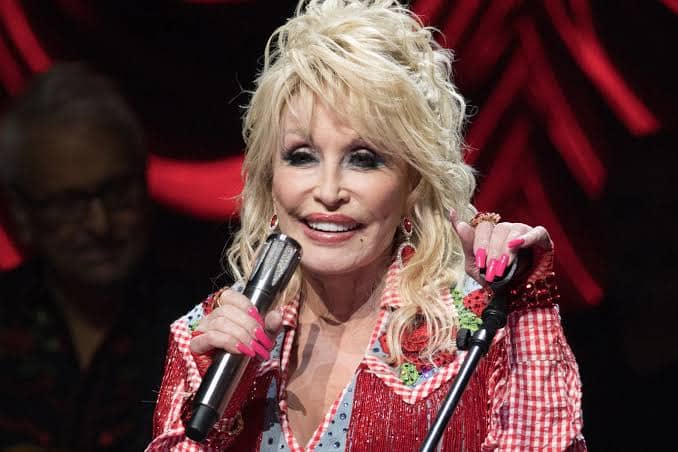
By Paul Joseph
Dolly Parton’s journey from a poor Appalachian childhood to international superstardom remains one of the most remarkable stories in modern entertainment. From humble beginnings in rural Tennessee, she rose to become a country music legend, Hollywood actress, songwriter, entrepreneur and philanthropist whose influence extended far beyond the stage.
Parton died on Tuesday, August 25, 2026, at the age of 80 in Nashville, Tennessee, bringing an end to a career that spanned nearly seven decades. Her death marked the closing of an era for an artist whose music, personality and charitable work made her one of the most enduring figures in American culture.
But Parton’s story was never simply about fame. It was a story of escaping poverty through talent and determination, transforming songwriting into a global career and using success to create opportunities for others.
Born on January 19, 1946, in Sevier County, Tennessee, Parton was one of 12 children raised in a modest household in the Great Smoky Mountains. The hardship and simplicity of her upbringing later became a recurring theme in her songwriting.
Music became an important part of her life from an early age. As a child, she performed on local radio and television programmes and was already pursuing professional opportunities before her teenage years. At 13, she made her first professional recording, while a performance at the Grand Ole Opry in 1959 gave the young singer an early taste of the Nashville spotlight.
After graduating from high school in 1964, Parton moved to Nashville to pursue music full-time.
Her breakthrough initially came not as a superstar performer but as a songwriter. She began writing songs for other artists while building her own recording career.
That ability to tell deeply personal stories through simple but powerful lyrics would become one of the defining features of her career.
Parton’s major breakthrough came in 1967 when she joined The Porter Wagoner Show, replacing singer Norma Jean. The nationally syndicated programme gave her exposure to a much wider audience and helped establish her as one of country music’s rising stars.
She eventually left the show to pursue her own career, a decision that proved pivotal.
Parton went on to build a remarkable catalogue of songs, including “Jolene,” “Coat of Many Colors,” “9 to 5” and “I Will Always Love You.”
“I Will Always Love You” became one of the most recognisable songs in popular music after Whitney Houston recorded a version for The Bodyguard soundtrack, exposing Parton’s songwriting to another generation of listeners worldwide.
Her success also extended beyond traditional country music. Songs such as “Here You Come Again” helped establish her crossover appeal, while her performances and songwriting demonstrated that she could move comfortably between country, pop and other musical styles.
Parton did not limit herself to music.
She became a successful actress, making a major impact with the 1980 film 9 to 5, in which she starred alongside Jane Fonda and Lily Tomlin. She also wrote and performed the film’s hugely successful title song.
Her film career continued with appearances in productions including The Best Little Whorehouse in Texas, Steel Magnolias and other major projects.
Through television, film and music, Parton developed a distinctive public personality: glamorous, humorous, self-aware and unmistakably connected to her Appalachian roots.
That image became part of her brand without overshadowing her songwriting talent.
Parton also demonstrated an extraordinary understanding of business.
In 1986, she became involved in the development of Dollywood, a theme park in Tennessee that grew into one of the state’s major tourist attractions.
Her business interests, music catalogue, entertainment projects and philanthropic activities eventually turned her into far more than a recording artist.
She had become a brand and institution in her own right.
Perhaps the most enduring part of Parton’s legacy may ultimately be her philanthropy.
In 1995, she launched Dolly Parton’s Imagination Library, a literacy initiative inspired in part by her father, who could not read or write.
The programme provides free books to children from birth until they begin school in participating communities. It has expanded beyond the United States to countries including Canada, the United Kingdom, Australia and Ireland.
The initiative became one of the clearest expressions of Parton’s belief that her success should benefit people beyond the entertainment industry.
Her philanthropic record also extended to disaster relief, education and medical research. She famously donated $1 million to Vanderbilt University Medical Center to support COVID-19 vaccine research, funding that was later acknowledged as part of the research that helped lead to the Moderna vaccine.
Parton’s achievements earned her an extraordinary collection of honours.
She was inducted into the Country Music Hall of Fame in 1999 and the Rock & Roll Hall of Fame in 2022. She was also inducted into the Nashville Songwriters Hall of Fame and the Songwriters Hall of Fame.
The Country Music Hall of Fame records that she won 10 Grammy Awards, nine Country Music Association Awards and 13 Academy of Country Music Awards, among numerous other honours.
Her recognition eventually extended beyond entertainment, with major national honours celebrating her contribution to American culture and humanitarian causes.
Parton’s rise was particularly significant because she succeeded in an industry where women were often expected to fit narrow roles.
She was frequently underestimated because of her flamboyant appearance, but behind the wigs, rhinestones and carefully crafted public image was a highly disciplined songwriter, performer and businesswoman.
She wrote her own songs, controlled important aspects of her creative work and built businesses that outlived individual phases of her music career.
Her journey also became an inspiration to generations of female performers and entrepreneurs.
Parton’s death on August 25, 2026, brought an extraordinary chapter in American entertainment to a close.
Her passing prompted tributes from fans, fellow musicians, public figures and institutions across the United States and beyond. Fans gathered at the Country Music Hall of Fame in Nashville to leave messages and remember the singer whose career had become inseparable from the history of country music.
President Donald Trump also ordered American flags to be flown at half-staff for a week in her honour, an unusual federal tribute to a private citizen that reflected the scale of Parton’s cultural impact.
Yet the most fitting measure of Parton’s legacy may not be the number of awards she won or records she sold.
It may be the number of lives touched by her songs, the children who received their first books through her literacy programme, the communities supported by her charitable work and the generations of artists influenced by her career.
Dolly Parton rose from a modest home in rural Tennessee to become one of the most recognisable women in the world.
She left behind music that crossed generations, businesses that became institutions and a philanthropic legacy designed to continue helping children long after her voice fell silent.
For a woman who once sang about a “coat of many colors” made from scraps, Parton ultimately created a life of extraordinary colour — transforming poverty into purpose, talent into influence and fame into service.
Her story is no longer simply that of a country music star.
It is the story of an American original whose legacy reached far beyond music and the stage.




Leave a Reply