
By Paul Joseph
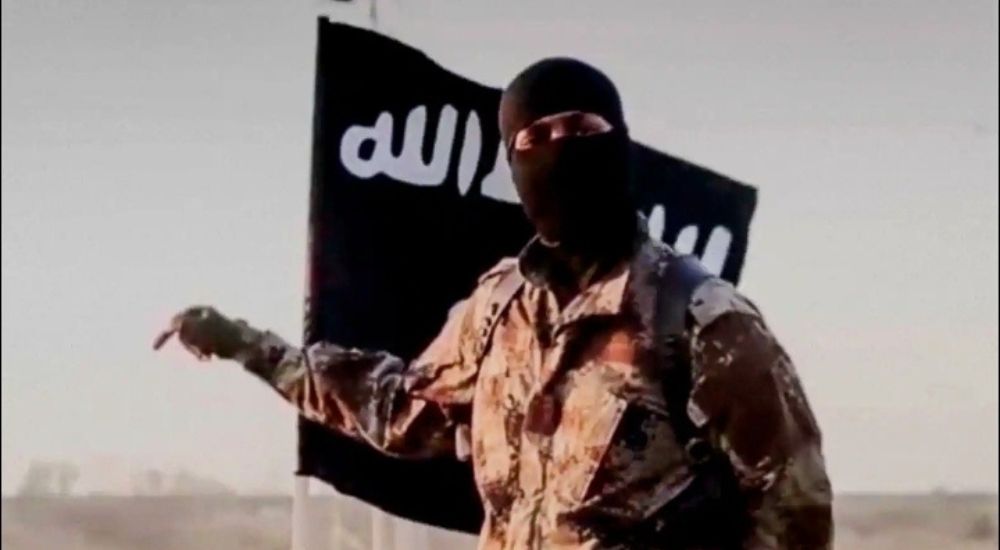
The United States government has imposed sanctions on a Nigerian businessman and three Nigeria-based currency exchange companies over their alleged involvement in financing the Islamic State of Iraq and Syria (ISIS).
In a statement issued by the U.S. Department of the Treasury’s Office of Foreign Assets Control (OFAC), the Nigerian, Muhammad Mukhtar Adamu, was named among three individuals and six entities across Europe, the Middle East and West Africa designated as Specially Designated Global Terrorists.
According to the Treasury Department, Adamu allegedly served as a financial facilitator for ISIS in West Africa by coordinating money transfers on behalf of the terrorist group.
The sanctions also target three Nigerian bureau de change operators said to be owned or controlled by Adamu. They are Nine to Nine Exchange Bureau de Change Limited, Manhattan Bureau de Change Limited and Generation Currency Bureau de Change Limited.
Authorities identified Generation Currency Bureau de Change Limited as a Lagos-based company incorporated in January 2019, while Manhattan Bureau de Change operates from Kano State.
The U.S. action also extended to France-based Miloud Abderrahmane, accused of providing explosives-related guidance to ISIS supporters, and Syria-based Abdelhakim Boukich, who allegedly used cryptocurrency transactions through Bitcoin Xchange to move funds for ISIS-linked associates in several countries, including the United States.
U.S. Treasury Secretary Scott Bessent said the terrorist group continues to adapt its financing methods despite sustained international counterterrorism efforts, stressing that Washington would continue deploying every available measure to weaken ISIS’s operational capabilities.
The Treasury Department noted that increasing global pressure on terrorist organisations has forced ISIS to rely on more fragmented and complex financial networks, referencing findings contained in its 2026 National Terrorist Financing Risk Assessment and an earlier advisory issued by the Financial Crimes Enforcement Network (FinCEN).
The sanctions come weeks after a joint U.S.-Nigeria counterterrorism operation on May 16, 2026, which reportedly led to the killing of Abu Bilal al-Minuki, described by U.S. authorities as ISIS’s second-in-command and head of its General Directorate of Provinces, responsible for coordinating funding and operational support to regional branches.
Under the sanctions, all assets and property belonging to the designated individuals and entities that fall within U.S. jurisdiction are frozen. U.S. citizens and businesses are also prohibited from engaging in transactions with the sanctioned parties.
The Treasury further warned that foreign financial institutions found facilitating significant transactions for the designated persons or entities could face secondary sanctions, including restrictions on access to the U.S. financial system.



Leave a Reply