

By Paul Joseph
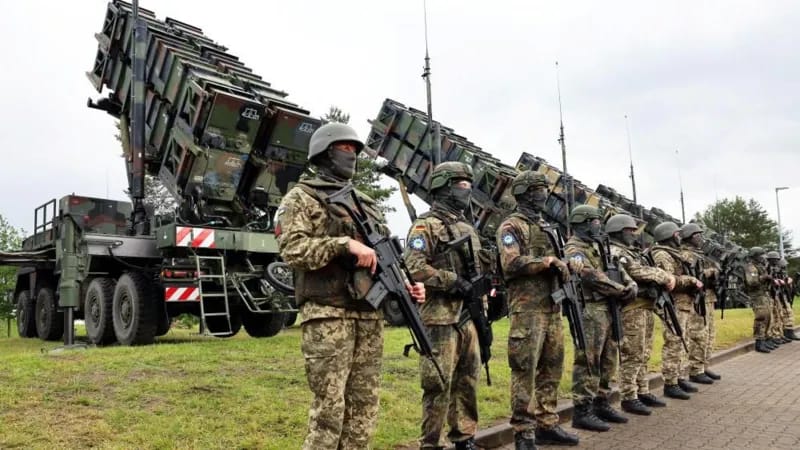
The United States has approved a $2.1bn sale of 500 Patriot air defence missiles to Ukraine to strengthen its protection against intensifying Russian aerial attacks, although deliveries could take several years.
The US State Department said the proposed sale involves advanced PAC-3 interceptor missiles, which will be funded entirely by Ukraine’s European allies and Canada, with no American government funds involved.
However, Ukrainian President Volodymyr Zelensky has urged Washington to accelerate the delivery of the weapons, warning that his country urgently needs the interceptors to defend against Russian ballistic missile attacks.
In a statement, the State Department said the sale would advance US foreign policy and national security objectives by improving the security of Ukraine, which it described as a force for political and economic stability in Europe.
It added that the purchase would be financed through contributions from Canada, Germany and Norway under the JUMPSTART programme, alongside national funds supported by the European Union’s Ukraine Support Loan.
American defence company Lockheed Martin will serve as the principal contractor for the deal.
Zelensky welcomed the approval in a post on X on Friday but stressed that Ukraine needed the missiles immediately, citing the growing threat to its energy infrastructure ahead of winter.
According to the Ukrainian leader, Russia had carried out more than 30 strikes targeting critical sections of the country’s power grid over the preceding two weeks.
He had earlier disclosed that Ukraine had been waiting for almost a month for Washington to approve the critical missile supplies as its existing stock of interceptors dwindled.
The proposed sale, however, may not provide immediate relief because it is understood to involve newly manufactured missiles rather than weapons drawn from existing stockpiles.
Production constraints could further delay deliveries. According to figures cited by the US Department of Defence, approximately 600 Patriot missiles are produced annually.
The global supply of the interceptors has also come under pressure because of their use by the United States in its war against Iran.
The approval comes amid recent tensions between Zelensky and US President Donald Trump over Washington’s approach to ending Russia’s war against Ukraine.
Earlier this month, Trump said it was time for Ukraine to get a new leader capable of reaching a deal to end the conflict. The remarks followed a US decision to ease sanctions on Russia as part of an arrangement to secure Russian diesel.
Relations appeared to ease after Zelensky met US envoys in Oslo on October 20.
Russia launched its full-scale invasion of Ukraine in February 2022, following its earlier seizure of Crimea and parts of the Donbas region in eastern Ukraine.
Meanwhile, tensions over the war were also evident at the G20 foreign ministers’ meeting in Atlanta, United States, where European diplomats protested the presence of Russian Foreign Minister Sergei Lavrov by refusing to stand for an official group photograph.
British Foreign Secretary Ed Miliband directly confronted Lavrov during the summit, accusing the Russian government of killing innocent civilians in Ukraine and insisting that Moscow was responsible for the war.
The meeting is being hosted by US Secretary of State Marco Rubio.
Despite Washington’s approval of the missile sale, uncertainty remains over the delivery timeline, leaving Kyiv facing continued pressure to protect its cities and critical infrastructure from Russian attacks.






Leave a Reply