
By Editor Drealomalicha Emmanuella
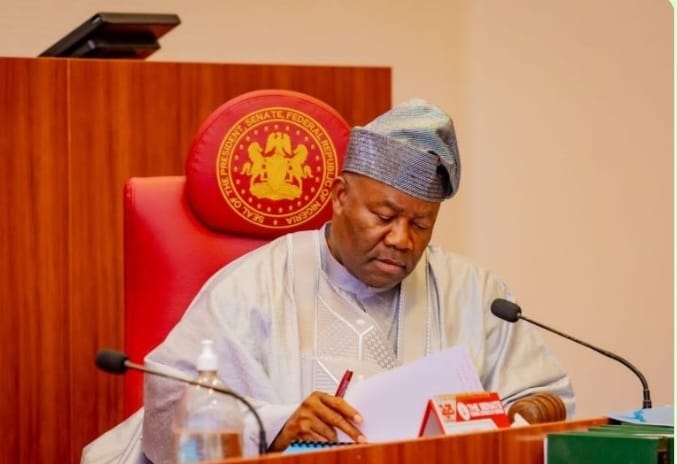
The Senate has approved a request by President Bola Tinubu to secure external loans totalling $6 billion, a move the government says is aimed at easing financial pressures while sustaining key infrastructure projects across the country.
The approval followed deliberations on a report presented by Senator Aliyu Wamakko, Chairman of the Senate Committee on Local and Foreign Debts, during plenary on Tuesday.
In a letter read before lawmakers, the President outlined plans to establish a structured total return swap (TRS) financing programme of up to $5 billion with First Abu Dhabi Bank. The facility, he explained, would be drawn down in phases rather than as a lump sum a strategy intended to reduce the immediate burden of debt servicing.
According to the Presidency, the funds will be channelled towards implementing the national budget, supporting priority infrastructure, and refinancing both domestic and external debt. Officials argue that the approach is designed not only to keep critical projects on track but also to help the government meet pressing financial obligations without destabilising the broader economy.
As of the end of 2025, Nigeria’s total public debt stood at approximately $110.3 billion about ₦159.2 trillion a figure that continues to weigh heavily on public finances. By staggering access to the new loan, the government hopes to create some breathing space in managing repayments.
In a separate request, President Tinubu sought legislative approval to issue naira-denominated federal government securities as collateral for the financing arrangement, alongside provisions for settling margin obligations in U.S. dollars.
The President also requested approval for an additional $1 billion export finance facility from the United Kingdom, arranged by Citibank. The funds are earmarked for the reconstruction and rehabilitation of the Lagos Port Complex and Tin Can Island Port projects widely seen as crucial to improving trade efficiency and reducing congestion at two of Nigeria’s busiest maritime gateways.
For many Nigerians, however, the announcement is likely to stir mixed reactions. While the government maintains that the borrowing is necessary to stabilise the economy and drive development, concerns persist about the country’s growing debt profile and what it could mean for future generations.


Leave a Reply