
By Paul Joseph
The United Nations has issued a fresh warning that a powerful El Niño weather event could develop within weeks and intensify through the rest of 2026, raising fears of more extreme weather, higher temperatures and widespread disruptions across the globe.
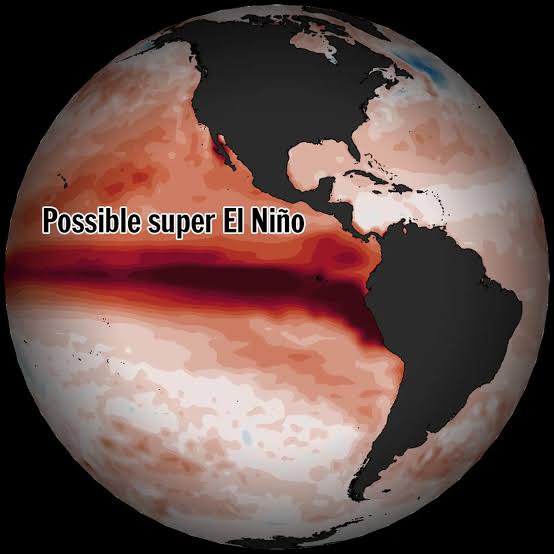
Climate scientists say the developing El Niño could become one of the strongest recorded in modern history, with some forecasting models suggesting it may reach “super El Niño” status a rare category associated with severe droughts, floods, heatwaves and economic losses.
The warning comes from the World Meteorological Organization, which says warming ocean temperatures in the tropical Pacific are increasingly pointing toward a major climate event at a time when the planet is already experiencing record-breaking heat driven by human-induced climate change.
El Niño is a naturally occurring climate phenomenon that develops when changes in Pacific Ocean winds allow unusually warm waters to spread across the tropical Pacific.
The warming influences weather patterns worldwide, often triggering extreme conditions in different regions.
Scientists monitoring the Pacific Ocean say waters that were cooler than average late last year have warmed rapidly in recent months.
Particularly striking is a massive pool of unusually warm water beneath the ocean surface, in some areas measuring more than six degrees Celsius above normal.
Experts believe this stored heat could fuel a significant warming event later this year.
According to climate researchers, forecasts indicate the phenomenon could rival or even exceed the strength of previous major El Niño events recorded in 1982, 1997-98 and 2015-16.
A strong El Niño typically alters rainfall and temperature patterns across continents.
Regions such as Australia, parts of Southeast Asia and sections of South America often experience hotter and drier conditions, increasing the risk of drought and wildfires.
In contrast, some areas including parts of East Africa, East Asia and the southern United States can experience heavier rainfall and flooding.
The phenomenon may also weaken India’s crucial monsoon season, potentially affecting agriculture and food production for millions of people.
Past El Niño episodes have been linked to crop failures, supply-chain disruptions, rising food prices and economic losses worth hundreds of billions of dollars globally.
Scientists say the greatest concern is not simply the arrival of El Niño itself, but the fact that it is developing on a planet already warmed significantly by greenhouse gas emissions.
Historically, global temperatures tend to spike during strong El Niño years. However, researchers note that the world’s baseline temperature today is much higher than during previous major events.
As a result, the combination of El Niño and climate change could push global temperatures to unprecedented levels.
Climate experts are increasingly warning that 2027 could become the hottest year ever recorded if the current forecasts materialize.
UN Secretary-General António Guterres warned that El Niño could intensify the impacts of an already warming world, with consequences stretching across national borders through extreme weather, food insecurity and economic disruption.
While scientists caution that the exact strength of the event remains uncertain because El Niño is highly sensitive to changing wind patterns, they stress that governments should begin preparing now for potential impacts.
From droughts and wildfires to floods and agricultural disruptions, experts say the coming months could test the resilience of communities worldwide as natural climate variability collides with long-term global warming trends.






Leave a Reply