


By Paul Joseph
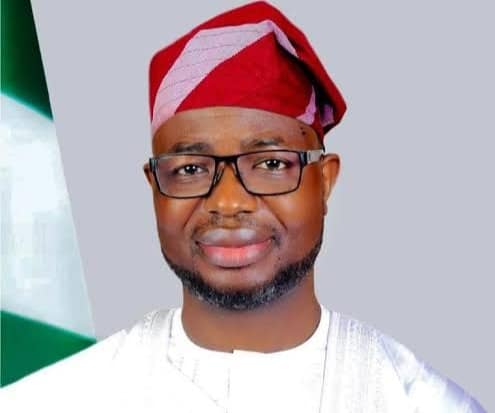
Nigeria and Poland have taken a major step toward strengthening bilateral security cooperation following high-level talks between Nigeria’s Minister of Interior, Hon. (Dr.) Olubunmi Tunji-Ojo, and Poland’s Minister of Interior, Marcin Kierwiński, in Warsaw.
The meeting, held on Polish soil, produced a concrete framework for collaboration on internal security, border management, civil defence, and the protection of critical national infrastructure, underscoring Nigeria’s growing role in international security diplomacy.
At the heart of the agreement is the establishment of a Technical Working Group that will develop a structured roadmap for cooperation between both countries.
The framework will cover key areas including border security, fire and rescue services, civil protection, correctional reforms, and critical infrastructure security.
Both ministers on Friday also reaffirmed their commitment to ensuring that future cooperation agreements are guided by international human rights standards and the rule of law, with correctional reforms forming a key component of broader security governance efforts.
The Warsaw meeting marks a significant milestone in a diplomatic engagement that began in Abuja weeks earlier when Poland’s Deputy Prime Minister, Krzysztof Gawkowski, visited Nigeria and held discussions with Tunji-Ojo at the Ministry of Interior headquarters.
During that visit, both countries pledged to deepen cooperation in border management, internal security systems, cybersecurity, technology transfer, and institutional capacity development.
The latest engagement in Warsaw is seen as the implementation phase of those commitments.
For Tunji-Ojo, the agreement represents another achievement in an increasingly ambitious international engagement strategy aimed at strengthening Nigeria’s security architecture through strategic partnerships and global best practices.
In recent months, the Interior Minister has led several international initiatives designed to improve migration governance, border security, and institutional efficiency.
In April, Nigeria and the United Kingdom signed three major agreements under his leadership, including a Memorandum of Understanding on Migration Partnership, a Statement of Intent on Cooperation on Organised Immigration Crime and Border Security, and a Statement of Intent on the Expansion of Business Visas for UK companies operating in Nigeria.
Those agreements were widely regarded as a significant step in advancing cooperation between both countries on migration management and security issues.
Tunji-Ojo has also strengthened Nigeria’s engagement with the European Union. Earlier this year, he hosted senior officials from the European Union’s Directorate-General for Migration and Home Affairs alongside the EU Ambassador to Nigeria, where discussions focused on preventive and technology-driven approaches to migration management and border security.
Observers say the latest partnership with Poland further demonstrates the Federal Government’s commitment to leveraging international collaboration to address emerging security challenges while enhancing institutional capacity.
Beyond international diplomacy, the minister has continued to drive reforms within Nigeria’s interior sector.
Among the most notable is the comprehensive restructuring of the country’s passport administration system, which consolidated 96 decentralised passport personalisation centres into a single secure and centralised processing facility designed to meet international standards.
The reforms have also extended to agencies under the Ministry of Interior, with renewed emphasis on efficiency, service delivery, technology adoption, and institutional accountability in line with President Bola Tinubu’s Renewed Hope Agenda.




Leave a Reply