

By Paul Joseph
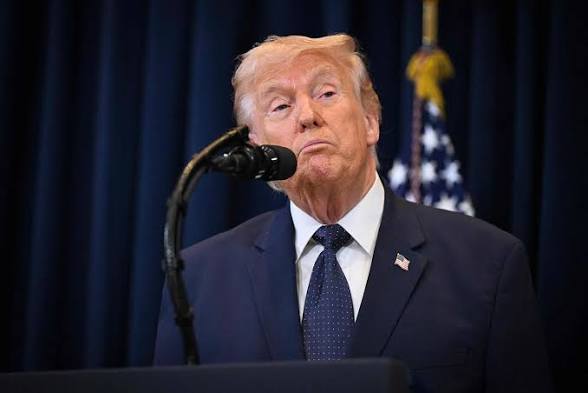
U.S. President Donald Trump has ignited fresh geopolitical debate after claiming that Iran’s leadership has reached out to Washington seeking a ceasefire, a development that remains unverified and unconfirmed by officials in Tehran.
In a strongly worded statement, Trump suggested a possible shift within Iran’s leadership, praising what he described as a “new regime president” who is “much less radicalized and far more intelligent than his predecessors.” The comment points to what he framed as a change in tone or strategic direction, although he did not name the individual or provide further details.
Despite the apparent praise, Trump made it clear that any consideration of a ceasefire by the United States would hinge on developments surrounding the strategically critical Strait of Hormuz. The narrow maritime corridor remains one of the world’s most vital oil transit routes and a longstanding flashpoint in global energy security.
“We will consider when Hormuz Strait is open, free, and clear,” Trump stated, setting a firm condition for any potential de-escalation.
However, the tone of the message quickly hardened, with the U.S. president issuing a stark warning of possible military consequences if those conditions are not met. He cautioned that Iran could be “blasted into oblivion,” invoking rhetoric reminiscent of past periods of heightened confrontation.
The dual nature of the statement blending commendation with explicit threats has drawn widespread international attention. Analysts say it reflects a familiar approach in Trump’s foreign policy messaging, combining signals of openness to negotiation with sustained pressure.
Security experts warn that any escalation involving the Strait of Hormuz could have far-reaching global implications, particularly for oil markets and regional stability. The waterway remains one of the most sensitive geopolitical chokepoints in the world.
Observers are also scrutinizing Trump’s reference to a “new regime,” which may suggest internal political developments within Iran. However, no such changes have been officially confirmed, and the ambiguity surrounding the claim has fueled speculation about its intent and timing.
As of press time, Iranian authorities have not issued an official response to the remarks, leaving uncertainty over the alleged ceasefire outreach and the broader trajectory of U.S.-Iran relations.
The situation unfolds against a backdrop of heightened regional tension, with global powers closely watching for any signals that could either ease or further inflame the fragile security balance in the Persian Gulf.


Leave a Reply