
By Paul Joseph
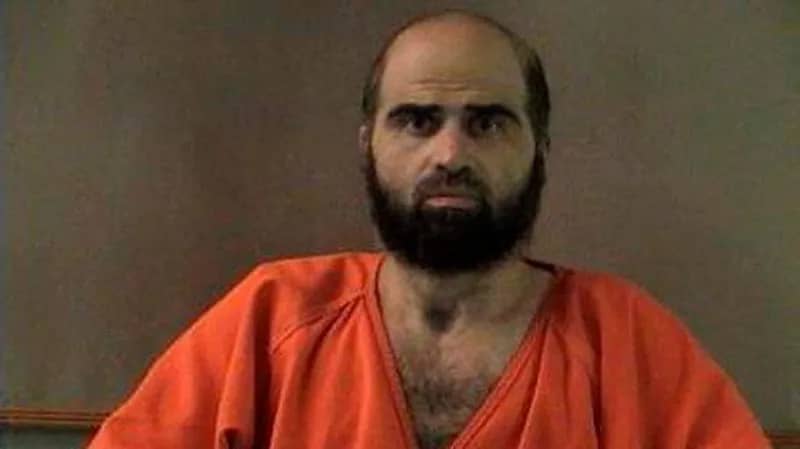
US President Donald Trump has withdrawn his support for livestreaming the planned execution of former US Army psychiatrist Nidal Hasan, who killed 13 people in a 2009 shooting at Fort Hood military base in Texas.
Trump announced the decision on Thursday, saying the execution would proceed as scheduled on December 3, 2026, but would not be broadcast online following mounting criticism over the proposed public display.
The president had previously endorsed the livestream, arguing that showing the execution could deter terrorism and demonstrate the consequences of attacks against American military personnel.
However, he acknowledged concerns raised by people who opposed broadcasting the execution.
“Many very good and well meaning people would rather not watch him die,” Trump said.
He added that livestreaming the execution could have served as a deterrent by showing the world how the United States deals with terrorists, but confirmed that the event would not be streamed.
“He will die, as scheduled, by firing squad, but this event will not be streamed,” Trump said.
Trump also said the families of the victims would be allowed to witness the execution in person.
“They deserve to witness JUSTICE!” he added.
The Pentagon announced last week that Hasan would be executed by firing squad on December 3, 2026.
US Defence Secretary Pete Hegseth subsequently said the execution would be livestreamed, arguing that the public needed to understand the consequences of attacks against military personnel.
Trump had initially backed the proposal, saying he approved of the livestream, although he noted that the Pentagon was still determining whether it would proceed.
The plan drew criticism from retired military officers and other observers who questioned the appropriateness of broadcasting an execution.
Vice-President JD Vance also expressed reservations, saying he would not watch the event.
In a letter reported by the BBC, 72 retired military officers urged the Pentagon to abandon the livestream, arguing that broadcasting the execution could damage the reputation of the military and the country.
Hasan opened fire inside a crowded medical building at Fort Hood, Texas, on November 5, 2009, targeting unarmed soldiers who were awaiting medical examinations and vaccinations before deployment.
The attack killed 13 people and wounded 32 others, making it the deadliest non-combat attack on a US military installation.
Hasan later admitted in court that he was responsible for the shooting and apologised for what he described as his mistakes.
During his court-martial in 2013, he said he believed he was protecting Muslims and the Taliban in Afghanistan from the US military.
His planned execution would mark the first US military execution in more than 60 years.
Under US military law, an execution requires presidential approval and appellate review before it can proceed.
The controversy has also renewed debate over the use of public executions and whether broadcasting capital punishment serves a legitimate deterrent purpose.
According to Amnesty International figures cited by the BBC, more than 2,700 executions were recorded across 17 countries in 2025. Only two countries were reported to have carried out public executions that year.
Iran reportedly carried out 11 public executions, while Afghanistan recorded six.
Trump’s decision means Hasan’s scheduled execution will not be livestreamed, although the planned firing-squad method and December 3 date remain unchanged in the announcement.
The development follows days of debate over the proposed broadcast, with supporters arguing that it could demonstrate the consequences of attacks on military personnel and critics questioning the implications of turning an execution into a public spectacle.


Leave a Reply