

By Paul Joseph
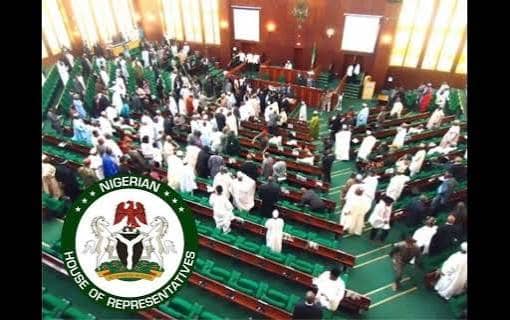
President Bola Ahmed Tinubu’s prolonged stay outside Nigeria has triggered fresh constitutional controversy, with members of the House of Representatives under the Save Democracy Group (SDG) demanding the immediate reconvening of the National Assembly.
The lawmakers are pressing the Senate President, Godswill Akpabio, and Speaker of the House of Representatives, Tajudeen Abbas, to publicly disclose whether President Tinubu transmitted the written declaration required under Section 145 of the 1999 Constitution before or during his extended stay abroad.
Tinubu departed Abuja on August 30 for what the Presidency described as a three-week working vacation. On September 21, however, the Presidency announced that the President had extended his stay abroad by a few days and was expected to return to Nigeria at the weekend.
The development has intensified questions over the formal arrangements for the exercise of presidential powers during his absence, particularly after the expiration of the initially announced 21-day period.
The SDG, in a statement issued on Wednesday, argued that Nigerians deserve a clear explanation of whether the constitutional procedure governing presidential absence had been followed.
According to the lawmakers, Section 145 requires a President proceeding on vacation or otherwise unable to discharge the functions of office to transmit a written declaration to the President of the Senate and the Speaker of the House of Representatives.
The Constitution further provides that if the President fails or is unable to transmit the declaration within 21 days, the National Assembly is to mandate the Vice-President to perform the functions of President as Acting President through simple-majority resolutions of both chambers.
The lawmakers therefore demanded that Akpabio and Abbas clarify whether such a declaration was received.
“If it was transmitted, the President of the Senate and the Speaker of the House of Representatives should immediately make that fact clear to Nigerians,” the group said.
The SDG maintained that the controversy cannot simply be dismissed by pointing to Tinubu’s continued communication with government officials from abroad.
“The question is not whether modern technology allows the President to work from another country. The question is whether the Constitution has been obeyed,” the lawmakers said.
The Presidency has maintained that Tinubu remains in charge of government and has continued to communicate with officials and issue directives while abroad. It has also said Vice-President Kashim Shettima represented the President at some official engagements during the period.
However, Shettima himself travelled to New York on September 20 to represent Nigeria at the 81st United Nations General Assembly, further intensifying public debate about the formal exercise of presidential authority during the simultaneous absence of the President and Vice-President.
The lawmakers consequently called for both chambers of the National Assembly to reconvene and establish the facts surrounding the President’s absence.
They further urged the legislature to invoke Section 145(2), if it establishes that the required declaration was not transmitted within the constitutionally prescribed period, and mandate Shettima to perform the functions of President as Acting President.
The group said the National Assembly should not leave the matter to assumptions or political interpretation.
It also cited Botswana as an example of a country where temporary presidential authority is formally addressed by constitutional provisions, while acknowledging that Nigeria and Botswana operate under different constitutional frameworks.
“Constitutional continuity should be clear, formal and transparent – not left to assumption,” the lawmakers said.
The latest demand comes amid broader criticism and questions from opposition figures over Tinubu’s extended absence from the country. The African Democratic Congress and former Vice-President Atiku Abubakar have also questioned whether the constitutional procedure under Section 145 was followed.
For now, the central issue remains whether the constitutionally required declaration was transmitted and, if so, why the National Assembly leadership has not publicly clarified the matter.
The SDG insists that Nigerians should be given a definitive answer rather than left to speculate over who formally exercises presidential functions during the extended absence.


Leave a Reply