
By Paul Joseph
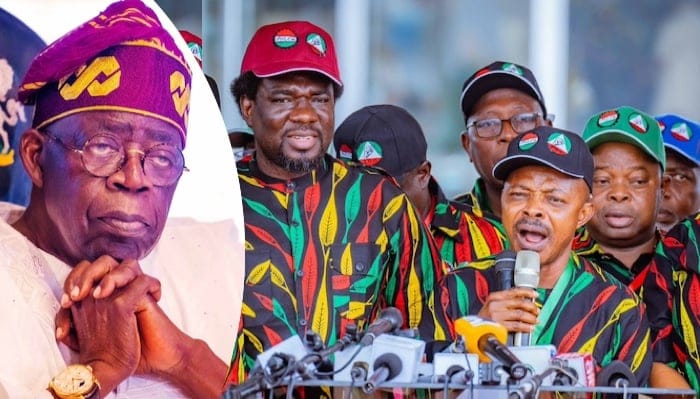
The Nigeria Labour Congress (NLC) and the Trade Union Congress of Nigeria (TUC) have directed their affiliates and state councils to prepare for possible nationwide industrial action after negotiations with the Federal Government over workers’ demands ended without a resolution.
The unions issued the warning on Thursday following a meeting at the Federal Ministry of Labour and Employment in Abuja, giving the government until Tuesday, October 27, to demonstrate its commitment to addressing outstanding labour issues.
In a joint statement signed by NLC Acting General Secretary, Comrade Benson Upah, and TUC Secretary General, Comrade Nuhu Toro, organised labour accused the government’s delegation of arriving at the meeting without the necessary authority to negotiate substantive solutions.
The unions said the meeting ended without concrete commitments, leaving their demands unresolved.
According to the statement, the Minister of Labour and Employment requested an adjournment until October 27 to allow the government to assemble relevant ministers and heads of departments and agencies for further negotiations.
However, the labour centres warned that the postponement must not become another opportunity for unnecessary delays.
While reaffirming their commitment to dialogue, the NLC and TUC insisted that they would not accept indefinite negotiations without tangible results.
They said the outcome of Tuesday’s meeting would determine their next course of action, urging their affiliates, state councils and civil society allies to remain on red alert and begin mobilising for possible nationwide industrial action.
The unions also appealed to Nigerian workers and the general public to remain calm, assuring them that they would continue to pursue workers’ interests through legitimate means.
Five Key Demands Behind Labour Dispute
The disagreement centres on five major areas: a reduction in petrol prices, fresh negotiations on the national minimum wage, implementation of agreed tax relief measures, fulfilment of the settlement with health workers and resolution of outstanding public-sector workers’ demands.
Organised labour is demanding a reduction in petrol prices to the levels that prevailed when the current national minimum wage was signed into law in 2024, arguing that rising fuel costs have continued to weaken workers’ purchasing power.
The unions are also seeking the commencement of negotiations for a new national minimum wage and the implementation of agreed tax relief measures to ease the financial pressure on workers.
Another major demand is the implementation of the February 5, 2026, Terms of Settlement involving the Joint Health Sector Unions and Assembly of Healthcare Professionals (JOHESU).
The NLC and TUC are equally pressing for the resolution of demands submitted by the Joint Public Sector Negotiating Council (JPSNC), including issues relating to peculiar allowances, wage awards and hazard allowances.
The labour centres maintained that the government must honour existing agreements and take practical steps to address the deteriorating purchasing power of Nigerian workers amid rising living costs.
NLC Had Earlier Issued Two-Week Ultimatum
Thursday’s deadlock follows an earlier two-week ultimatum issued by the NLC in October, demanding government action on petrol prices, minimum wage negotiations, tax relief and outstanding agreements with workers.
The ultimatum, which began on October 9, also covered the implementation of the JOHESU settlement, JPSNC demands and wage awards intended to cushion the effects of rising living costs.
The Congress argued that the current minimum wage had lost significant purchasing power amid the depreciation of the naira and rising prices of essential goods and services.
With negotiations now scheduled to resume on October 27, attention is focused on whether the government will present concrete proposals capable of resolving the dispute.
Although the unions have not declared a nationwide strike, their directive for affiliates and state councils to prepare for possible action signals a growing risk of industrial confrontation if the next round of talks fails to produce meaningful progress.



Leave a Reply