
By Opeyemi Adelakun
The Senate is set to deliberate on Tuesday over the controversy surrounding the ₦1.3 billion allocation to the disputed Presidential Foreign Intervention Promotion Council (PFIPC) in the 2026 Appropriation Act, amid fresh revelations that a forged presidential appointment letter allegedly enabled the agency to operate within government circles for more than a year.
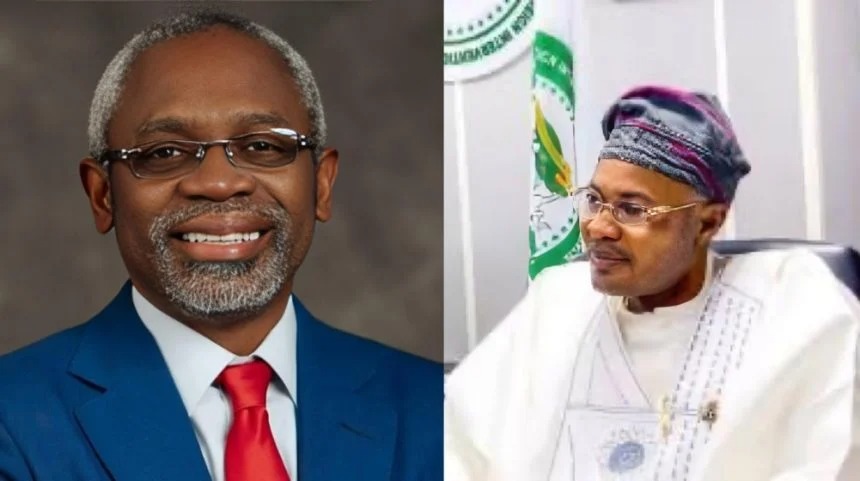
The development comes as multiple Presidency and civil service sources disclosed that Prince Adeniyi Adeyemi Mathew allegedly used a falsified appointment letter bearing a forged signature of the President’s Chief of Staff, Femi Gbajabiamila, to obtain office accommodation at the Federal Secretariat Complex in Abuja, creating the impression that the council was a legitimate government institution.
According to the sources, the forged document passed through several government institutions without proper verification, allowing the council to interact with ministries, diplomatic missions, the National Assembly and private organisations.
The sources maintained that the controversy could have been prevented if established bureaucratic checks had been properly observed at the Budget Office, the Civil Service Headquarters and the National Assembly.
A National Assembly source disclosed that the controversial ₦1.3 billion allocation was inserted without any representative of the council appearing before the Senate Committee on Establishment and Public Service to defend the budget.
“It was not brought in as a stand-alone item. It came alongside other budget items transmitted directly from the Presidency. There was no separate budget defence or oversight. The Senate leadership is expected to address the issue when plenary resumes on Tuesday,” the source said.
Presidency officials explained that the appointment letter allegedly used by Adeyemi violated established procedures for federal appointments.
According to one senior official, appointments to agencies under the Presidency are made by the President and formalised through the Secretary to the Government of the Federation, not the Chief of Staff.
“The Chief of Staff does not appoint heads of agencies. That authority belongs to the President, with appointment letters issued through the SGF. The entire scheme was built around a forged document,” the official said.
Another senior civil servant disclosed that Adeyemi allegedly presented the forged appointment letter to officials at the Civil Service Headquarters and requested office accommodation for the council.
“The officials accepted the document without confirming whether the Chief of Staff had the authority to make such an appointment. Once an office was allocated, the agency acquired an appearance of legitimacy, complete with official letterheads and a website,” the source explained.
The official added that although the office was eventually sealed after Adeyemi’s arrest, he allegedly continued operating outside the Federal Secretariat.
Presidency insiders also revealed that the Nigerian Investment Promotion Commission first raised concerns in October 2025 after discovering that the council was performing functions that overlapped with its statutory responsibilities.
According to the sources, the matter was immediately brought to the attention of Gbajabiamila, who reportedly denied any knowledge of Adeyemi and alerted the Department of State Services.
“The Chief of Staff insisted he had never met the individual or signed any appointment letter. He personally followed up until Adeyemi was arraigned in court,” one source said.
Another Presidency official suggested that the budget allocation may have been facilitated through contacts within the National Assembly.
“He appeared to have convinced some people that the council was a legitimate government agency because it had an office, official documents and all the appearances of legality. That was how the allocation found its way into the budget,” the source alleged.
The source also disclosed that Adeyemi was alleged to have breached the conditions attached to his bail.
The controversy has triggered widespread reactions from civil society organisations and opposition groups.
The Socio-Economic Rights and Accountability Project demanded that the Senate and House of Representatives release all documents relating to the controversial budget allocation, including records identifying officials who defended the expenditure and lawmakers who approved it.
The Human and Environmental Development Agenda also called for a full public investigation into the matter, insisting that Nigerians deserve to know how public funds were appropriated for an agency the Presidency says does not legally exist.
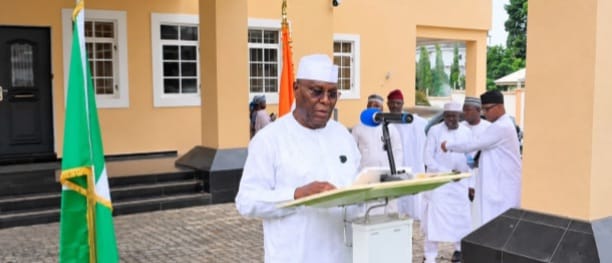
Former Vice President Atiku Abubakar criticised the Tinubu administration over the scandal, describing it as another example of institutional failure.
According to him, the Presidency should order an independent investigation and publicly disclose those responsible for creating and funding the council.
The Tanimu Turaki-led faction of the Peoples Democratic Party described the controversy as evidence of weak governance, while the Committee for the Defence of Human Rights urged Gbajabiamila to step aside pending an independent investigation.
Similarly, the Kwankwasiyya Movement questioned how the council secured budgetary allocation, office accommodation and official recognition without proper legal establishment.
However, Deputy House of Representatives Spokesman Philip Agbese urged Nigerians to allow the courts determine the matter, saying due process should be allowed to take its course.
Meanwhile, senior lawyers have cautioned against calls for the immediate prosecution of the Chief of Staff, insisting that criminal charges must be based on credible evidence rather than allegations.
Senior Advocate of Nigeria, Bankole Akomolafe, argued that there was currently no proof linking Gbajabiamila to the alleged fraud.
Another senior lawyer, Sampson Erugo, however, maintained that investigations should extend beyond Adeyemi to determine the roles played by all public officials who allegedly facilitated the operations of the controversial council.
Adeyemi is expected to appear before the Federal High Court in Abuja on July 27 alongside two alleged accomplices, identified as Femi and Anu, who are currently at large.
Leave a Reply