
By Paul Joseph
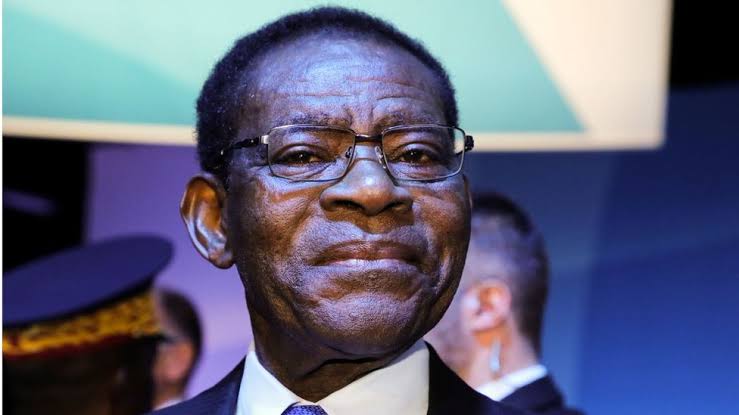
Equatorial Guinea’s President, Teodoro Obiang Nguema Mbasogo, the world’s longest-serving head of state, has dissolved his government after it achieved only 10 percent of its national development targets, triggering the resignation of the entire cabinet in a sweeping political shake-up aimed at improving governance and accelerating reforms.
The mass resignation followed President Obiang’s decision to overhaul his administration after expressing dissatisfaction with its inability to deliver key economic, infrastructure and public service objectives.
Vice-President Teodoro Nguema Obiang Mangue announced that Prime Minister Manuel Osa Nsue Nsua formally submitted the resignation of all cabinet members, saying the administration had fallen well short of the performance expected of it.
According to the vice-president, the outgoing government implemented barely 10 percent of the targets assigned to it, making its overall performance unacceptable.
“The degree of execution achieved is clearly insufficient in relation to the expectations and commitments undertaken,” Obiang Mangue wrote in a statement on X, adding that accountability in public office must be measured by concrete results.
The ruling Democratic Party of Equatorial Guinea (PDGE) said President Obiang approved the government’s resignation after concluding that the administration had failed to deliver on its mandate.
The party accused the outgoing cabinet of encouraging corruption, misusing public resources for personal gain and allowing several strategic development projects to stall.
It also criticised the government for failing to diversify the country’s economy, particularly by neglecting the agricultural sector despite repeated efforts to reduce dependence on imported goods that could be produced locally.
President Obiang has ruled Equatorial Guinea since seizing power in a 1979 military coup and appointed the outgoing administration in 2024 with Manuel Osa Nsue Nsua as prime minister.
The cabinet overhaul comes at a challenging period for the oil-rich Central African nation, whose economy remains heavily dependent on petroleum exports. Declining oil production and changing global energy markets have weakened economic growth, exposing the country’s slow progress in diversifying its economy.
Although Equatorial Guinea has one of Africa’s highest GDP per capita figures because of decades of oil revenues, much of its estimated 1.8 million population continues to live in poverty, while the benefits of the country’s natural resources remain unevenly distributed.
Political observers say the government’s resignation reflects mounting pressure on the administration to strengthen accountability, improve policy implementation and deliver meaningful economic results amid growing fiscal challenges.
A new cabinet is expected to be appointed in the coming days as President Obiang seeks to restore momentum to the country’s development agenda and improve the execution of government policies.



Leave a Reply