
By Opeyemi Adelakun
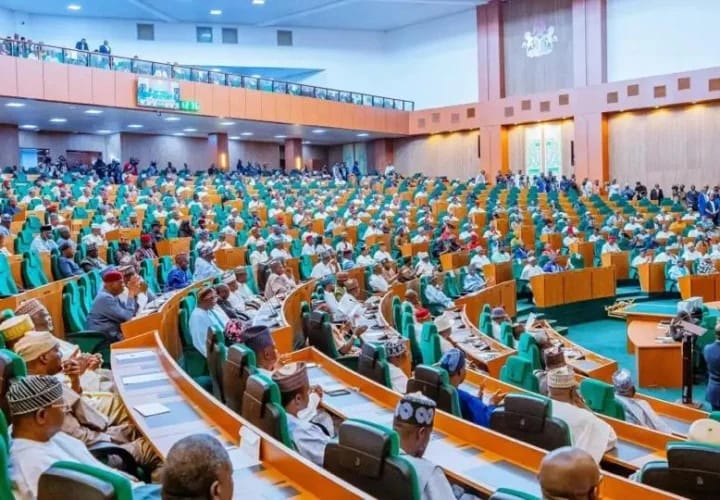
The Peoples Democratic Party (PDP) has suffered another setback in the House of Representatives following the defection of a lawmaker representing Misau/Dambam Federal Constituency of Bauchi State, Aliyu Misau, to the Allied Peoples Movement (APM).
Misau’s defection, announced during plenary on Wednesday, comes just days after four other members of the Bauchi caucus in the House of Representatives left the PDP for the APM, further weakening the opposition party’s influence in the state.
The lawmaker formally communicated his decision in a letter addressed to the Speaker of the House of Representatives, Rt. Hon. Tajudeen Abbas, which was read on the floor of the Green Chamber.
Explaining his decision, Misau blamed the prolonged leadership crisis within the PDP.
“I would like to thank the PDP for the opportunity given to me to serve the good people of Misau/Dambam Federal Constituency. The leadership crisis in the PDP has made it impossible for me to continue to represent my people and contribute to the development of the constituency,” he stated.
The latest defection is widely viewed as part of the political realignment triggered by the recent exit of Bauchi State Governor, Bala Mohammed, from the PDP to the APM.
Since the governor’s move, several political office holders and party loyalists in the state have either defected to the APM or openly expressed their intention to join the party.
Political analysts had predicted that lawmakers loyal to the governor would eventually follow his path, given his strong influence on Bauchi’s political landscape and the uncertainty surrounding the PDP’s internal stability.
Misau’s departure further reduces the PDP’s strength in the House of Representatives and highlights the growing challenges facing the party amid persistent internal disputes and increasing defections nationwide.
The PDP has been battling leadership crises at both national and state levels, with disagreements over party structures, direction and preparations for future elections continuing to fuel divisions among key stakeholders.





Leave a Reply