
By Ameh Sunday Enyo-ojo
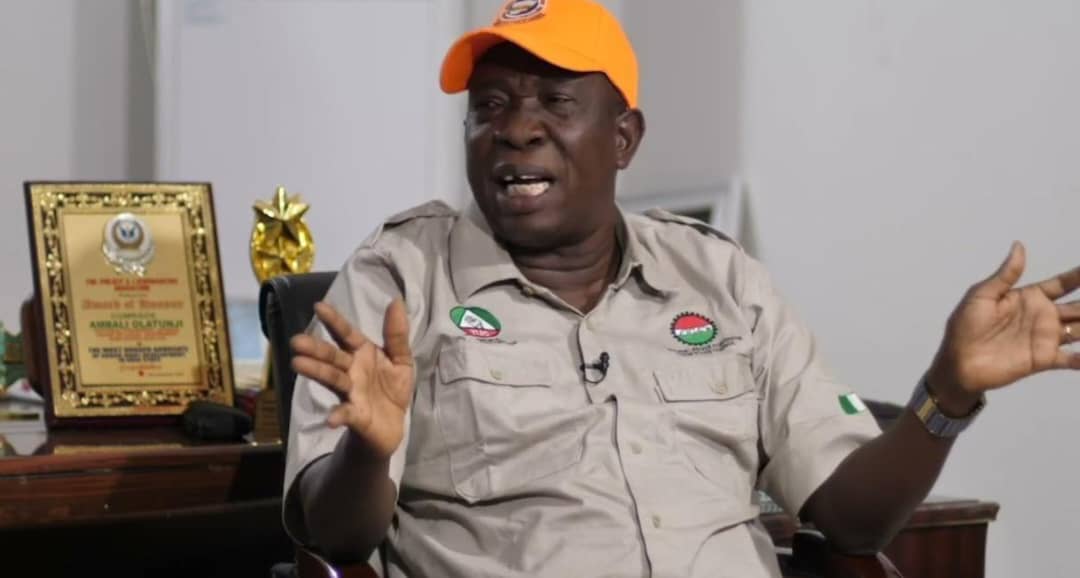
Former National President of the Nigeria Union of Local Government Employees, Comrade Akeem Ambali, has warned that the growing disagreement between the Nigeria Labour Congress and the Trade Union Congress could weaken organised labour and undermine efforts to protect Nigerian workers.
Ambali, a former NLC treasurer and Ogun State chairman, gave the warning on Tuesday during an interview in Ogun State.
He described the disagreement over the Federal Government’s proposed ₦70,000 transport allowance for public sector workers as an unnecessary distraction, saying labour leaders should focus on addressing the economic hardship confronting workers.
The dispute escalated after NLC President, Joe Ajaero, signed a Memorandum of Understanding with the Federal Government without the participation of the TUC, whose President, Festus Osifo, subsequently rejected the arrangement.
Ambali said the removal of fuel subsidy, inflation and the floating of the naira had severely reduced workers’ purchasing power, leaving many struggling to meet basic needs despite the implementation of the ₦70,000 national minimum wage.
He said transportation and electricity costs had become major burdens on household incomes, while rising production expenses were also affecting businesses and making goods and services increasingly unaffordable.
The former labour leader urged organised labour to prioritise improved wages, minimum pensions, accessible healthcare and affordable social services rather than allow internal disagreements to weaken its bargaining strength.
On the transport allowance controversy, Ambali recalled that both the NLC and TUC participated in the 2024 minimum wage negotiations alongside the Joint Negotiating Council.
He argued that the two labour centres should have worked together on the latest agreement, insisting that the NLC ought to have briefed the TUC and explained the circumstances surrounding its negotiations with the Federal Government.
According to him, the NLC’s larger membership does not make the TUC a junior partner, as both organisations are registered labour centres with recognised responsibilities.
He also acknowledged the TUC’s concerns about the government’s record of implementing agreements, particularly its alleged failure to fully honour the previous ₦30,000 wage award.
Ambali, however, cautioned against directing workers to reject the ₦70,000 allowance, arguing that the additional payment could provide some relief despite being inadequate.
He estimated that the allowance amounted to slightly more than ₦2,000 daily, questioning whether such an amount could meaningfully address workers’ transportation and living expenses.
Looking ahead to the next national minimum wage negotiations, which he said were expected to begin in April, Ambali proposed that organised labour should demand a minimum wage of not less than ₦400,000.
He urged the NLC and TUC to begin preparations early by engaging economists, academics, technocrats and other experts to develop research-backed proposals.
Ambali also called for any agreement reached at the national level to be extended to state governments and the private sector to ensure wider implementation.
Drawing from his experience as former Ogun State NLC chairman, he recalled how he once had to suspend a planned strike after his TUC counterpart reached a separate understanding with the government.
He said the experience taught him the importance of communication and cooperation between the two labour centres, even when they disagreed on a particular course of action.
Ambali consequently called for a review of Nigeria’s labour laws to establish clearer rules requiring the participation of recognised labour centres in negotiations involving workers’ welfare.
A caller, Prince Suleiman Hassan, who contributed to the programme, also urged the NLC and TUC to resolve their differences, saying workers were more concerned about receiving the benefits negotiated on their behalf.
Ambali appealed to the leadership of both congresses to put aside personal interests, restore cooperation and protect the collective strength of organised labour.





Leave a Reply