
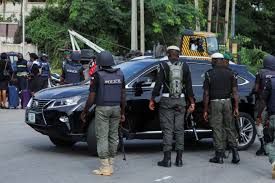

By: Sunday Ameh
A Federal High Court sitting in Delta State has ruled that Nigerians have the constitutional right to record police officers while carrying out stop-and-search operations in public spaces.
Justice Hyeladzira Nganjiwa delivered the judgment on Tuesday while ruling on a fundamental rights enforcement suit filed by a lawyer, Maxwell Nosakhare Uwaifo.
The court held that citizens are legally permitted to record law enforcement officers performing their duties in public and that any attempt to stop, harass, or intimidate individuals for doing so is unlawful.
The suit, which listed the Nigeria Police Force, the inspector-general of police, the Police Service Commission, and the attorney-general of the federation as defendants, also challenged the legality of police officers conducting operations without proper identification.
In its ruling, the court declared that “anonymous policing” is unconstitutional, stressing that officers must wear visible name tags and display their force numbers during public engagements.
The case stemmed from an incident on May 10, 2025, when Uwaifo was stopped by suspected police officers near Sapele while travelling from Benin to Warri. He told the court that the officers, who allegedly lacked identification and operated an unmarked vehicle, threatened to arrest him when he attempted to record the encounter.
Justice Nganjiwa ruled that such conduct violates citizens’ fundamental rights, including the right to freedom of expression as guaranteed under Section 39 of the 1999 Constitution.
The court further held that it is unlawful for police officers to seize recording devices, arrest, or threaten citizens for documenting their activities in public.
In addition, the judge ordered that police authorities must ensure officers on stop-and-search duties are properly identified and adhere strictly to constitutional standards.
The court awarded N5 million in damages for the violation of fundamental rights and an additional N2 million as litigation costs.
Legal observers say the judgment marks a significant step toward strengthening police accountability and protecting citizens’ rights in Nigeria.

Leave a Reply