

By Editor Drealomalicha
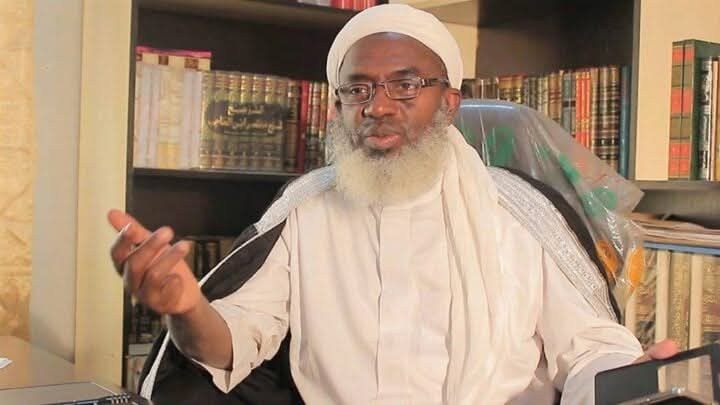
Speaking during a recent interview, the outspoken cleric said security agencies are not unaware of those behind violent attacks but possess detailed information about them.
According to him, his controversial visits to bandits and other armed groups were never undertaken alone, stressing that security operatives were fully involved in the process.
“The government knows every terrorist by name and location,” Gumi said. “When I go for negotiations, I don’t go alone. I go with the police, the military and other security agencies.”
He explained that some of the dialogue efforts even involved traditional rulers and community representatives in an attempt to build trust.
“I would first meet with the Emirs. In fact, when we went into one forest, I even went with women into the bush,” he added, describing the unusual circumstances surrounding some of the engagements.
The cleric further stated that he would be willing to support groups such as Indigenous People of Biafra (IPOB), as well as militants linked to Boko Haram and armed bandits, if they agree to abandon violence.
Gumi maintained that meaningful dialogue could pave the way for lasting peace, provided the groups are prepared to lay down their arms and negotiate with the government.
“If they are ready to put down their weapons and come to the roundtable, I am ready to support them,” he said. “All we want is peace. Violence cannot solve our problems.”
The cleric also spoke about widespread public distrust toward the government, suggesting that many Nigerians doubt official statements because they believe government actions often contradict its promises.
“What they say is not always what they do,” he remarked.
Call for Non-Military Solutions
Gumi argued that Nigeria’s insecurity cannot be solved through military force alone, urging authorities to adopt broader social and economic strategies.
He said experts have increasingly recommended non-military approaches to tackling violence.
“Experts are saying that about 75 per cent of the solution should be non-kinetic,” he noted.
According to him, Nigeria’s deteriorating infrastructure and social services — including poor road networks, erratic electricity supply, struggling healthcare systems and weak educational institutions — are major contributors to instability.
“In a situation where basic services are failing, should the priority be pumping trillions into defence, or investing that money into amenities that improve people’s lives?” he asked.
Gumi argued that improving living conditions across the country could significantly reduce crime and violent extremism, adding that a national conversation involving academics, criminologists and policy experts is urgently needed to chart a sustainable path out of the security crisis.



Leave a Reply