
By Opeyemi Adelakun
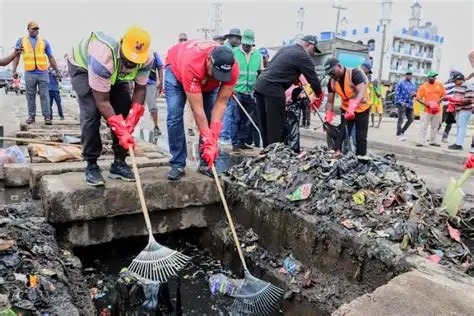
For a city aspiring to rank among the world’s leading megacities, Lagos is confronting an increasingly visible environmental crisis as growing mountains of refuse continue to dominate roadsides, drainage channels and public spaces across the state.
From densely populated suburbs to major commercial corridors, waste disposal practices have become a major source of concern, raising questions about whether ongoing efforts to transform Nigeria’s economic capital into a cleaner and more sustainable urban centre are yielding the desired results.
The challenge persists months after the state government reintroduced monthly environmental sanitation exercises aimed at restoring order and cleanliness to communities. Yet, across several parts of Lagos, discarded household waste, plastic materials and other refuse continue to accumulate in locations never designed to serve as dumpsites.
Particularly alarming is the increasing conversion of landscaped road medians, highway setbacks and drainage infrastructure into waste collection points, a trend environmental experts say is worsening flood risks and environmental degradation.
Observers argue that while government agencies have invested heavily in waste management infrastructure and environmental sustainability programmes, the problem has evolved beyond logistics and now reflects a deeper issue of public attitude and civic responsibility.
Last week, Lagos State Governor Babajide Sanwo-Olu renewed calls for residents to take greater ownership of their environment, stressing that maintaining a clean city cannot be left solely in the hands of government agencies.
The governor urged Lagosians to support ongoing sanitation initiatives and refrain from indiscriminate disposal of waste, noting that environmental cleanliness remains a collective responsibility.
His position aligns with repeated warnings from the leadership of the Lagos Waste Management Authority, which has consistently maintained that effective waste management depends on active cooperation between residents, businesses and waste operators.
Despite expanded waste collection networks, recycling programmes and enforcement campaigns, illegal dumping remains widespread.
Across major roads and neighbourhoods, residents say many offenders take advantage of late-night hours to dispose of waste on road dividers and public spaces, often leaving communities to deal with the consequences by morning.
“Many of the people dumping refuse on road dividers do so at night,” said Akeem Lawal, a trader along the Oshodi-Apapa corridor.
“Residents and shop owners living around these areas know what happens and should work together to identify offenders and report them to the appropriate authorities.”
Others insist the solution must combine enforcement with community participation.
“We cannot continue blaming government for everything,” said Chidinma Okafor, a resident of Abule-Egba.
“Some residents dump refuse indiscriminately and then complain about dirty surroundings. Communities should organise themselves to discourage such behaviour and report offenders whenever they are caught.”
Environmental advocates say neighbourhood associations, market unions and community development groups can play a crucial role in changing behaviour and promoting compliance with sanitation regulations.
However, residents also argue that compliance is easier when waste evacuation services are efficient and consistent.
According to Ibrahim Bello, a resident of Ikorodu, regular refuse collection encourages households to dispose of waste responsibly.
“When waste is collected regularly, people are more likely to dispose of it properly. The state government and waste operators should continue improving collection schedules to complement residents’ efforts,” he said.
The urgency of the challenge is amplified by Lagos’ rapidly growing population and expanding urban footprint. Analysts estimate that thousands of tonnes of waste are generated daily across the state, placing enormous pressure on existing waste management systems.
Experts warn that unless environmental awareness, law enforcement and waste evacuation improve simultaneously, the consequences could extend beyond aesthetics to include severe flooding, disease outbreaks and long-term environmental damage.
As Lagos pursues ambitious development goals and seeks to strengthen its status as a global city, stakeholders insist that a cleaner environment can only be achieved through a partnership between government and residents.
For many, the future of Lagos will depend not only on infrastructure investments but also on whether citizens embrace sanitation as a civic obligation rather than a government responsibility alone.




Leave a Reply