

By Paul Joseph
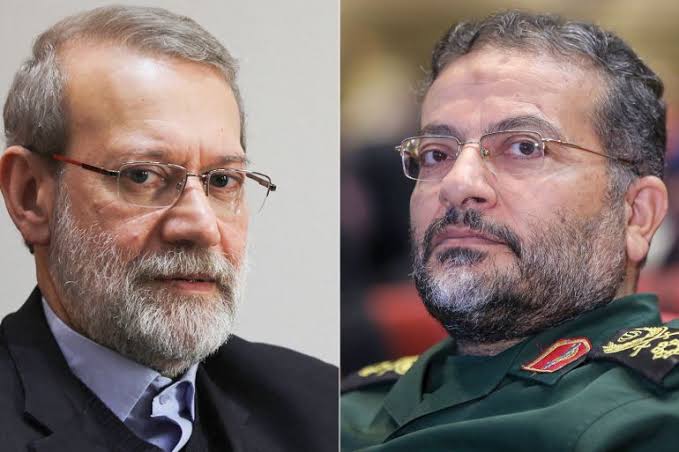
Israel’s Defence Minister has announced that the country’s military has killed Ali Larijani, Iran’s top security chief, in a precision strike, marking a significant escalation in Middle Eastern tensions.
Larijani, a senior figure in Iran’s security and intelligence apparatus, was last publicly seen at a Quds Day march in Tehran on Friday. Iranian authorities have not confirmed whether he was killed or injured.
The announcement comes as drones and rockets targeted the US embassy in Baghdad, Iraq, marking the second such attack in the ongoing conflict.
The strikes have raised concerns over the safety of diplomatic personnel and the potential for further escalation across the region.
Following recent missile and drone threats originating from Iran, the United Arab Emirates briefly closed its airspace but has now reopened it.
In response to the continued uncertainty, British Airways announced a temporary suspension of some flights to the Middle East until the end of May, citing safety concerns.
Former US President Donald Trump has renewed calls for international cooperation to secure the Strait of Hormuz, a critical route for global oil shipments. He emphasized the importance of NATO allies and other nations in maintaining regional stability.
Meanwhile, leaders from the United Kingdom, Canada, France, Germany, and Italy issued a joint statement warning that a large-scale Israeli ground offensive in Lebanon would have “devastating humanitarian consequences”.
The statement highlights growing international concerns about potential civilian casualties and the humanitarian impact of military escalation.
Ali Larijani has been a central figure in Iran’s security establishment for decades, with responsibilities spanning intelligence, counter-terrorism, and coordination of national security policies.
His alleged killing by Israeli forces signals a dramatic intensification in the ongoing regional conflict, which has involved a series of strikes, cross-border attacks, and diplomatic tensions over the past months.
Analysts warn that Larijani’s death, if confirmed, could trigger retaliatory actions from Iran against Israel and US-aligned targets in the region. The combination of embassy attacks, missile threats, and international travel disruptions underscores the fragility of security in the Gulf and Levant regions.
Governments worldwide are monitoring the situation closely, urging restraint while preparing for possible escalations.
As of now, Iran has not issued an official statement confirming Larijani’s death.
The situation remains fluid, with regional stability and global energy markets potentially impacted in the coming days.

Leave a Reply