
By Paul Joseph
The Independent National Electoral Commission (INEC) and the European Union (EU) have warned that the growing use of artificial intelligence to spread fake election information could threaten the credibility of Nigeria’s 2027 general elections, calling for stronger collaboration and effective measures to protect the country’s electoral information space.
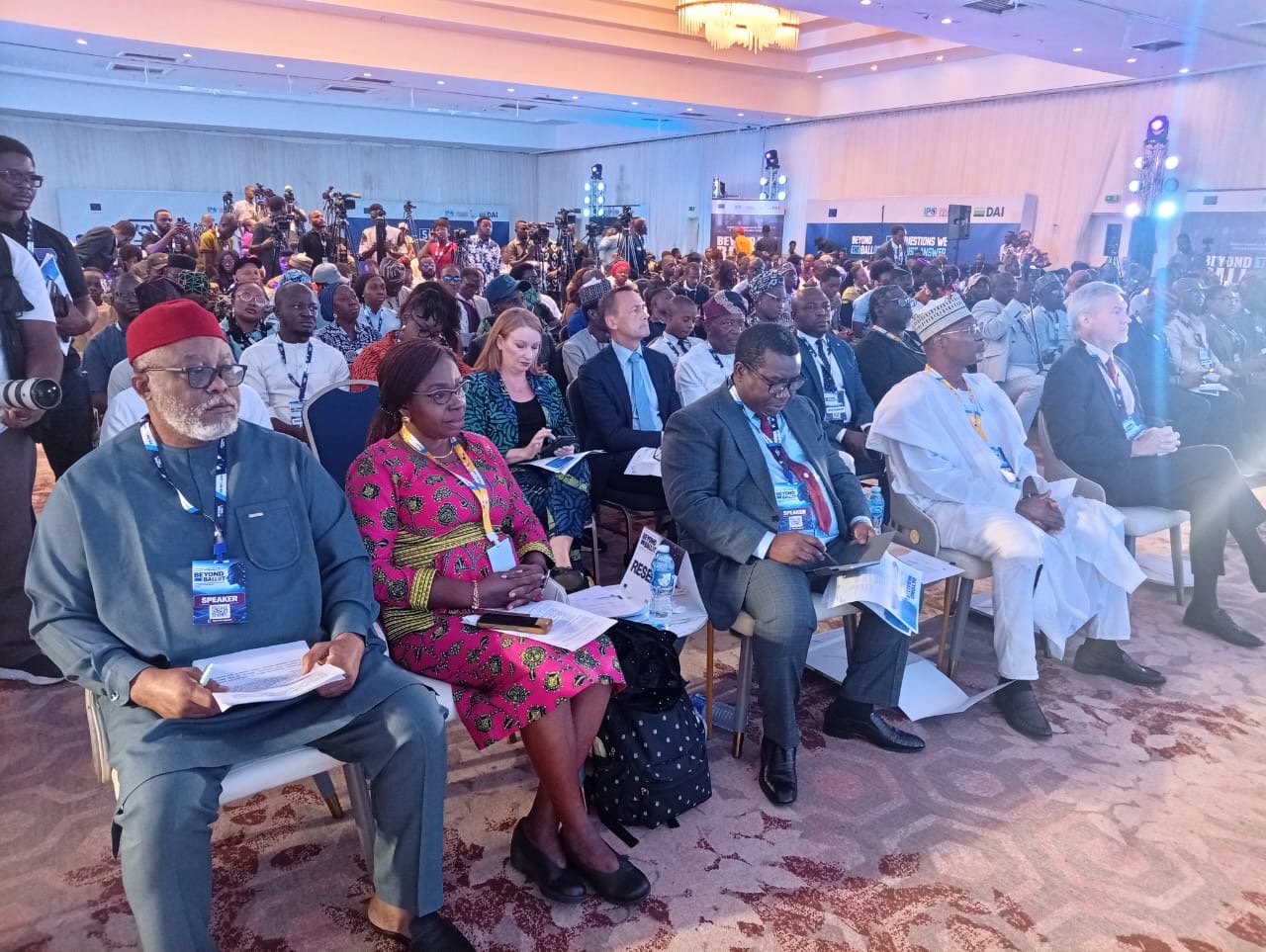
The warning came at a National Summit on Electoral Information Integrity, themed “Beyond the Ballot: AI, FIMI and the Integrity of the Nigerian 2027 Elections,” held on Monday at the Continental Hotel, Abuja.
INEC Chairman, Professor Joash Amupitan, said AI-generated audio recordings, manipulated videos, fake electoral directives and fabricated results had emerged as potential tools for misleading voters, discrediting political actors and disrupting electoral activities.
He said the growing sophistication of artificial intelligence required election management bodies to continually improve their technological capacity to identify and counter emerging forms of digital manipulation.
According to Amupitan, the threats could occur at different stages of the electoral process, including voter registration, political campaigns, election-day operations, result collation and official announcements.
He identified forged voter registration portals, fake operational instructions and manipulated information about voters’ registers as possible sources of confusion during electoral preparations.
The INEC chairman also expressed concern about the use of AI-generated campaign materials to discredit political parties and candidates, particularly during periods when political campaigning is legally restricted.
Citing experiences from other countries, he recalled how an artificially generated audio recording allegedly implicating a political party leader in vote-buying and electoral manipulation circulated shortly before an election, leaving authorities with limited time to counter the claims.
He further warned that fabricated results and false announcements attributed to INEC officials could trigger unrest and weaken confidence in the electoral process.
Amupitan stressed that INEC remained the legally recognised authority responsible for announcing official election results, urging Nigerians to disregard unverified figures circulated on social media.
On the commission’s response, he identified voter education, technological safeguards and rapid communication mechanisms as major priorities ahead of the 2027 elections.
He explained that citizens needed to understand not only how to vote but also how to verify electoral information and distinguish authentic official communications from AI-generated fabrications.
He also disclosed that INEC was strengthening its engagement with social media platforms, including TikTok, Facebook, Instagram, WhatsApp, YouTube, Telegram and X, to improve the identification and handling of harmful electoral content.
According to him, the commission already has memoranda of understanding with some platforms as part of efforts to improve cooperation.
Amupitan called for a coordinated approach involving media organisations, fact-checkers, civil society organisations, security agencies, telecommunications providers and technology companies.
He urged journalists to make verification a priority, noting that accuracy was fundamental to protecting democratic institutions.
However, he cautioned that efforts to tackle misinformation must not become an excuse for censorship, digital restrictions or the suppression of legitimate political opinions.
He maintained that measures against foreign information manipulation and AI-generated electoral fraud must respect fundamental rights, remain transparent and operate within the law.
The INEC chairman said the summit should produce practical outcomes, including clear inter-agency communication procedures, direct links with independent fact-checking organisations and simulation exercises to prepare institutions for possible AI-driven electoral crises.
Former INEC Chairman, Professor Attahiru Jega, also called for innovative approaches to tackling election-related misinformation, recommending that the commission consider deploying AI-powered chatbots equipped with verified electoral information.
Jega, who supervised the 2011 general elections, said such platforms could enable citizens to obtain accurate information quickly and verify the authenticity of claims circulating during elections.
He described the summit as timely and urged citizens, institutions and other stakeholders to contribute to strengthening the credibility of Nigeria’s electoral process.
Also speaking, European Union Ambassador to Nigeria, Gautier Mignot, said elections could be undermined even without the alteration of a single ballot, explaining that fabricated announcements and false result claims could misdirect voters and create suspicion before authentic information becomes available.
He said the immediate target of information manipulation was electoral information, while its deeper consequence was the erosion of public confidence in democratic institutions.
Mignot noted that although artificial intelligence offered opportunities for improved communication, translation and accessibility, it also made it easier to produce deceptive content that could be difficult to identify.
He argued that protecting electoral integrity required more than detecting deepfakes, stressing the importance of credible institutions, reliable public communication, independent journalism and coordinated responses to manipulation.
The EU ambassador outlined three priorities for Nigeria ahead of the 2027 elections: preparing before electoral pressure builds, strengthening practical partnerships and protecting democratic rights while addressing information manipulation.
He said communication channels, verification contacts and institutional responsibilities should be agreed upon and tested before election day to ensure that false information could be addressed without unnecessary delays.
Mignot also cited the EU’s 2023 Election Observation Mission, which highlighted the need for timely public information, independent fact-checking and stronger capacity to address harmful content in local languages.
He warned that an information vacuum could weaken public confidence, emphasising that citizens must have access to credible and verified information throughout the electoral process.
The two-day summit brought together electoral officials, diplomatic representatives, media executives, civil society organisations, security institutions and technology experts to deliberate on strategies for safeguarding electoral information and strengthening public trust ahead of the 2027 general elections.




Leave a Reply