
By Gloria Drealomalicha
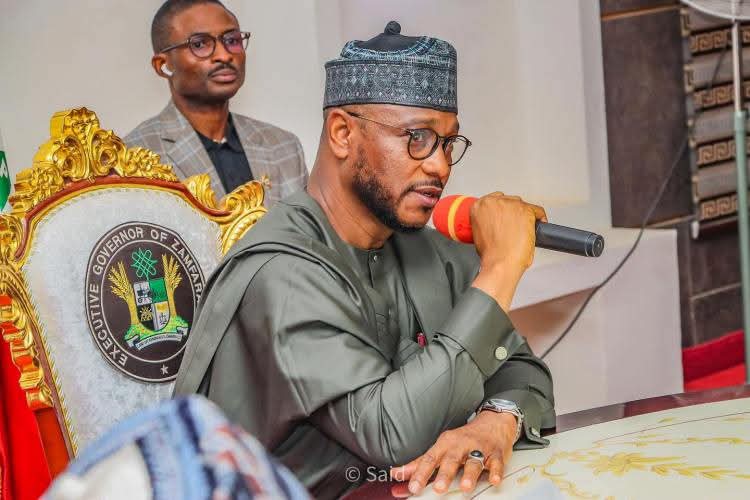
Zamfara State Governor Dauda Lawal has disclosed that he refused to pay a ₦300 million ransom when his brothers were abducted in 2019, insisting that giving in to kidnappers only fuels the cycle of criminality.
Speaking on Thursday at the ARISE News/THISDAY Townhall Conference in Abuja, the governor said it was one of the most difficult decisions he had ever made, but maintained that paying ransom would have encouraged further kidnappings.
Recalling the ordeal, Lawal said the kidnappers demanded ₦300 million for the release of his brothers, but he stood his ground.
“My own brothers were kidnapped in 2019, and these criminals were demanding about ₦300 million. I told them I was not going to pay a dime. If they wanted to kill them, they could,” he said.
According to the governor, his brothers regained their freedom after spending three months in captivity, despite no ransom being paid.
Lawal argued that the growing trend of ransom payments has emboldened criminal groups, making kidnapping an increasingly lucrative enterprise.
“If people continue to pay ransom, we are encouraging these criminals to keep kidnapping more victims. Once they realise there is no financial reward, they will think twice before carrying out such crimes,” he said.
The governor reaffirmed his opposition to negotiating with kidnappers, stressing that his administration would not pay ransom under any circumstances.
“I will not negotiate, and I will not pay ransom to any criminal, no matter what happens,” he declared.
Lawal made the remarks while advocating the creation of state police, arguing that governors should have operational authority over security agencies if they are to be held accountable for protecting lives and property.
He lamented that although governors are widely regarded as the chief security officers of their states, they lack the constitutional powers to direct security operations.
“I am called the chief security officer of the state, but I do not have the command and control structure to determine what happens or issue instructions to security agencies. Yet, I am held responsible whenever there is insecurity,” he said.
The governor described security as the bedrock of development, insisting that meaningful progress cannot be achieved without safeguarding lives and property.
He argued that establishing state police would improve accountability, enable quicker responses to local security threats and allow state governments to provide better funding, welfare and training for security personnel.
Lawal also criticised the challenges facing the Nigeria Police Force, citing inadequate funding, poor welfare and insufficient training as major obstacles to effective policing.
Highlighting Zamfara’s investment in security, he said his administration currently finances more than 30 per cent of security operations in the state.
According to him, the state government has procured more than 500 operational vehicles for security agencies over the past three years. It has also supplied 35 Armoured Personnel Carriers (APCs) and Mine-Resistant Ambush Protected (MRAP) vehicles to strengthen operations against bandits.
The governor added that technology has become a key part of the state’s security strategy, with the acquisition of surveillance and combat drones to support security forces in tracking and confronting criminal groups.
Lawal maintained that the solution to banditry and kidnapping lies in strengthening security institutions through improved funding, modern equipment, advanced technology and proper training, rather than negotiating with armed groups.
His comments come amid renewed nationwide calls for state policing and broader security reforms, as stakeholders continue to debate ways of tackling Nigeria’s persistent security challenges.



Leave a Reply