
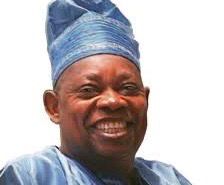
Former President Olusegun Obasanjo and former Head of State Gen. Abdulsalami Abubakar (retd.) have provided insights into the circumstances surrounding the death of Chief MKO Abiola, the presumed winner of the annulled June 12, 1993 presidential election. Speaking at the public presentation of three books in honor of Abubakar’s 84th birthday, Obasanjo disclosed that Abubakar was actively working to secure Abiola’s release prior to his sudden death in detention. “Your next move was how to get MKO Abiola released, and you kept me regularly informed, and also related messages to the family. Kola was already in Abuja to pick up his father when the unexpected happened. I remember you telling me on the telephone, ‘our man is dead,’” Obasanjo recounted.
Obasanjo described Abubakar as “a great military leader, an officer and a gentleman, a patriot, a nationalist and a peacemaker.” He acknowledged Abubakar’s role in stabilizing the nation after the death of Gen. Sani Abacha in June 1998, highlighting how he managed the ensuing political crisis surrounding Abiola’s continued detention. “You sagaciously managed the seeming confusion and uncertainty that followed Abacha’s death. You emerged from the cloud and carefully proceeded to untangle the nation,” Obasanjo stated, praising Abubakar for facilitating Nigeria’s swift return to democratic governance.
In a related account, Abdulsalami Abubakar dismissed claims that MKO Abiola was poisoned, emphasizing that an autopsy conducted by pathologists from four countries attributed his death to natural causes. “I do not believe Abiola was poisoned. The family requested an autopsy and we assembled American, British, Nigerian, and Canadian pathologists to conduct it. The autopsy report attributed his death to natural causes,” Abubakar stated in his autobiography, ‘Call of Duty.’ He elaborated on how Abiola collapsed during a meeting with a visiting American delegation on July 7, 1998, revealing that Abiola had been managing pre-existing medical conditions, including hypertension and a heart ailment.
Abubakar recounted the moments leading up to Abiola’s death, where he described Abiola’s distress during a meeting with U.S. officials. “A doctor arrived within 10 minutes and called for immediate hospital attention. We all helped to put him in a car, but unfortunately, at the end of their efforts, it was not possible, and he died,” he recalled. Abubakar emphasized that allowing the American delegation to see Abiola was crucial in avoiding speculation about a cover-up regarding his death.
As both former leaders reflected on the legacy of MKO Abiola, they underscored the significance of his struggle for democracy in Nigeria, with Obasanjo attributing Abubakar’s leadership to the country’s eventual transition to civilian rule on May 29, 1999.


Leave a Reply