
By Opeyemi Adelakun
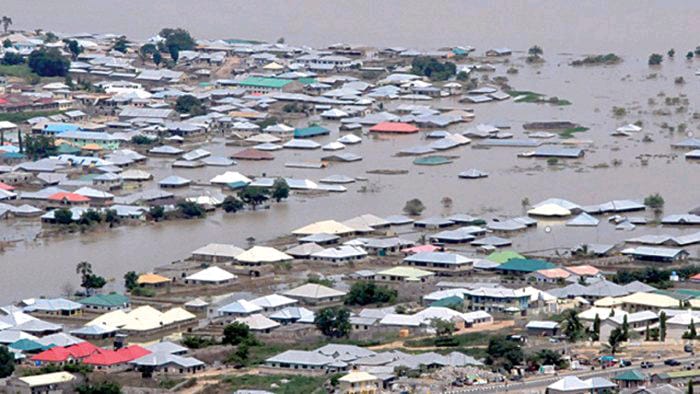
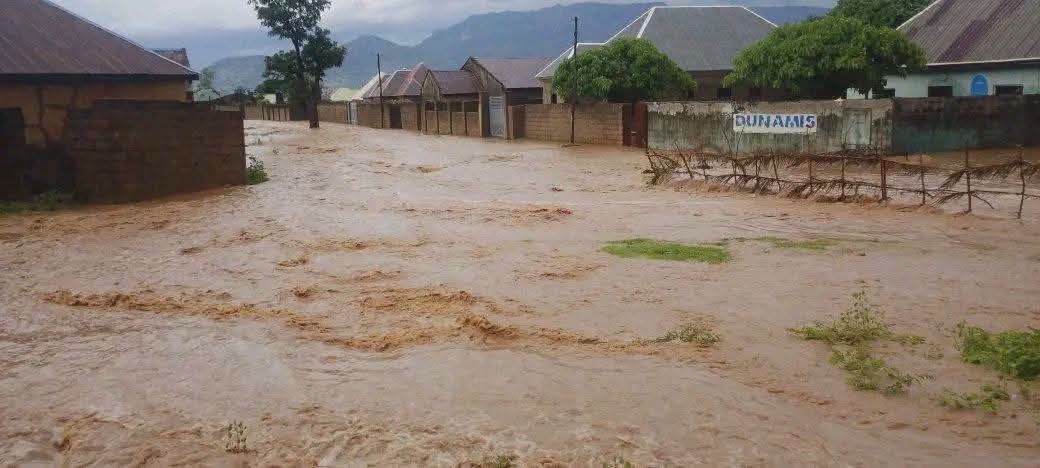
The Nigeria Hydrological Services Agency (NiHSA) has warned that more than 18 million Nigerians could be exposed to flooding in 2026, urging state governments to urgently activate mitigation measures to minimise the impact on lives, infrastructure and agriculture.
The agency said its latest flood outlook indicates that over 2,000 hectares of farmland, 8,794 educational facilities and 3,808 healthcare centres are at risk of being affected if adequate preventive measures are not taken.
Director-General of NiHSA, Umar Mohammed, who spoke through the agency’s Head of Geographic Information System (GIS) and Remote Sensing, Emmanuel David Tuna, said the projections were based on nationwide hydrological assessments and are intended to guide governments in disaster preparedness.
According to him, the forecast identifies several high-risk areas along the River Niger and River Benue corridors, with severe flooding expected in parts of Sokoto, Kebbi, Niger, Kwara, the Federal Capital Territory, Kogi, Anambra, Delta, Bayelsa, Adamawa and Taraba states.
He explained that communities downstream of the Kainji Dam, including Lokoja, could experience significant flooding as water levels rise, while floodwaters entering through the River Benue are also expected to affect several communities from Adamawa through Taraba.
NiHSA noted that while some locations may experience low or moderate flooding, others are projected to record high-impact inundation, with varying water depths across vulnerable communities.
The agency, however, expressed concern over what it described as poor cooperation from several state governments, alleging that many routinely ignore flood forecasts and fail to implement recommended mitigation strategies despite repeated warnings.
Mohammed said the agency had developed a National Flood Insurance Programme aimed at reducing the economic impact of flood disasters, but lamented that no state had adopted the initiative despite sustained engagement.
He also revealed that several states failed to respond to invitations to review flood risk assessments or discuss preparedness plans, describing the lack of collaboration as one of the biggest obstacles to effective flood management.
The NiHSA boss stressed that although flooding cannot be completely prevented, early planning, stronger collaboration and timely response by state authorities would significantly reduce its impact on affected communities.




Leave a Reply