
By Opeyemi Adelakun
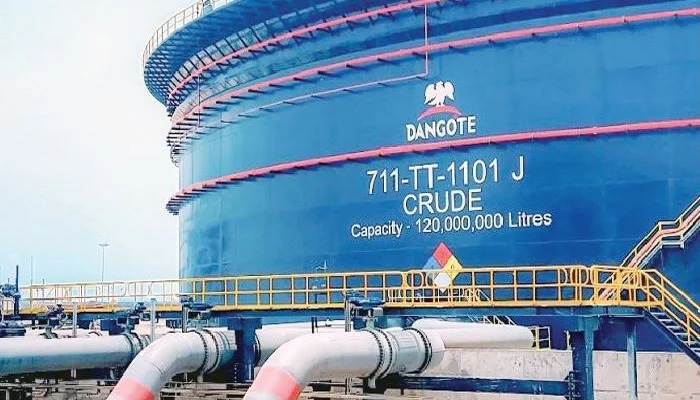
The Federal Government has stepped in to avert fresh instability in Nigeria’s downstream petroleum sector as a dispute over the Dangote Petroleum Refinery’s decision to adopt a dollar-based fuel pricing model triggered uncertainty among marketers, resulting in reduced product lifting across the country.
The intervention comes amid concerns by independent marketers over fluctuating petrol prices and disagreements between the refinery and the government over crude oil supply arrangements and the continued issuance of import licences. While marketers alleged that fuel loading at the refinery had been suspended, the Dangote Refinery dismissed the claim, insisting that operations were continuing normally.
Petroleum marketers told The PUNCH that many operators had slowed or suspended fresh purchases of Premium Motor Spirit (PMS), popularly known as petrol, as they awaited clarity on the refinery’s new pricing template and the cost of incoming imported products.
The National Publicity Secretary of the Independent Petroleum Marketers Association of Nigeria (IPMAN), Chinedu Ukadike, said marketers were adopting a cautious approach because of uncertainty over future pump prices.
“The issue is simple; marketers are not buying because they are trying to look at the market dynamics. Whatever we are using today is existing products in tank farms, which we are buying around N1,250 and N1,300,” Ukadike said.
He explained that uncertainty over the pricing of newly supplied crude oil and imported petroleum products had made marketers reluctant to load large volumes of fuel.
“The problem we are now facing is that this new crude oil that they are bringing—what will be the template? Also, those who have brought in petroleum products and are given licences are also estimated to place their price at N1,350, which marketers are also wary of.
“So everyone is just sceptical about loading products because when you load, you don’t know the next price, if it is going to reduce or go higher. You are still expected by consumers to sell at the prevailing price,” he added.
Ukadike appealed to the Federal Government to quickly resolve the pricing dispute, warning that prolonged uncertainty could further destabilise the downstream petroleum market.
Similarly, the IPMAN Western Zone Chairman, Oyewole Akanni, said marketers had been forced to source products from private depots at higher prices following what he described as the suspension of PMS loading at the Dangote refinery.
According to him, ex-depot prices at private depots in Lagos now range between N1,200 and N1,220 per litre, excluding transportation costs.
“The non-availability of fuel at some filling stations and the closure of others are due to fluctuations in the price of lifting fuel from depots.
“Since the Dangote refinery stopped selling PMS about four days ago, private depot owners have increased their prices. Many filling stations that have exhausted their stock are waiting to see whether prices will come down when the Dangote refinery resumes sales or increase further,” Akanni said.
He, however, urged motorists against panic buying, maintaining that there was no fuel scarcity despite the market uncertainty.
Contrary to the marketers’ claims, an official of the Dangote Group dismissed reports of a loading suspension, describing them as false.
“The refinery is loading. Anybody can go there to check. That’s fake news to say we are not loading,” the official said.
Meanwhile, a senior government official familiar with ongoing discussions disclosed that negotiations between the Federal Government and the refinery had yet to produce an agreement on the issues behind the refinery’s decision to price fuel in dollars.
According to the official, the disagreement extends beyond pricing and includes complaints by the refinery over continued issuance of petrol import licences and the volume of crude oil supplied to it by the Nigerian National Petroleum Company Limited (NNPC), particularly crude sold in naira.
“So the issue is that Dangote is unhappy about two things; one is that the government gave import permits. They issued import permits to some companies while his refinery is capable.
“Then number two is that the refinery is saying that it is not getting enough crude oil even from the Nigerian National Petroleum Company Limited. The percentage of naira for crude that they are giving to the facility is not a lot,” the official stated.
The source added that the government would continue engaging the refinery but insisted that no operator would be allowed to dictate market conditions.
“If there is no agreement and he does not want to listen, the next step will be to allow more imports to come in. It is not possible to hold anybody to ransom,” the official said.
The official also noted that because the Dangote refinery operates within a Free Trade Zone, it is legally permitted to determine the currency in which it conducts transactions.
Responding to concerns over the proposed dollar pricing model, the Federal Competition and Consumer Protection Commission (FCCPC) reaffirmed that the naira remains Nigeria’s only legal tender for domestic commercial transactions.
FCCPC Director of Corporate Affairs, Ondaje Ijagwu, said, “The commission’s position is clear. The Nigerian naira is the legal tender in Nigeria and remains the lawful currency for domestic commercial transactions.”
Ijagwu also expressed concern that recent declines in global crude oil prices had not translated into lower pump prices for Nigerian consumers.
“The FCCPC remains concerned that recent declines in international crude oil prices have not been reflected proportionately in retail petrol prices,” he said.
He stressed that the commission would continue monitoring developments in the downstream petroleum sector and would not hesitate to act where there was evidence of anti-competitive practices or consumer exploitation.






Leave a Reply