
By Paul Joseph
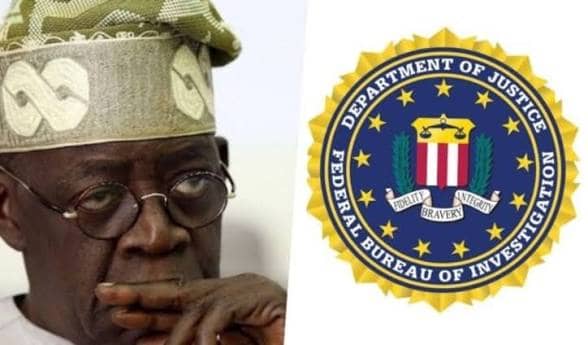
Uncertainty surrounds the possible release of United States records relating to President Bola Ahmed Tinubu as the court-imposed deadline for the Federal Bureau of Investigation (FBI) and other parties to state their positions on their disclosure ends today, Friday, August 28, in an ongoing Freedom of Information Act (FOIA) case.
The FBI, alongside the US Department of Justice (DOJ), the Drug Enforcement Administration (DEA) and Tinubu, is required under the court’s timetable to file its submissions concerning the disclosure of the requested documents.
The records are being sought by American transparency activist, Aaron Greenspan, who instituted a Freedom of Information Act lawsuit against several US government agencies over documents connected to investigations involving Tinubu.
Among the documents requested are the FBI’s complete file relating to Tinubu and FBI Form 302 interview records concerning the period between 1992 and 1993.
The case also covers records linked to a 1993 civil forfeiture proceeding in the United States involving approximately $460,000 connected to Tinubu.
In a separate development, the FBI has asked the US District Court for the District of Columbia for permission to submit a confidential declaration outlining why certain records should remain exempt from public disclosure.
The bureau made the request on August 20, seeking to file the explanation ex parte and in camera, a procedure that would allow the material to be presented privately to Judge Beryl Howell without being made available to the public.
According to the FBI, publicly disclosing its full reasons for withholding some of the records could reveal sensitive law-enforcement techniques or potentially endanger the life or physical safety of an individual.
The agency is relying on provisions of the US Freedom of Information Act that protect certain law-enforcement methods and information whose disclosure could pose a threat to an individual’s safety.
While the court has granted the FBI permission to make the confidential submission, the parties are still required to meet Friday’s deadline for filing their respective positions on the requested records.
The legal dispute follows an earlier ruling in which Judge Howell rejected the FBI and DEA’s broad reliance on a “Glomar response” — a position that allows US agencies, in certain circumstances, to neither confirm nor deny the existence of requested records.
The judge had ruled that the agencies could not rely on the response under the circumstances of the case and directed them to search for and process records responsive to Greenspan’s requests, subject to applicable exemptions and redactions.
The records have generated public interest because of their connection to historical US investigations and allegations involving drug trafficking and Tinubu.
However, the FOIA case is not a criminal trial, and the court is not determining whether Tinubu committed any drug-trafficking offence. Tinubu has not been convicted of drug trafficking in the United States.
Friday’s deadline also does not automatically mean that the requested records will immediately be released to the public.
The court will still consider the submissions of the parties, the FBI’s confidential declaration and the legal exemptions that may apply before deciding whether any of the requested information should be disclosed, either fully or in part.
The next stage of the case will depend on the filings submitted by the parties and the court’s subsequent determination on the extent to which the requested records may be released.






Leave a Reply