
By Opeyemi Adelakun
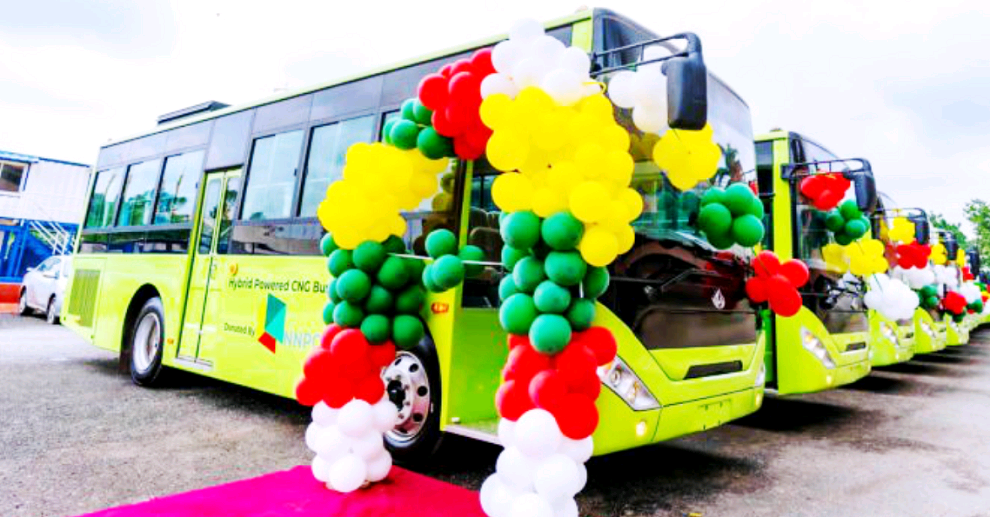
The Federal Government’s plan to reduce public transportation fares through Compressed Natural Gas (CNG) and electric buses is gaining momentum, with several states deploying or preparing to receive new vehicles ahead of the October 1 target.
However, available reports from across the country indicate that not all states are likely to meet the deadline, with some still negotiating with the Federal Government, private investors and transport operators on how to implement the scheme.
President Bola Tinubu had on September 18 directed state governments to accelerate the deployment of CNG and electric mass transit systems to achieve measurable reductions in transport fares from October 1.
The President, while providing an update on the National Affordable CNG Transit Programme, said Nigeria’s abundant gas reserves offered an opportunity to reduce dependence on imported and expensive conventional fuels.
He disclosed that more than 120,000 vehicles had so far been converted to CNG, while over 400 certified conversion centres and more than 90 CNG refuelling stations were operational across the states and the Federal Capital Territory.
Kano State is among those already ahead in the rollout, having launched 222 CNG and electric vehicles for public transportation in May.
Akwa Ibom and Cross River have now added 50 and 10 buses respectively to their fleets, while Delta is expecting 50 CNG buses under its pilot mass transit scheme.
Edo State plans to introduce 50 CNG buses on October 15, with First Lady Oluremi Tinubu scheduled to perform the unveiling.
At the Kano launch, Vice President Kashim Shettima, represented by his Deputy Chief of Staff, Ibrahim Hadejia, said cheaper alternative-fuel transportation was necessary to reduce the impact of transport costs on households and businesses.
“Transportation costs affect food prices, businesses, manufacturing, logistics and ultimately the lives of ordinary Nigerians. President Bola Tinubu understood that Nigeria could not continue to depend entirely on expensive traditional fuel systems while sitting on over 200 trillion cubic feet of gas reserves,” he said.
Shettima described Kano as a strategic location for the northern rollout because of its importance as a commercial and transportation hub linking markets within northern Nigeria and neighbouring countries.
Kano Governor Abba Yusuf described the initiative as an intervention capable of easing transportation difficulties while creating new economic opportunities.
States begin local rollouts
In Akwa Ibom, 50 CNG buses have been deployed across the state’s 31 local government areas.
Information Commissioner Aniekan Umanah said the initiative was introduced to cushion commuters from the effects of high transportation costs following the removal of petrol subsidy.
In Cross River, Transport Commissioner Kingsley Egomi confirmed that the state had taken delivery of 10 CNG buses.
He said the government had also commenced work on conversion centres, stressing that adequate conversion infrastructure would be necessary for the programme to succeed.
Delta State is awaiting 50 CNG buses approved for the pilot phase of its MORE Mass Transit Scheme.
Transport Commissioner Onoriode Agofure said terminals were being constructed in Asaba and Warri, with the buses expected to arrive after the facilities are completed.
He said the state’s assessment showed that about 80 per cent of residents in seven major cities rely on public transportation, highlighting the need for a more organised mass transit system.
Ondo State, meanwhile, has requested 100 CNG buses and 100 CNG-powered tricycles from the Federal Government.
The state’s Special Adviser on Transport, Muyiwa Ogunyemi, said the request was submitted after a stakeholders’ meeting involving state transport commissioners, the Presidential Implementation Committee on CNG and Electric Vehicles and the Nigeria Governors’ Forum.
He said the state was also exploring partnerships with private operators and vehicle dealers while working towards expanding CNG conversion infrastructure.
Ogunyemi stressed that the success of the programme should ultimately be judged by whether cheaper operating costs translate into lower fares for commuters.
Edo State also plans to deploy 50 CNG buses across its three senatorial districts and 18 local government areas.
Information and Strategy Commissioner Kassim Afegbua said fares on the buses would be kept very low, which he said would also put pressure on private transport operators to reduce their charges.
Abia, Benue, Kaduna expand existing interventions
Abia State plans to add another 60 CNG buses to its existing fleet before the end of the year, taking the total to 100.
Governor Alex Otti commissioned the first 20 buses last December and another 20 last month. The buses currently operate mainly in Umuahia and Aba, with plans to extend services to additional inter-city routes.
In Benue, the state government said it had ordered additional buses, including CNG vehicles, to strengthen public transportation.
The Chief Press Secretary to Governor Hyacinth Alia, Kula Tersoo, said the government had earlier procured 100 Toyota buses for Benue Links Nigeria Limited and expected further additions to help drive down fares.
Kaduna has gone beyond preparations, with the state already operating a free CNG mass transit programme.
Information and Culture Commissioner Ahmed Maiyaki said about 3.2 million passengers had benefited from the service since its launch in July 2025, with commuters estimated to have saved about ₦3.5 billion.
He said about 30 CNG buses currently operate daily on designated routes, while the state government is constructing 200 modern bus stops.
Lagos, South-East states still working on implementation
Lagos State, despite having one of the country’s most extensive public transport networks, is still discussing implementation arrangements with the Federal Government.
Information and Strategy Commissioner Gbenga Omotoso said the state supported efforts to improve citizens’ living conditions but did not disclose specific details of its planned CNG rollout.
Ebonyi, Imo, Anambra and Osun are also at different stages of developing their implementation plans.
In Anambra, Transport Commissioner Edward Obiefuna Ibuzo said the government was discussing partnerships with private investors, including Innoson Motors, and would soon announce its own plan.
Osun is expecting a Federal Government delegation to finalise arrangements for the CNG initiative. The state government has also developed a blueprint for reducing transport fares.
Imo said it was working towards expanding CNG-powered transportation after reviving the Imo Transport Company, while the Federal University of Technology, Owerri has acquired CNG-compatible vehicles and tricycles for use within the university community.
Ogun State said it was expanding CNG and electric vehicle adoption, including electric cars and motorcycles, as part of its strategy to reduce fuel and transport costs.
FG moves to build CNG, EV technical workforce
Beyond deploying vehicles, the National Automotive Design and Development Council (NADDC) has begun validating training manuals for technicians working on CNG and electric vehicles.
The council said the manuals would establish standard training and certification requirements covering installation, maintenance, diagnostics, repairs and safety.
NADDC Director-General, Oluwemimo Joseph Osanipin, represented at the validation workshop by Director of Industrial Infrastructure, Joke Onireti, said technical competence would be crucial to Nigeria’s transition to alternative-fuel vehicles.
He stressed that safety must remain central because technicians would be dealing with high-pressure CNG systems, high-voltage electric systems, batteries and charging infrastructure.

Leave a Reply