
By Paul Joseph
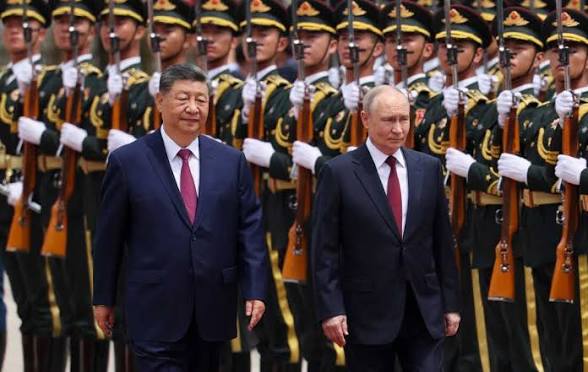
China’s President Xi Jinping recently hosted two high-profile visits in quick succession, welcoming Russian President Vladimir Putin and former U.S. President Donald Trump at the Great Hall of the People.
Both leaders received grand ceremonial welcomes, projecting Xi as a central figure in global diplomacy and signaling China’s growing international influence.
While the optics were similar, the underlying dynamics differed. Putin, facing Western sanctions and a prolonged war in Ukraine, relies heavily on China, now Russia’s top trading partner and largest oil and gas customer.
Talks concluded with over 20 agreements on trade and technology, though major projects like the long-delayed Russian gas pipeline remain unresolved.
In contrast, Xi negotiated with Trump from a position of economic strength, leveraging China’s dominance in trade, rare earth minerals, and advanced manufacturing.
Analysts say the visits demonstrate China’s ability to set the terms of engagement on the global stage.
China’s rise in diplomacy marks a striking turnaround from five years ago, when pandemic closures, aggressive “wolf warrior” diplomacy, and criticism over human rights in Xinjiang left Beijing isolated. Today, it has repositioned itself as a power that the world must engage.
However, limits remain. Xi called for an end to the Iran conflict but avoided direct comments on Ukraine, revealing the careful balancing act Beijing maintains between neutrality and strategic interests.
Experts note that China’s credibility as a fair global actor could be affected, especially as it seeks stronger ties with Europe to support its export-driven economy.
The Xi-Putin relationship also underscores an unequal but strategically vital partnership: Russia depends more on China than ever, while Beijing maintains the upper hand in negotiations and global positioning.




Leave a Reply