
By Paul Joseph
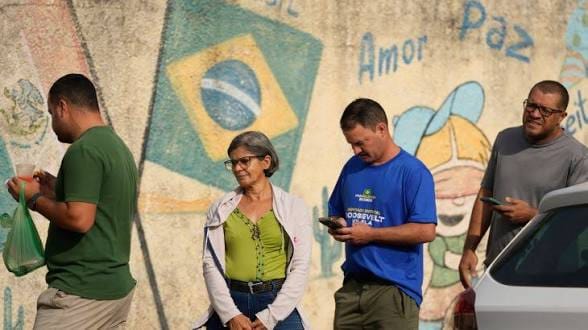
Brazilians have headed to the polls to decide between incumbent President Luiz Inácio Lula da Silva and right-wing senator Flávio Bolsonaro, son of former president Jair Bolsonaro, in a closely contested presidential run-off.
The election, held on Sunday, October 25, 2026, pits the 80-year-old left-wing president against the 45-year-old senator, who emerged ahead in the first round of voting on October 4.
Flávio Bolsonaro cast his ballot at a polling station in Rio de Janeiro early on Sunday, telling reporters that the time had come for “real change”.
His campaign has centred on tackling organised crime, reducing taxes and cutting public spending. He has also pledged to secure the release of his father, who is serving a 27-year prison sentence for plotting a coup after losing the 2022 election and is currently under house arrest because of health concerns.
Bolsonaro’s first-round performance has put pressure on Lula, who is seeking a fourth non-consecutive term as president. No candidate who finished behind in the first round of a Brazilian presidential election has previously overturned the deficit to win the run-off, according to the report.
Supporters of the senator expressed confidence in his promises to strengthen security and introduce economic reforms, arguing that Brazil needs a change in leadership.
At rallies in Rio de Janeiro ahead of the election, some Bolsonaro supporters accused Lula’s Workers’ Party of damaging the country’s economy and called for tougher action against violence, drug trafficking and organised criminal groups.
Lula’s supporters, meanwhile, organised large rallies to encourage participation after approximately 33 million voters did not cast ballots in the first round.
Addressing a crowd at Copacabana beach in Rio de Janeiro on Saturday, Lula described the election as a matter of national sovereignty, urging voters to choose progress rather than a return to the past.
“We’re going to win the election for one simple reason: it’s true that the people want change, but they want to move forward. They don’t want to go backward,” he said.
Lula and his Workers’ Party have presented the contest as a battle to protect democracy, arguing that Jair Bolsonaro’s conviction over a coup plot highlights concerns about the political movement associated with the former president.
Relations with United States President Donald Trump have also featured prominently in the campaign. Lula has accused Washington of interfering in Brazil’s election, an allegation the US has rejected as baseless.
Lula has maintained that Brazil should not be subordinate to any foreign power, while Flávio Bolsonaro has argued that closer cooperation with Washington could help tackle powerful criminal gangs and restore government authority in areas affected by organised crime.
The senator has also criticised the Workers’ Party over corruption scandals that have damaged its reputation among some voters.
The run-off has emerged as a contest between competing political visions for Latin America’s largest country, with security, economic management, democratic institutions and relations with the United States among the major issues shaping the campaign.
Lula was expected to follow the election results in São Paulo, while Flávio Bolsonaro was scheduled to be in Brasília as the country awaited the outcome.


Leave a Reply