

By: Sunday Ameh
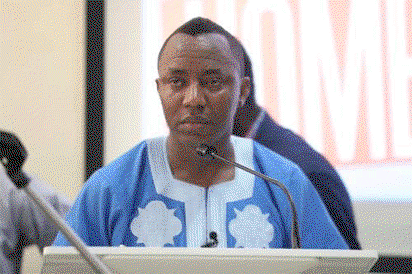
A promoter of the All Democratic Alliance, Umar Ardo, has criticised the registration of the Nigerian Democratic Congress, describing the process as a “judicial breach” and a violation of established electoral procedures.
Ardo made the remarks on Tuesday during an interview on a current affairs programme aired on Eagle 102.5 FM in Ilese-Ijebu, Ogun State, where he alleged that both the judiciary and the Independent National Electoral Commission failed to follow due process in recognising the party.
He argued that political party registration in Nigeria follows a clearly defined constitutional and administrative procedure, which he claimed was not adhered to in the case of the NDC.
According to him, the process begins with a formal letter of intent submitted to INEC, after which the commission conducts a review to determine whether the proposed name, acronym or logo conflicts with existing entities.
He noted that this stage only grants clearance to proceed and does not amount to full registration.
Ardo further explained that the substantive registration phase requires strict compliance with several conditions, including payment of administrative fees, submission of party documents and details of executives across states through INEC’s designated portal.
He maintained that the NDC allegedly failed to complete these requirements before seeking judicial intervention.
“The process was not completed. There was no full compliance with the requirements before the matter went to court,” he said.
The former governorship aspirant also questioned the Federal High Court’s involvement in the matter, arguing that the case was filed outside the statutory timeline provided under electoral laws.
He claimed that despite raising preliminary objections, the court proceeded to deliver judgment, which he described as inconsistent with legal provisions guiding such disputes.
Ardo also raised concerns over the speed of the judgment, noting that the case was concluded within a relatively short period compared to other pending electoral cases.
He further alleged that INEC published names of party officials that were not part of the court’s directive, describing the move as an administrative irregularity.
While acknowledging that INEC is bound to comply with court orders, Ardo argued that the commission had the option of appealing the ruling if it believed due process was not followed.
He also questioned the choice of jurisdiction for the case, noting that INEC’s headquarters is in Abuja, while the matter was filed in Lokoja.
On the broader implications, Ardo warned that failure to uphold procedural standards could undermine public confidence in democratic institutions.
“If due process is not followed, it weakens the credibility of both the electoral body and the judiciary,” he said.
He disclosed that he was consulting legal experts, including Senior Advocates of Nigeria, on possible actions, including an appeal.
Ardo added that his intervention was aimed at protecting democratic principles rather than advancing political interests, stressing the need to uphold the rule of law in electoral matters.





Leave a Reply