

By Paul Joseph
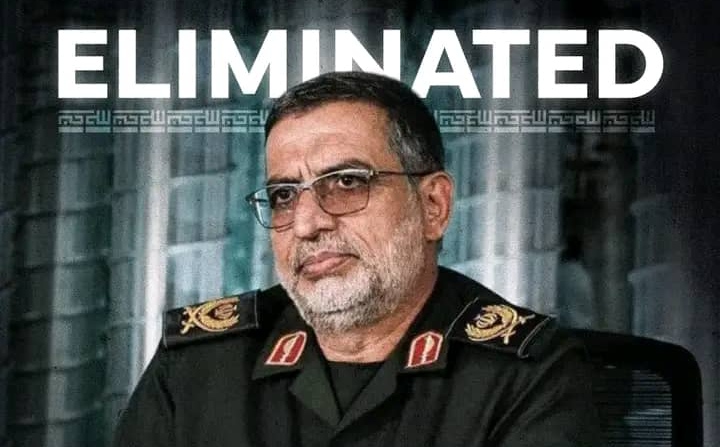
A senior Iranian military figure has been killed in a fresh wave of coordinated strikes, dramatically escalating tensions in the already volatile Middle East conflict.
Ali Mohammad Naini, spokesperson for Iran’s powerful Revolutionary Guard, was confirmed dead by state media on Friday.
His killing reportedly followed joint operations attributed to the United States and Israel, marking another high-profile loss for Iran’s leadership.
The development came just hours after Naini issued a bold challenge to Washington, dismissing claims by Donald Trump that Iran’s naval capabilities had been neutralized.
In his remarks, Naini dared the US to send warships into the Persian Gulf, insisting Iran’s military strength remained intact.
Iranian authorities condemned the strike, describing it as a targeted attack by what they called “American-Zionist forces.” Naini, a brigadier general, had also emphasized that Iran’s missile production continued uninterrupted despite ongoing bombardments.
Naini’s death is part of a broader pattern of targeted killings of senior Iranian officials in recent weeks. Among those reportedly killed are intelligence chief Esmaeil Khatib and political figure Ali Larijani, alongside paramilitary leader Gholamreza Soleimani.
These strikes follow the earlier reported death of Iran’s Supreme Leader Ali Khamenei in late February, a turning point that has further destabilized the country’s power structure.
Despite these losses, Iran’s leadership has projected resilience.
President Masoud Pezeshkian pledged continued resistance, while Foreign Minister Abbas Araghchi insisted that the country’s political system remains functional and intact.
The conflict now entering its third week has spread beyond military targets, increasingly threatening critical energy infrastructure across the Gulf.
Recent strikes on Iran’s South Pars gas field triggered retaliatory attacks, including drone strikes on key oil facilities in Kuwait. Fires were reported at major refining sites, raising alarm over global oil supply disruptions.
The strategic Strait of Hormuz a vital artery for global energy shipments has become a focal point of concern, with markets reacting sharply to fears of prolonged instability.
Elsewhere in the region, missile interceptions and air defence responses were reported across the UAE, Bahrain, and Saudi Arabia, with debris causing damage in civilian areas.
The attacks coincided with major cultural observances, including Nowruz and Eid celebrations, amplifying the sense of uncertainty across the region.
With both sides continuing to exchange strikes and rhetoric, analysts warn the situation risks spiraling into a broader regional war with global economic consequences.
For now, the killing of Ali Mohammad Naini underscores a clear reality: the conflict is not only intensifying on the battlefield but also reshaping the leadership landscape in Iran—raising the stakes for what comes next.






Leave a Reply