
By Gloria Drealomalicha
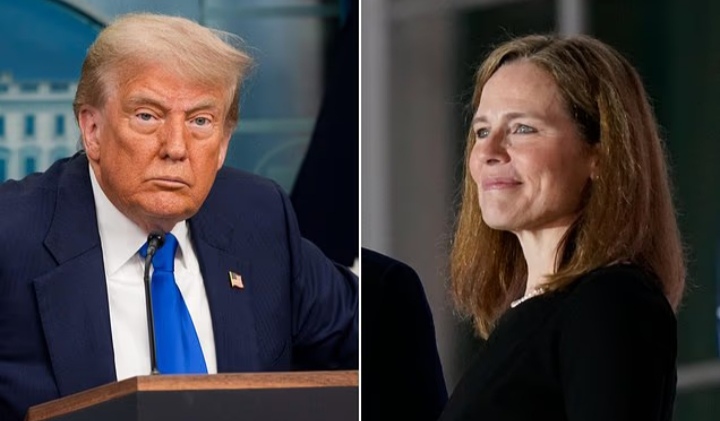
US Supreme Court Justice Amy Coney Barrett has declined to respond to President Donald Trump’s latest public attacks on the court, saying she does not want to discuss his comments.
Barrett made the remark on Thursday during a public conversation at the University of Virginia, where she was discussing her book, Listening to the Law: Reflections on the Court and Constitution.
Asked about Trump’s recent criticism of the Supreme Court, Barrett said: “I don’t want to talk about anything that the president has said in particular.”
Her response came days after the Supreme Court blocked the Trump administration from implementing new restrictions on mail-in voting ahead of the 2026 midterm elections.
The decision prompted Trump to sharply criticise several justices, including Barrett, Neil Gorsuch and Brett Kavanaugh, all of whom were appointed to the Supreme Court during his first term.
Justices Clarence Thomas and Samuel Alito were the only members of the court to dissent from the decision.
Trump subsequently took to social media to attack the justices, questioning whether they were still the same people he had interviewed before appointing them to the court.
“These are not the people I interviewed to serve on the United States Supreme Court, they are merely a shell of their original selves,” Trump wrote.
He also accused the Supreme Court of being influenced by what he described as the “Radical Left” and said some justices lacked the courage to act in his preferred manner.
The latest clash is part of a wider pattern of tension between Trump and the Supreme Court over rulings that have gone against his administration.
Trump has previously criticised the court after it ruled against some of his policies, including his attempt to use emergency powers to impose sweeping tariffs on US trading partners.
Despite the political pressure surrounding the court, Barrett has generally avoided engaging publicly with political attacks or commenting on politically contentious disputes.
During Thursday’s University of Virginia event, she instead focused on the judiciary, legal interpretation and the relationship between the courts and the rule of law.
The Supreme Court’s decision on mail-in voting has come as preparations for the November midterm elections intensify, with early voting already beginning in some US states.




Leave a Reply